• About Us
    • Mission & Vision
    • Team
    • Eboo Patel
    • Adam Nicholas Phillips
    • Board of Directors
    • Reports & Financials
  • Where We Work
    • Higher Education
      • Senior Leaders
      • Faculty
      • Students
    • Workplace
    • Civic Life
    • Health
    • Emerging Leaders
  • Get Involved
    • The Learning & Action Bridge
    • Courses, Curricula, and Tools
    • Grants & Leadership Awards
    • Events
    • Campus Training & Consulting
    • Corporate Training & Consulting​
    • Speaking
  • Magazine
    • Interfaith America Magazine
    • Voices of Interfaith America
    • Money, Meet Meaning
    • Press
  • Contact Us
    • Subscribe
    • Support Us
    • Our Supporters
    • Careers
    • Contact Us
  • About Us
    • Mission & Vision
    • Team
    • Eboo Patel
    • Adam Nicholas Phillips
    • Board of Directors
    • Reports & Financials
  • Where We Work
    • Higher Education
      • Senior Leaders
      • Faculty
      • Students
    • Workplace
    • Civic Life
    • Health
    • Emerging Leaders
  • Get Involved
    • The Learning & Action Bridge
    • Courses, Curricula, and Tools
    • Grants & Leadership Awards
    • Events
    • Campus Training & Consulting
    • Corporate Training & Consulting​
    • Speaking
  • Magazine
    • Interfaith America Magazine
    • Voices of Interfaith America
    • Money, Meet Meaning
    • Press
  • Contact Us
    • Subscribe
    • Support Us
    • Our Supporters
    • Careers
    • Contact Us
Subscribe
Support Us
Civic Life

What Matters to Patients at the End of Life? Join the Conversation

By
Anastasia Young

June 21, 2022

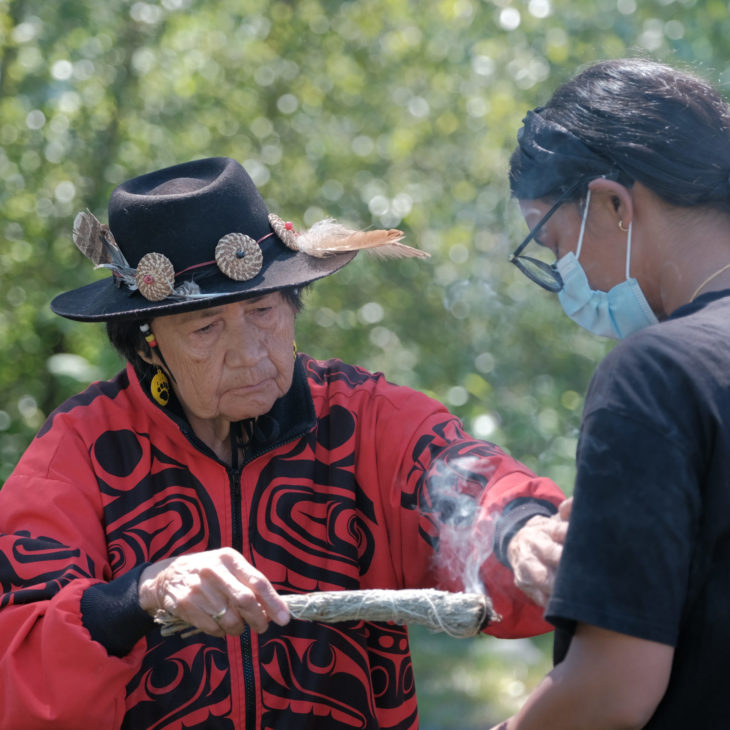
An indigenous elder participates in a water ceremony in British Columbia, Canada, in May 2021. (Blake Elliott/Shutterstock)

When I was working as an inpatient oncology nurse, I had the pleasure of taking care of a patient that I will refer to as Glen. I met Glen in the last days of his life when he was admitted to the hospital for uncontrolled pain related to cancer. Glen was a pretty quiet and reserved man, but he shared with me about his life, his journey with cancer, and now his reckoning with death. During one of our conversations, Glen shared with me that he was saddened that was admitted to the hospital because his Shaman hadn’t yet performed a traditional smudging ceremony before he died. Glen was Native American, and this ceremony was one that was sacred to him.

Although Glen’s code status (one’s wishes in an emergent situation if their heart or lungs stopped working) was known to the healthcare care team, Glen did not have an advance directive/advance care plan.

Like Glen, 2 out of 3 adults in the U.S. don’t have an advance directive.

Advance care planning, or ACP, is defined as, “a process that supports adults at any age or stage of health in understanding and sharing their personal values, life goals, and preferences regarding future medical care. The goal of ACP is to help ensure that people receive medical care that is consistent with their values, goals, and preferences during serious and chronic illness.”

Advance care planning shifts from healthcare providers asking the question, “What is the matter?” to asking the patient, “What matters to you?”

For Glen, the answer would have included his spiritual beliefs and practices.

These conversations are often avoided when healthcare providers (nurses, doctors, social workers, chaplains, etc.) feel ill-equipped to ask patients questions about their religious/nonreligious traditions and the role they play in their life. However, failing to have these conversations can be even more detrimental to the patient, their family, and the healthcare team.

In order for these conversations to regularly occur and be effective, healthcare providers must be prepared to discuss with the patient what matters most — whether it’s their worldview, culture, religion, or something entirely different.

This can be done through equipping healthcare providers with interfaith skills and providing opportunities for providers to practice such skills. Healthcare workers must be able to engage across lines of differences, including cultural and religious differences. This requires providers to have an awareness and understanding of their own beliefs, as well as a sense of cultural curiosity and humility in advance care planning conversations with patients.

How does your religious tradition/worldview approach advance care planning? Do you have an advance care plan?

Although Glen didn’t have an advance directive, learning what mattered most to him allowed us to connect with a Shaman who completed the smudging ceremony with his family at his bedside. I hope that by training healthcare providers with the skills needed to engage in these conversations, they will feel more confident in talking with patients early and often about what matters most in the face of a serious illness.

Interested in learning more?

On Tuesday, June 28 at 6pm CST the Interfaith Healthcare Cohort, a group within the Interfaith America Emerging Leaders Network is having a session called, “Let’s Talk: Incorporating Worldviews in Advance Care Planning Conversations.” This session is open to anyone who works in healthcare and will use both a practical evidence-based guide for Advance Care Planning conversations as well as engage in storytelling and small group discussions around worldviews on death and dying practices. This virtual session is a safe space for healthcare providers to learn from each other and develop skills needed to have these difficult conversations.

Event registration

Share

Related Articles

  • Civic Life

    Immigrant Faith Communities On Rooting Out Anti-Black Racism

  • Civic Life

    We Commemorate, We Commit: Out of Catastrophe, a Conversation on Connection and Repair

  • Civic Life

    Race, Religion and Healing in American Healthcare

Anastasia Young

Anastasia Young

Dr. Anastasia Young recently graduated from the University of Minnesota with a Doctorate of Nursing Practice-Nurse Practitioner specializing in adult and gerontology primary care. Her commitment to merging interfaith work and healthcare began in college when she double majored in nursing and religion after witnessing Muslim and Hindu women create a clinic for their community. The women spoke about how their faith traditions called them to work together and how their different beliefs strengthened the care they provided. Young continued to bridge her twin vocations as an Interfaith Scholar at Concordia College as well as a Peace Scholar in Norway. In 2018, Young co-created the Interfaith Healthcare Cohort for IFYC alumni (now Interfaith America Emerging Leaders) to further develop healthcare-specific interfaith skills. In 2021, Anastasia was an Interfaith Innovation Fellow and worked on a project to equip healthcare providers with resources and tools needed to incorporate patients’ beliefs into their care.

Interfaith America Magazine seeks contributions that present a wide range of experiences and perspectives from a diverse set of worldviews on the opportunities and challenges of American pluralism. The opinions expressed herein do not necessarily reflect those of Interfaith America, its board of directors, or its employees.

Latest Articles

Chris Scammell, right, co-founder of the Buddhism & AI Initiative, meets the Dalai Lama, left, at the 2025 Mind & Life Dialogue— “Minds, Artificial Intelligence, and Ethics”— in Oct. 2025 in Dharamsala, India. (Photo courtesy of Chris Scammell)
  • Civic Life

A New Group of Buddhist Technologists is Working to Shape the Future of AI

Nov 07, 2025
Students serve their peers at the interfaith iftar. Photo credit: Yiwen Zha
  • Campus

WashU Students Bridgebuild with Storytelling, Service, and Shared Meals

Nov 05, 2025
PEMBROKE PARK, FLORIDA - OCTOBER 27: Ester Pena shops at the Feeding South Florida food pantry on October 27, 2025 in Pembroke Park, Florida. (Photo by Joe Raedle/Getty Images)
  • Civic Life

Lives Hang in the Balance as White House Temporizes on SNAP Funding. Our Values Do, Too.

Nov 03, 2025
Group of Interfaith Scholars deliver the assembled kits to a local shelter. Courtesy photo
  • Campus
  • /Civic Life

20 Augsburg Students Care For Their Minneapolis Community

Nov 03, 2025
End of content
No more articles to load
Interfaith America, 141 W. Jackson Blvd, Suite 3200, Chicago, IL 60604, US

© 2024 Interfaith America

Instagram Youtube Facebook X-twitter Tiktok
  • Privacy Policy
  • Terms of Use

Copyright @ 2024 Interfaith America. All Rights Reserved. Interfaith America is 501 (c)(3) non-profit recognized by the IRS. Tax ID Number: 30-0212534