“We Prepared for Covid-19 Without Knowing It”
April 30, 2020
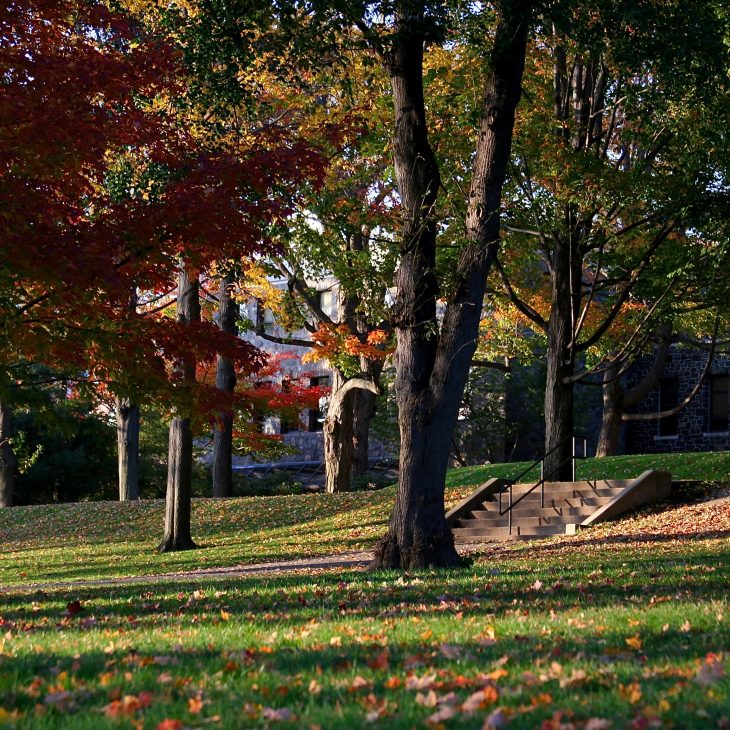
Three leaders in the University Chaplaincy at Tufts University share their conversation on the current pandemic and how Interfaith Leadership helped them prepare. The dialogue below is from Shelby Carpenter, University Chaplaincy Program Coordinator, Jennifer Peace, Tufts University Chaplain ad interim, and John Lazur, Program and Outreach Student Assistant The questions in this constructed conversation were created by Shelby Carpenter and John Lazur who hope this dialogue can inspire, nudge, or nourish our readers in this moment, when we may need to seek out glimmers of hope.
Jennifer Peace (she/her/hers): How did your interfaith work at Tufts this past year prepare you to respond to the campus’ closure due to Covid-19?
John Lazur (they/them/theirs): I realized how much interfaith work had shaped the way I see our campus culture the night that we heard about our campus closure. It felt important for me to be in a space, where I’ve been able to ground myself and find a little peace in moments of crisis: Goddard Chapel, which houses the University Chaplaincy’s main office. It also felt like that’s what some on the campus needed – a space open for snacks, tea or just a quiet space to sit. To me, that space offers a place to sit with the uncertainty without necessarily demanding answers to questions that we couldn’t imagine answering at that point.
Shelby Carpenter (she/her/hers or they/them/theirs): Something that interfaith work has instilled in me is an awareness of the emotional and spiritual landscape around me. When I saw the campus closure announcement, I felt like everything that I have been trained to do kicked in: connect with my colleagues and open a space on campus for students if they want it. Having our staff on-hand and opening a space for people to be together felt like the least that we could do in this heightened moment emotionally.
After talking with Jenny and our Program Manager, I sent a group message to the Interfaith Student Council, a cohort of student leaders we’d been working with all year, and asked them, “Do you all want Goddard Chapel open tonight?” John was the first person to respond, saying “Yes, I want that,” and others quickly agreed. Without prompting, John posted all over our class Facebook pages, then I got onto our office Instagram. I had no doubt that the word would be spread to the folks that needed to hear it.
Jennifer Peace: Interfaith work really helps us in moments of crisis, like this Covid-19 outbreak. Interfaith work is relationship building work. It’s a network of relationships that are in place when you need them most. We were able to activate those networks quickly, rather than trying to create them on the spot. This response made a big difference for a lot of people in the following days on Tufts’ undergraduate campus.
Jennifer Peace: How have you been approaching interfaith work with your communities under these new circumstances?
Shelby Carpenter: As we’ve restarted our programming, I’ve been considering this idea of providing “scaffolding” for our students. I don’t need to present them with a fully built house, but I can say, “Here’s a doorway, come on in,” – virtually, of course. For our Interfaith Student Council, this scaffolding looked like a poll in our group message, asking, “Do you want to meet this week or next week?” The question wasn’t “Do we, or should we, meet again?” Grief and major upheavals in someone’s life can impact functioning. Sometimes limiting the number of options is actually more freeing. I wanted to make sure students knew that while many things have changed, this work is still present and valuable. I invited students, who were so dedicated pre-campus closure, pre-global pandemic, to see that their dedication could still drive us to create many beautiful things together for our communities.
John Lazur: Since our physical campus closed, I’ve seen the way that our Humanist Chaplain, Walker Bristol, has opened a virtual space for students. Walker invited us to come as we are and share how we were doing. We entered a virtual space where we could reconnect with one another and find the space to ground ourselves with some degree of normalcy and routine.
Jennifer Peace: Interfaith work values and honors the differences among us and also what connects us as human beings. That combination really allows for the thoughtful creation of space where people – with the range of identities that define who we are – are genuinely invited to come as they are, as John described. Right now, there might be parts of yourself that you’d rather leave outside, but we need all the people and all the parts of each of us to respond wholly and fully.
Moments of crisis draw on our strengths and expose our vulnerabilities. In any healthy community, there’s a beautiful balance of those two aspects; you don’t have to have all the strengths and you don’t have to feel like you are carrying all the vulnerabilities. We’re all there to do this work collectively and that creates a really strong sense of support.
Jennifer Peace: What are some key features of your interfaith work this year that have allowed you to re-engage and support students?
Shelby Carpenter: In this current climate, I think an important part of our work is to (re)empower our students. My approach to interfaith work at Tufts is to reinforce for our students that their lived experience provides them with a great wealth of knowledge and insight.
John Lazur: An integral part of my experience on the Interfaith Student Council has been being considered a source of knowledge and working together to generate this wisdom. It has been really empowering to be asked, “What do you think? What stands out to you?” Through interfaith work, I’ve also become more comfortable with ambiguity. Developing this muscle to sit with ambiguity has been important for me since the closure of campus.
Jennifer Peace: One note of hope for me is the innovation and the creativity I’ve seen as we’ve moved to a virtual chaplaincy model. The needs remain even if the means must change. Interfaith work is as relevant now, if not more so, than it was before this pandemic.
Share
Related Articles
American Civic Life
Is This a Time for Bridgebuilding? 5 Leaders in Conversation
American Civic Life
Faith Based Efforts Work in Vaccine Uptake: Now Let’s Make it Easy
American Civic Life
We Commemorate, We Commit: Out of Catastrophe, a Conversation on Connection and Repair