We Need Equity and Justice in Vaccine Distribution. The Church Can Help.
February 18, 2022
(RNS) — Though we in the United States seem to be on the downslope of the latest surge of COVID-19, many countries are still in the thick of the fight against the omicron variant. Scientists warn that another variant could send our numbers back up at any time. So far, we know of only one good answer: vaccines.
But if vaccines are the key to controlling the pandemic and preventing more death and disruption, the U.S. continues to struggle to get a majority of its own population vaccinated, and the world’s poorest nations remain wildly undervaccinated. Fewer than 1% of all doses administered so far have gone to low-income nations.
This inequity in vaccine distribution is dangerous, experts have long warned, as it helps incubate more COVID-19 variants. An aggressive virus given free rein over a population will thrive and adapt, and then it will spread globally. COVID-19 has done so repeatedly.
But Christians should also recognize vaccine inequity as an obvious moral concern. We need equity and justice in vaccine distribution, and we need it soon.
Low-income nations have been relying on other nations’ vaccine surpluses as they suffer under the ongoing pandemic, but variants like these have increased demand for the boosters.
This drives a troubling cycle: Boosters administered by more wealthy nations in response to new variants means fewer surplus vaccines available for poor nations, which, in turn, accelerates the development of new strains.
This dynamic may seem intractable, but it’s not, so long as we prioritize boosters for those most in need and change the way we think about vaccine supply and administration.
The Biden administration has shipped 9 million COVID-19 vaccines to Africa and another 2 million to other parts of the world. This is a step in the right direction. We need a steady, generous supply of vaccines globally, and this is a start.
But we also must correctly prioritize who gets the vaccines currently in circulation. Taking care of the immunocompromised first will slash the risk of new variants. We need to change our mitigation tactics as well. It’s a combination of prevention and vaccination, not one or the other.
We also need to emphasize other, complementary means of vaccine supply. Donations, while crucial at this stage, aren’t enough to end the pandemic. Donations are a short-term response to a crisis, not a solution. The next step is to build up existing infrastructure.
This means transferring manufacturing capacity and making the technology fully replicable to places outside the U.S. and Europe. We can and should lift restrictions on vaccine and vaccine supply exports, as the World Health Organization has suggested. We could also invest directly in other nations’ vaccine manufacturing capacity.
Some nations have already begun this work. So far, 12 vaccine production facilities across six countries are either planned or already set up in Africa to help address the continent’s staggeringly low vaccination rate.
The U.S. and Europe have already begun to invest in or support some of these operations, such as the South African Biovac Institute. But many of these facilities are only equipped to do “fill-and-finish” manufacturing, using imported materials to produce a finished vaccine. This many-step process slows the response to urgent vaccine needs. It’s another partial solution — good, but not good enough.
A better long-term model is Senegal’s globally funded vaccine manufacturing hub. Once running, it’s expected to churn out 25 million vaccine doses each month. It will be run by the only WHO-authorized vaccine production facility on the entire continent. Importantly, this solves the problem of consistent vaccine availability: It’s sustainable; it’s ethical; and it requires all of us to get involved.
The Biden administration can and ought to join with other wealthy nations, the COVAX initiative and other global efforts to provide funding that makes sure these solutions can go into effect and remain in effect. The administration should commit to a clear plan for supporting and guiding these efforts.
It’s also crucial that future plans intentionally incorporate organizations that already have relationships of trust in areas that need the most help. We should partner with entities with deep roots in their local communities and utilize their infrastructure.
This includes mobilizing the church to speak out on behalf of vaccine inequity.
Getting shots in arms isn’t just about making sure the doses are available. It’s also about trust. After all, we’re not vaccinating a “population”; we’re vaccinating people. Addressing vaccine inequity isn’t just a logistical problem; it’s a human problem.
This is especially true where vaccine hesitancy is a serious problem. The Africa Centre for Disease Control found that many see COVID-19 vaccines as less safe than other vaccines. They’re worried about side effects, efficacy and their own wellbeing.
In nations with low trust in government, there are, unsurprisingly, correspondingly low rates of trust in the vaccine. Why would anyone choose to be vaccinated when the resources they trust the most, the people they know, are encouraging them not to get it?
This is why the church is so crucial. A local pastor or imam will persuade based on relationships with people who receive care and love from that faith leader on a weekly basis, not with information that is confusing even for the well educated.
World Relief’s SCOPE program, which is short for Strengthening Community Outcomes through Positive Engagement, works with faith leaders at the local and national levels, answering their questions and concerns and equipping them to share what they have learned and to address misinformation in their communities.
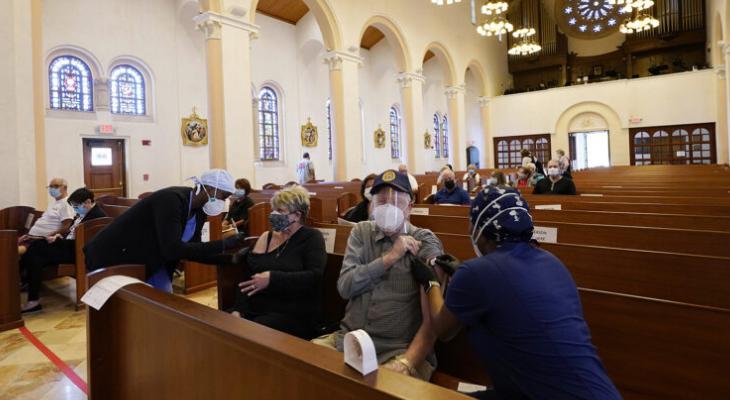
But the church has a major role to play in the United States as well. U.S.-based churches can advocate for vaccine equity and encourage distribution and manufacturing practices that empower and strengthen brothers and sisters around the world.
The church can engage with public health leaders to get clarity and facts, knowing that it takes hearts and minds and strength to fight this good fight. Churches in the U.S. can also give generously to organizations like World Relief to spread this work and support families impacted by COVID-19 worldwide.
American interests are now — and always have been — bound tightly to the welfare of the world. It’s time to act on it.
(Lanre Williams-Ayedun is the senior vice president for international programs at World Relief. Myal Greene is the president and CEO of World Relief. The views expressed in this commentary do not necessarily reflect those of Religion News Service.)
Share
Related Articles
American Civic Life
Faith Based Efforts Work in Vaccine Uptake: Now Let’s Make it Easy
American Civic Life
American Civic Life