• About Us
    • Mission & Vision
    • Team
    • Eboo Patel
    • Adam Nicholas Phillips
    • Board of Directors
    • Reports & Financials
  • Where We Work
    • Higher Education
      • Senior Leaders
      • Faculty
      • Students
    • Workplace
      • Health
    • Civic Life
      • Emerging Leaders
      • The Team Up Project
  • Get Involved
    • The Learning & Action Bridge
    • Courses, Curricula & Tools
    • Grants & Leadership Awards
    • Events
    • Campus Training & Consulting
    • Corporate Training & Consulting​
    • Speaking
  • Magazine
    • Interfaith America Magazine
    • Voices of Interfaith America
    • Money, Meet Meaning
    • Press
  • Join Us
    • Subscribe
    • Support Us
    • Our Supporters
    • Careers
    • Contact Us
  • About Us
    • Mission & Vision
    • Team
    • Eboo Patel
    • Adam Nicholas Phillips
    • Board of Directors
    • Reports & Financials
  • Where We Work
    • Higher Education
      • Senior Leaders
      • Faculty
      • Students
    • Workplace
      • Health
    • Civic Life
      • Emerging Leaders
      • The Team Up Project
  • Get Involved
    • The Learning & Action Bridge
    • Courses, Curricula & Tools
    • Grants & Leadership Awards
    • Events
    • Campus Training & Consulting
    • Corporate Training & Consulting​
    • Speaking
  • Magazine
    • Interfaith America Magazine
    • Voices of Interfaith America
    • Money, Meet Meaning
    • Press
  • Join Us
    • Subscribe
    • Support Us
    • Our Supporters
    • Careers
    • Contact Us
Subscribe
Support Us
Civic Life

Running Thread: Art, Iconoclasm, and Religious Diversity

By
Tony Banout

January 23, 2023

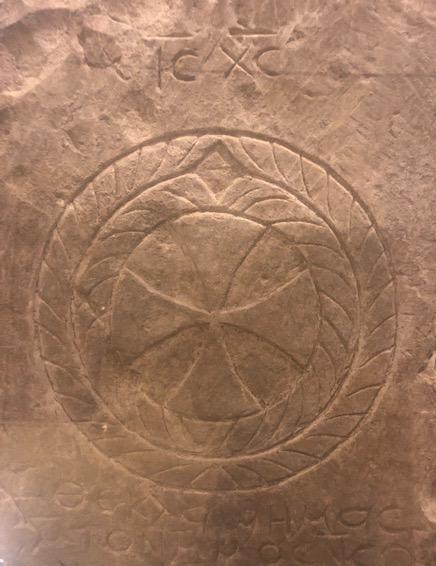
Third century headstone in Luxor, Egypt. Photo credit: Tony Banout

One of my favorite pieces of art is a bold creation of the Jewish artist Marc Chagall. It bewilders and vexes.

Initially, it hit home but I couldn’t say fully what it meant. Was it Keats or Yeats who said good poetry connects in transcendent meaning and then we seek to articulate what we can of our understanding in mundane language? That can be said of all good art, and that’s how I felt about the “White Crucifixion.” It’s a counterpoint, for me, of another great cruciform piece from a different master of color and line: Georgia O’Keeffe’s “Black Cross, New Mexico.” Both pieces are held, luckily for Chicagoans, at the Art Institute of Chicago — a  short walk from IA’s offices.

Chagall is lush in detail, and plain in the integration of Jewish persecution throughout the piece. Pogroms, refugees, burning villages, advancing troops, a fearful mother clutching her babe, the Biblical patriarchs and a sole matriarch in mourning, the Torah in flames. And then of course, Jesus, in a Jewish prayer shawl for his loincloth and a headcloth for his crown of thorns. Appropriation? I don’t think so. My own Christianity welcomes such depiction – and Jesus, I believe, is appropriately situated in his Jewishness. O’Keeffe’s piece emerges out of the sparse New Mexican desert, unadorned and regal.

Thinking about these pieces in light of recent conversations around the uses of religious imagery, I couldn’t help but think of a historical intra-Christian tension and continued practices around depictions of Jesus on (or absent from) the cross. The Catholic crucifix is defined by its inclusion of Jesus dying on the cross, emphasizing his torture and death. That bodily depiction is largely absent in renditions of the cross in the Churches of the Reformation. I have seen both in Orthodoxy, but my favorite and most ancient Coptic Orthodox crosses do not include Jesus – they mimic the aridity O’Keeffe saw in a different desert. Here’s one from my personal photos taken from a 3rd century headstone in Luxor, Egypt.

As for the raging intra-Christian tension, consider iconoclasm in Byzantine Christianity in the 8th and 9th centuries. Imperial and religious authorities literally smashed images – icons – of saints and religious figures. Reasons for this are debated by historians, who often see imperial and economic interests intersecting with theological interpretations of foundational precepts. Take, for example, the Ten Commandments and the prohibition of “graven images or likenesses” in Deuteronomy 5:8.

The work of IA emphasizes that religious diversity matters in a unique way because it deals with the different things people hold most sacred. I believe that this lies at the root of religious difference and differentiates religious diversity from other forms of diversity. Religious difference overlaps with other forms of identity and belief but remains different in kind from gender, sexuality, race, or ethnicity. And, of course, debates over what is and is not sacred are present within traditions themselves. Some would say that those debates actually constitute traditions.

So what are we talking about when we talk about religion? Should you choose to go further I would recommend the ongoing column by that title in Criterion, by The University of Chicago Divinity School. It is more than meets the eye, stirs the heart, beckons the conscience, captures the imagination … and then some.

Share

Related Articles

  • Civic Life

    Where Religious Identity Fits into Your Diversity Strategy

  • Civic Life

    Time for Business to Get Religion

  • Civic Life

    Religious Diversity: Corporate Obstacle? Or Asset?

Interfaith America Magazine seeks contributions that present a wide range of experiences and perspectives from a diverse set of worldviews on the opportunities and challenges of American pluralism. The opinions expressed herein do not necessarily reflect those of Interfaith America, its board of directors, or its employees.

Latest Articles

Demonstrators organized by CU Stands Up hold a silent vigil near Columbia University in New York City. (Photo by Tanya Raghu)
  • Campus

With Limits on Campus Protests, Quieter Vigils are the Growing Voice of Protest

Jan 13, 2026
Video Screenshot of Cherie Harder and Chris Crawford in discussion.
  • Civic Life

Cherie Harder on Pluralism and Virtue in a Diverse Democracy

Jan 13, 2026
View of American clergyman and civil rights campaigner Martin Luther King Jr (1929  - 1968) (centre) and others as they sit in First Baptist Church, Montgomery, Alabama, May 22, 1961. (Photo by William Lovelace/Express/Getty Images)
  • Civic Life

Listen, Read, and Watch: 3 Stories for MLK Day

Jan 12, 2026
Holy Quran books in a row standing on a wooden shelf inside a mosque, English translation of the Arabic Text (The Holy Noble Quran), it's the central religious text of Islam, revelation from God Allah, selective focus
  • Civic Life

Generous Gifts, Radical Openness: Adding the Quran to My Bookshelf

Jan 06, 2026
End of content
No more articles to load
Interfaith America, 141 W. Jackson Blvd, Suite 3200, Chicago, IL 60604, US

© 2024 Interfaith America

Instagram Youtube Facebook X-twitter Tiktok
  • Privacy Policy
  • Terms of Use

Copyright @ 2024 Interfaith America. All Rights Reserved. Interfaith America is 501 (c)(3) non-profit recognized by the IRS. Tax ID Number: 30-0212534

Corporate EVENT
Faculty at the 2025 Teaching Interfaith Understanding seminar in Chicago, Illinois in June 2025.
Interfaith Summit 2025
Faculty at the 2025 Teaching Interfaith Understanding seminar in Chicago, Illinois in June 2025.
Interfaith-11.12.25-463
Interfaith-11.12.25-379
Interfaith Summit 2025
Students at the 2025 Interfaith Leadership Summit.
FacultySeminar25-KF-603
FacultySeminar25-KF-408

Subscribe

Join the network for our latest Magazine articles, resources, and funding opportunities!

Join Us