Next Year in Kyiv?
February 24, 2022
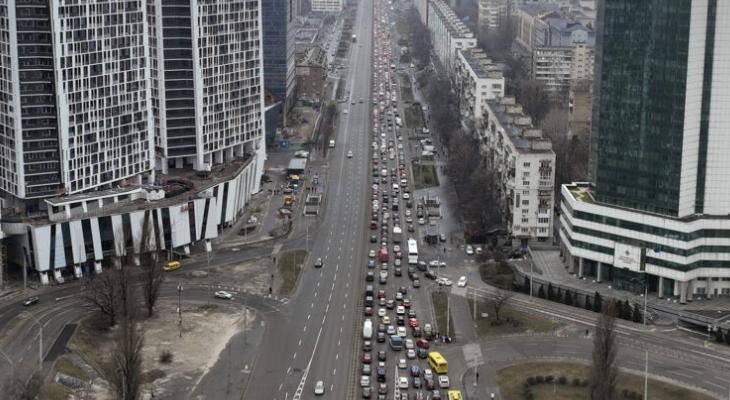
(RNS) — While the secular media tries to guess Vladimir Putin’s motives in Ukraine, one important aspect of the current situation has gone largely ignored: religion.
I’m no expert in Eastern European history, but my training in church history offers a lens into the events in Ukraine. In effect, the world is witnessing a new version of an old tale — the quest to re-create an imperial Christian state, a neo-medieval “Holy Roman Empire” — uniting political, economic and spiritual power into an entity to control the earthly and heavenly destiny of European peoples.
The dream gripping some quarters of the West is for a coalition to unify religious conservatives into a kind of supra-national neo-Christendom. The theory is to create a partnership between American evangelicals, traditionalist Catholics in Western countries and Orthodox peoples under the auspices of the Russian Orthodox Church in a common front against three enemies — decadent secularism, a rising China and Islam — for a glorious rebirth of moral purity and Christian culture.
In the United States, Trumpist-religion is most often framed as “Christian nationalism.” It is, indeed, that. But it is also more — it is the American partner of this larger quest for Christian internationalism. No one has articulated this more clearly than Steve Bannon, who, despite his legal troubles, remains a significant force as a kind of philosophical apostle in right-wing Christian circles for a neo-Christendom.
There have been a few bumps on the way to this Humpty Dumpty hope of reassembling a Christian Roman Empire, however. Interestingly enough (and I’ll leave this to future historians to sort out), American evangelicals bought into this neo-medieval project wholesale, having been prepared for far right nationalism by their fondness for racial and gender hierarchies. The most democratic form of Protestantism will evidently sell its soul to keep Black people and women in their “place.”
The hardest partner to recruit to neo-Christendom has been the Catholic Church. The election of Pope Francis in 2013 proved a major stumbling block for the emergence of a right-wing global political order. The new pope eschewed all such schemes in favor of opening up the church to the poor, outcasts and the marginalized with a social vision that questions capitalism and the destruction of the Earth. Neo-medieval Catholics — often referred to as “trad Caths” — haven’t taken this well and have mounted a decade of resistance to Francis that may well culminate in something like the Avignon schism of the 14th century. So far, however, Pope Francis remains in charge.
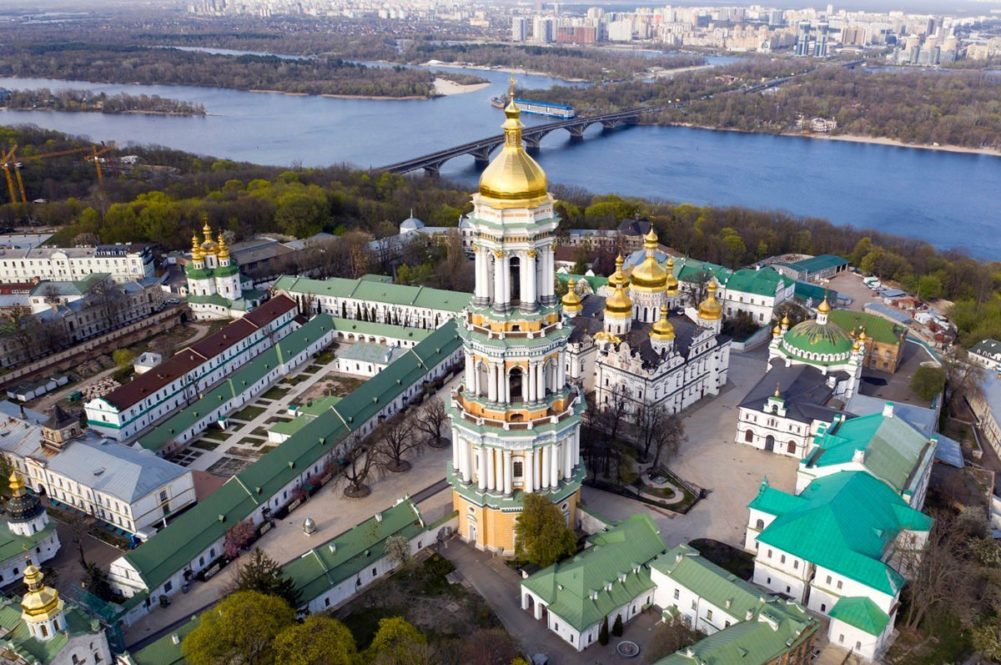
An aerial view of the ancient Kiev Monastery of the Caves in Kyiv, Ukraine, April 13, 2020. (AP Photo/Efrem Lukatsky)
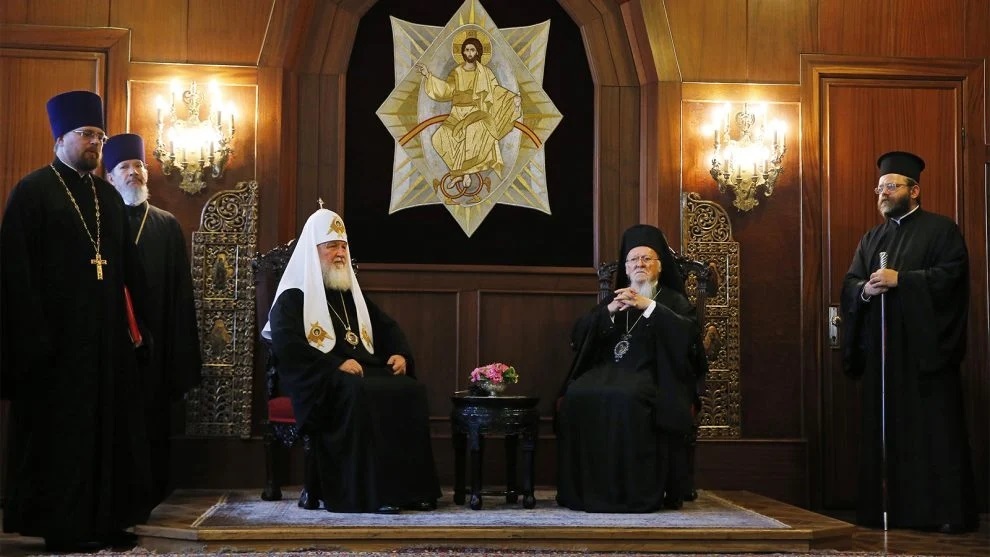
Ecumenical Patriarch Bartholomew I, center right, the spiritual leader of the world’s Orthodox Christians, sits with Patriarch Kirill of Moscow, center left, prior to their meeting at the Patriarchate in Istanbul on Aug. 31, 2018. (AP Photo/Lefteris Pitarakis)