Civic Life

King’s Last Full Year of Life: Protest, Praise, Ire, Incarceration

January 13, 2022
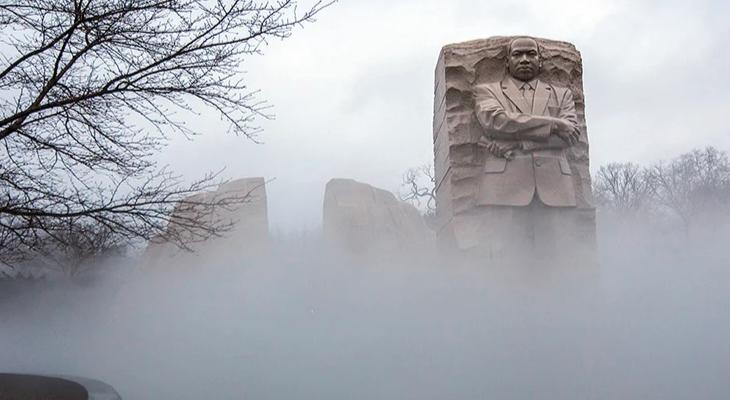
(RNS) — While Martin Luther King Jr. Day is mostly commemorated with quotes and clips of King’s 1963 “I Have a Dream” speech and footage of bus boycotts and the 1965 march from Selma to Montgomery, Alabama, some of the most important moments of King’s work came later, as he turned his attention from civil rights to poverty and the Vietnam War.

As he made more appearances in Northern cities to protest segregation and unequal treatment of Black Americans, King’s popularity began to drop. Surveys of the American public as well as statements from some clergy and activists showed the cost of shifting his focus away from the South and Jim Crow after the passage of the Civil Rights Act.

In 1967 — the last full year of his life before he was killed in Memphis, Tennessee — Religion News Service (then known as Religious News Service) published dozens of stories about King, chronicling how his growing outspokenness against the Vietnam War and his advocacy for the poor, while it garnered support from celebrities such as Dr. Benjamin Spock, drew criticism from evangelist Billy Graham and others.

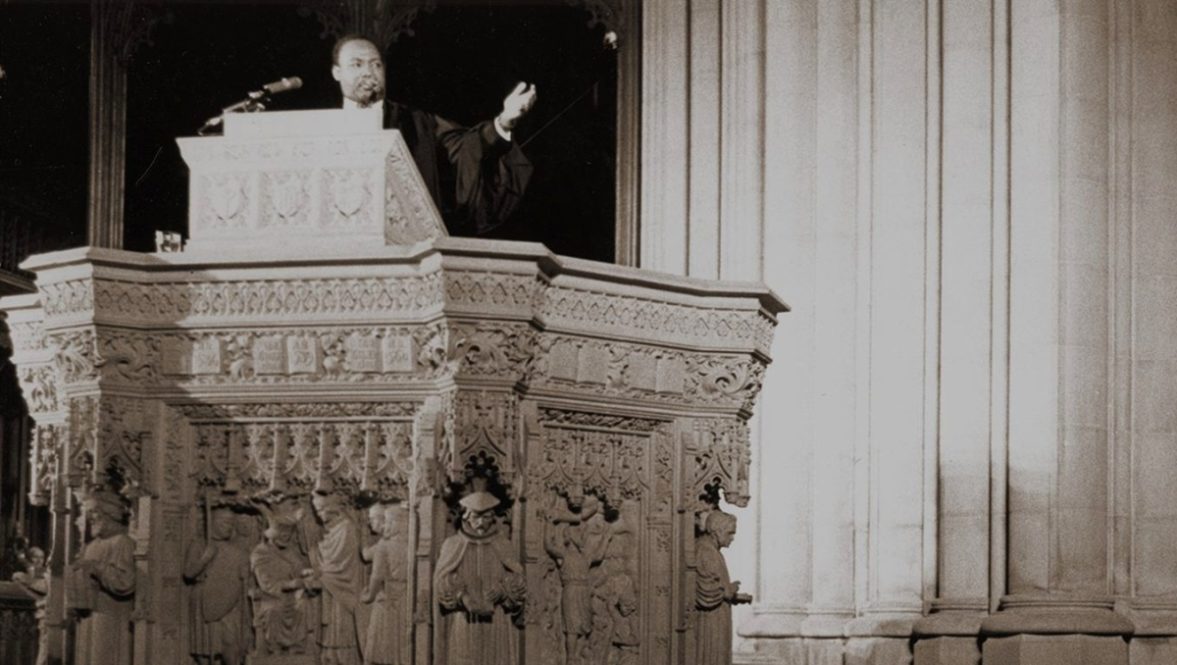
The Rev. Martin Luther King Jr. discusses his planned poor people’s demonstration from the pulpit of the Washington National Cathedral in Washington, D.C., on March 31, 1968. (AP Photo)
The Rev. Martin Luther King Jr. discusses his planned poor people’s demonstration from the pulpit of the Washington National Cathedral in Washington, D.C., on March 31, 1968. (AP Photo)

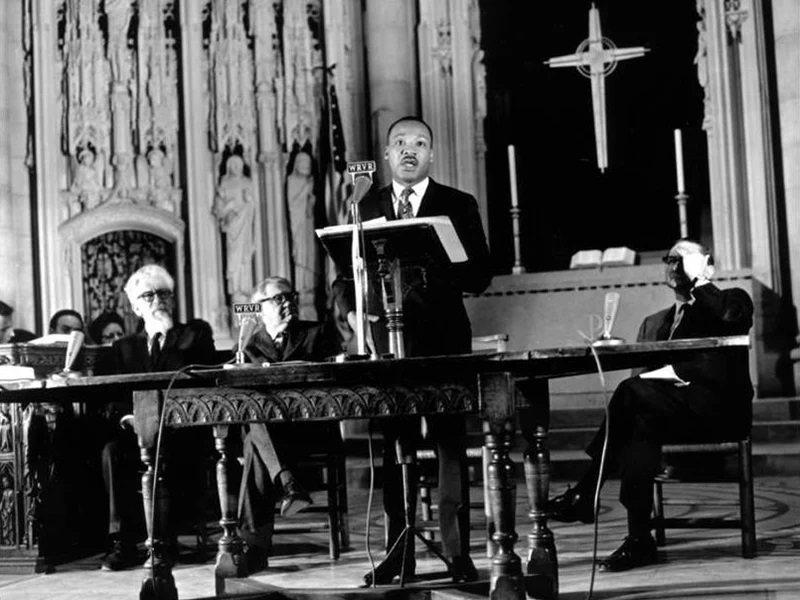
The Rev. Martin Luther King Jr. speaks about his opposition to the war in Vietnam at Riverside Church on April 4, 1967, in New York. RNS file photo by John C. Goodwin
The Rev. Martin Luther King Jr. speaks about his opposition to the war in Vietnam at Riverside Church on April 4, 1967, in New York. RNS file photo by John C. Goodwin

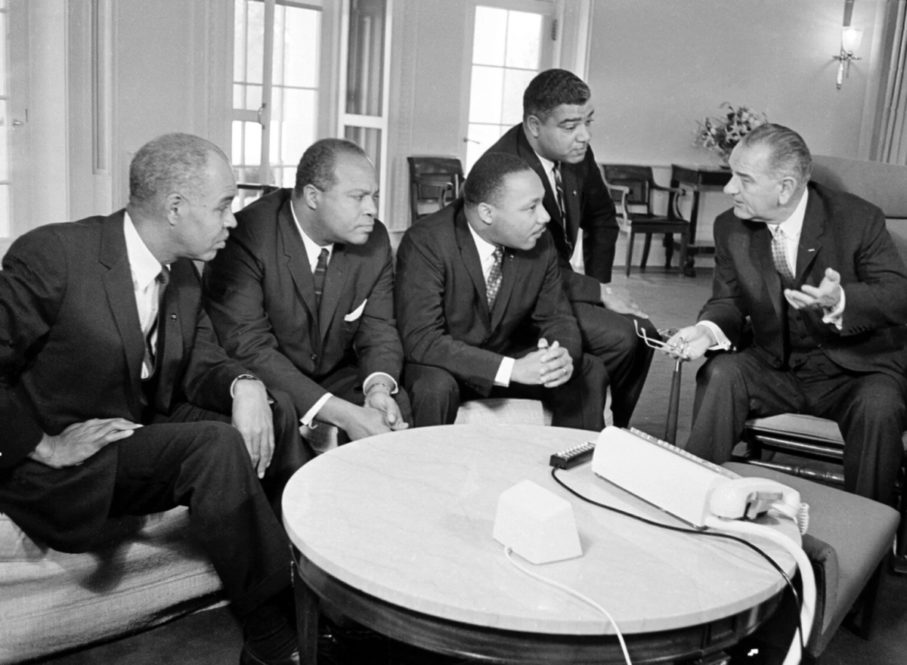
President Lyndon B. Johnson, right, talks with Martin Luther King Jr. and other civil rights leaders in his White House office in Washington, D.C., Jan. 18, 1964. (AP Photo)
President Lyndon B. Johnson, right, talks with Martin Luther King Jr. and other civil rights leaders in his White House office in Washington, D.C., Jan. 18, 1964. (AP Photo)

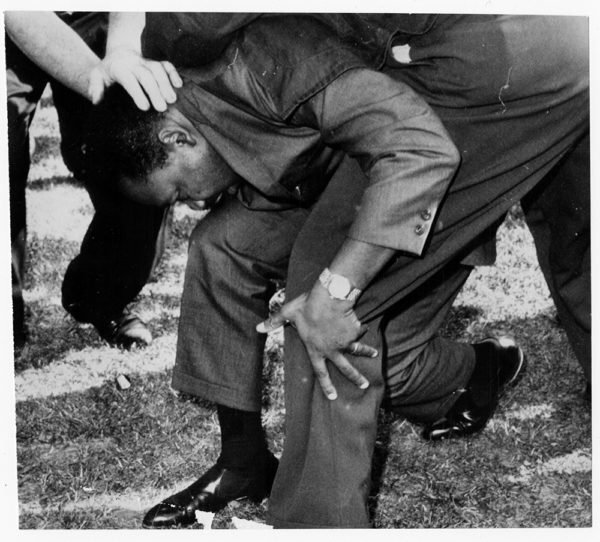
The Rev.. Martin Luther King Jr. is struck by a rock during a march in Chicago on Aug. 5, 1966. RNS archive photo
The Rev.. Martin Luther King Jr. is struck by a rock during a march in Chicago on Aug. 5, 1966. RNS archive photo

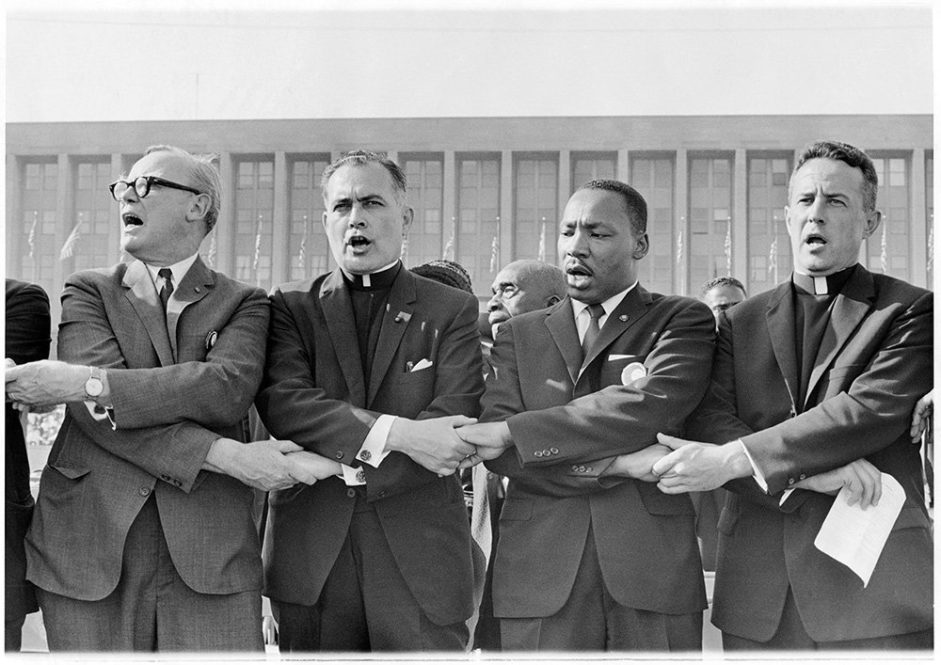
The Rev. Theodore Hesburgh, center left, holds hands with the Rev. Martin Luther King Jr. while singing “We Shall Overcome” during a civil rights rally at Soldier Field in Chicago on June 21, 1964. Photo courtesy of OCP Media
The Rev. Theodore Hesburgh, center left, holds hands with the Rev. Martin Luther King Jr. while singing “We Shall Overcome” during a civil rights rally at Soldier Field in Chicago on June 21, 1964. Photo courtesy of OCP Media

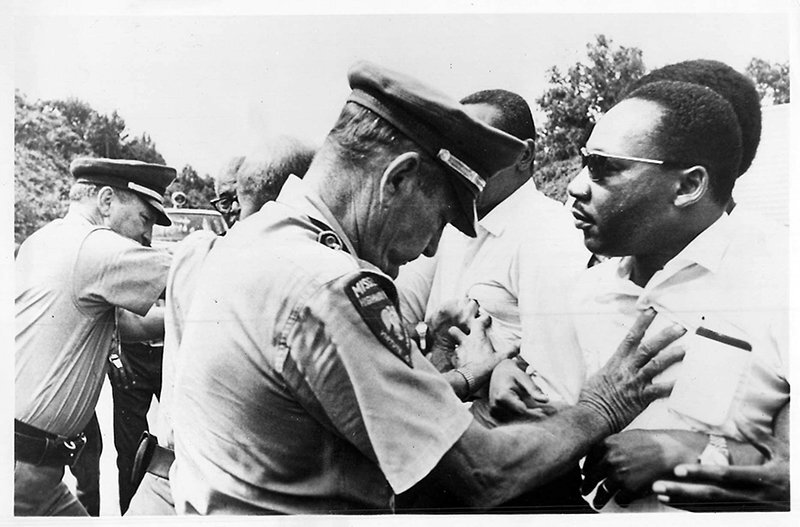
The Rev. Martin Luther King Jr., right, and other civil rights leaders, are pushed off the road as they resume a voters march begun by James Meredith. Religion News Service file photo
The Rev. Martin Luther King Jr., right, and other civil rights leaders, are pushed off the road as they resume a voters march begun by James Meredith. Religion News Service file photo

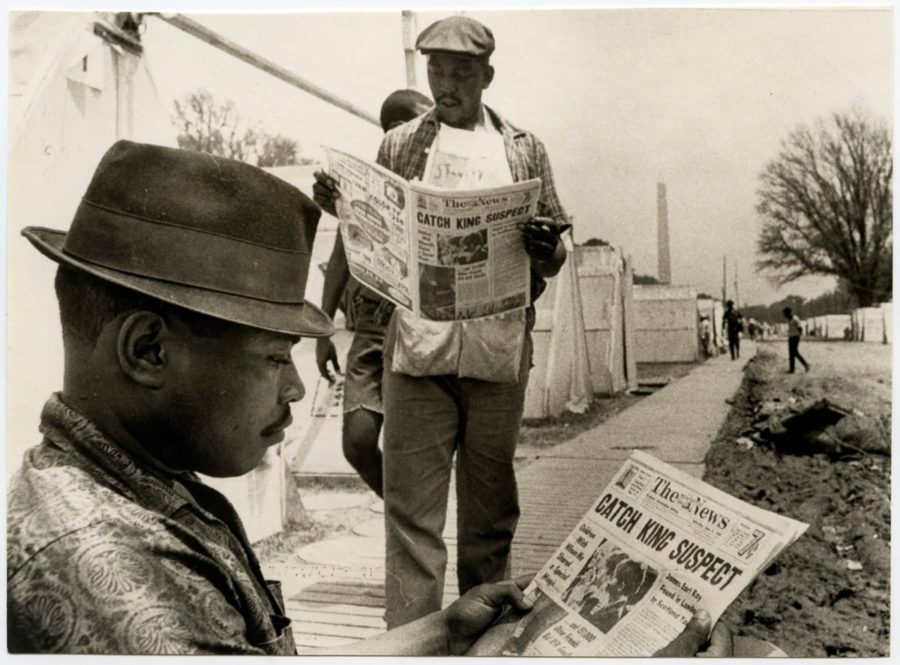
Inhabitants of Resurrection City, home of the Poor People’s Campaign in Washington, read newspaper accounts on June 8, 1968, of the capture of James Earl Ray, the accused assassin of the Rev.. Martin Luther King Jr., in London. Announcement of the capture was read over the public address system in the campsite. RNS archive photo. Photo courtesy of the Presbyterian Historical Society

Inhabitants of Resurrection City, home of the Poor People’s Campaign in Washington, read newspaper accounts on June 8, 1968, of the capture of James Earl Ray, the accused assassin of the Rev.. Martin Luther King Jr., in London. Announcement of the capture was read over the public address system in the campsite. RNS archive photo. Photo courtesy of the Presbyterian Historical Society
Interfaith America seeks contributions that present a wide range of experiences and perspectives from a diverse set of worldviews on the opportunities and challenges of American pluralism. The opinions expressed herein do not necessarily reflect those of Interfaith America, its board of directors, or its employees.

Join us today!

Let’s build an interfaith America, where people of all beliefs work together for the common good.

Join the Network

Resources, funding opportunities, and articles tailored to you!