
Imagine the following scene on a college campus during the pro-Palestinian protests earlier this spring:
Rachel, a Jewish student, approaches the encampment with curiosity and trepidation. She’s greeted by Amira, a Muslim student handing out flyers.
“Hi there, would you like to learn more about what’s happening in Palestine?” Amira asks.
Rachel hesitates. “I’m not sure. As a Jew, I feel a strong connection to Israel. But I know the situation is complicated …”.
Amira nods. “It absolutely is. But I believe that as people of faith, we have a shared responsibility to stand up for justice and human rights. Here, this flyer explains our perspective …”.
As the two students begin a thoughtful dialogue, they embody the kind of interfaith engagement urgently needed in our polarized society. Their exchange, grounded in mutual respect and a desire to understand each other’s perspectives, points the way forward.
In my work on religious liberty and following religious trends in the U.S. — including at the Supreme Court — I have observed how faith-related issues increasingly map onto and intensify our socio-cultural divides, influencing everything from legal battles to electoral politics. The widening polarization in American society is often mirrored in religious affiliations, with religion playing a central role in shaping individuals’ cultural and political identities. This intersection of religion and politics has profound implications for policy-making and social cohesion.
Recent headlines underscore this point: In Oklahoma, the state-mandated incorporation of the Bible into public school lessons raises debates about cultural heritage vs. church-state separation. In Louisiana, a new law requiring the Ten Commandments in classrooms has been both praised as reflecting religious heritage and critiqued as an unconstitutional imposition of religion. A leaked recording of Justice Alito advocating a “return to godliness “highlighted ongoing concerns about religious conservatism’s influence on the Supreme Court.
Gallup research reveals a widening “religiosity gap” between Republicans and Democrats, with religious individuals increasingly leaning Republican. Concurrently, studies suggest that for some evangelicals, the label is becoming more of a cultural-political identifier than a theological one, as small numbers of Muslims, Hindus, and Jews now also identify as evangelical. This reflects the increasing intertwining of religion and politics, with religious labels often serving as proxies for broader value sets.
Americans can model a thoughtful, inclusive engagement with the power and complexity of faith in public life.
Both parties must recognize the profound role of faith in providing meaning, purpose, and community for many Americans. Democrats must find ways to engage authentically with faith without alienating secular supporters. This requires acknowledging the rich diversity within religious communities, emphasizing shared values of justice and compassion, and robustly defending religious liberty for all.
Republicans can harness religious conviction for the common good by adopting a more inclusive, constructive vision of faith in the public square. This could involve partnering with diverse religious leaders to collaboratively address social ills, drawing on the unique resources of each tradition.
The recent Israel-Palestine protests, which saw passionate engagement from diverse faith groups, highlighted the urgent need for interfaith dialogue and peacebuilding but also revealed the range of views present within religious communities. Jewish groups held contrasting positions, some defending Israel’s actions as necessary and others criticizing occupation and advocating for Palestinian rights based on religious values. Christian groups appealed to theological notions of love, justice, and reconciliation, while Muslim communities, deeply connected to the Palestinian cause, highlighted issues of justice, human dignity, and the sanctity of religious sites. Engaging this full spectrum of religious perspectives is vital.
Political leaders must approach faith communities with genuine respect, humility, and a commitment to the common good, not just political expediency. Religion’s role should be neither immune from critique nor dictatorial over policy, but it should be engaged with empathy and understanding.
As we head into the 2024 election, Americans can model a thoughtful, inclusive engagement with the power and complexity of faith in public life. By seeking common ground and harnessing religious wisdom in service of justice and unity, we can move towards a society of greater solidarity – one conversation at a time, just like Rachel and Amira’s.
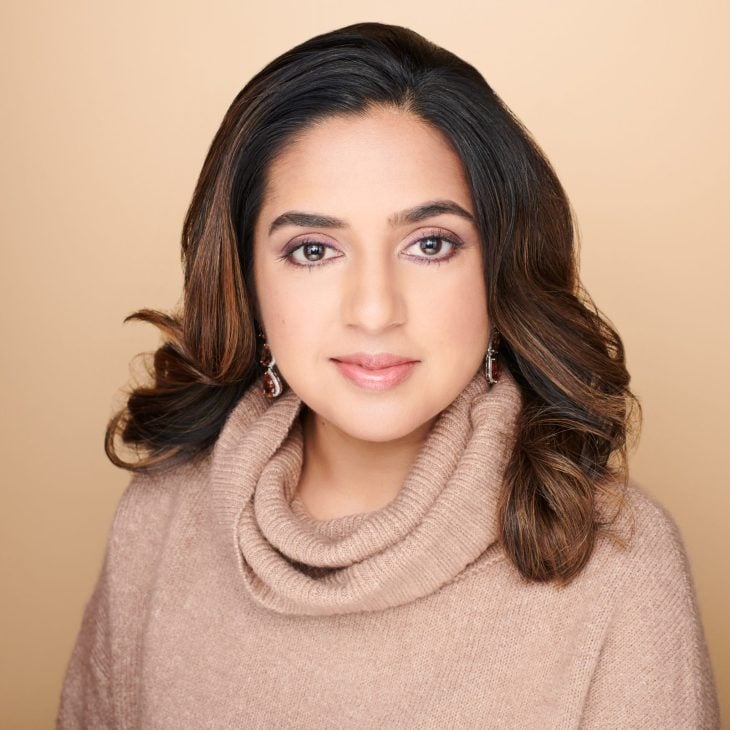
Asma Uddin
Asma Uddin is the author of When Islam Is Not a Religion: Inside America’s Fight for Religious Freedom and The Politics of Vulnerability: How to Heal Muslim-Christian Relations in a Post-Christian America. She is Visiting Assistant Professor of Law at Catholic University of America. Uddin is also a Fellow with the Aspen Institute’s Religion & Society Program in Washington, D.C., and a 2023 Sacred Journey Fellow at Interfaith America.