
How COVID-19 has Made the Lives of Aspiring Clergy More Daunting
December 27, 2021

(RNS) — Cooper Young, a second-year seminary student at Gordon-Conwell Theological Seminary in Massachusetts, knew he wanted to become a minister, but like many students in the past two years, his education has become a journey. Classes went from on campus and in person to online from home, and back again.
Meanwhile, since graduating from Syracuse University in 2020, Young has gone through other significant changes: He got married and, after an internship in Massachusetts, was hired as an assistant minister by his childhood church in Chittenango, New York. On the downside, he’d contracted COVID-19.
“I was still in my first year of marriage, but then on top of that, it’s a new job at a church of predominantly people over 55,” Young recalled. Charged with bringing in younger people in the middle of a pandemic, Young said he found himself fighting resistance to his ideas for growth while also fielding the congregation’s objections to the church leadership’s mask policies. “It didn’t seem like a lot was working,” he said.
The torrent of experiences — compounded by the fuzzy consciousness known as “COVID fog” — eventually impacted his mental health.
“I was having a panic attack at one point — the only time it’s ever happened in my life before,” Young said.
For many seminarians, Young is a harbinger of the difficulties many of them will face as they graduate into a religious landscape that has been transformed — spiritually, physically, politically and logistically — by COVID-19, and of the toll this new reality is taking on their mental health.
Share
Related Articles
American Civic Life
American Civic Life
American Civic Life
Faith Based Efforts Work in Vaccine Uptake: Now Let’s Make it Easy
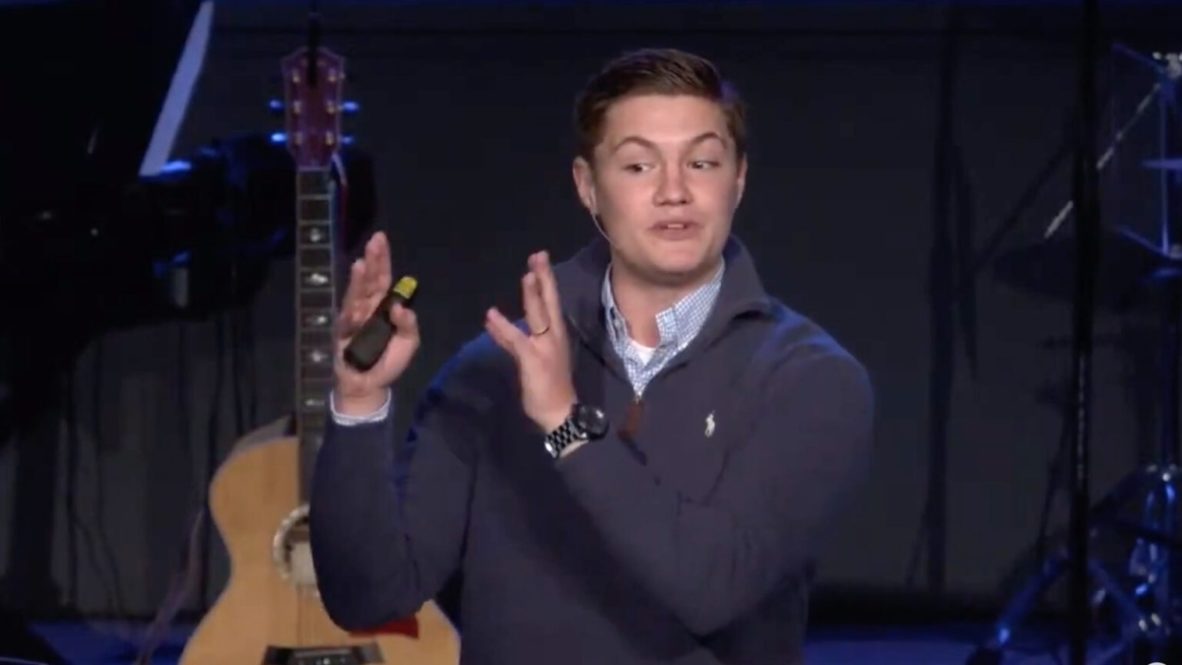
Pastor Cooper Young preaches at Crossroads Community Church in Chittenango, New York, on Dec. 19, 2021. Video screen grab
According to a recent Barna Group survey, pastors have increasingly been contemplating quitting their jobs since the beginning of 2021. In the same poll, female clergy members, like women across all industries, were found to be more likely to quit their jobs than male clergy.
Seminaries, like other institutions of higher education, have stepped up mental health services, but how much help students get can depend on the cultural climate of the school, as some schools may offer more services than others.
“Our school is pretty open about it, if you have mental health needs and we have mental health needs and we talk about it quite openly,” said Su Yon Pak, a dean and associate professor of integrative and field-based education at Union Theological Seminary in New York.
But the pandemic has put a greater focus on those struggling with their mental health, Pak said. “Because of all the constraints, the restraints, the quarantine, the fear of dying, people dying in the families, not being able to connect, absolutely. It’s not just students. We all struggled through it. It was really hard. And as a school we tried to put that upfront.”
Jay-Paul Hinds of Princeton Theological Seminary explained that the range of issues facing PTS students preparing for graduation only begins with the pandemic. “The isolation of COVID has something to do with it, the racial tension in this country, the political uncertainty has a lot to do with it. And for many people, the declining role of the church in our society is of major concern,” Hinds said.
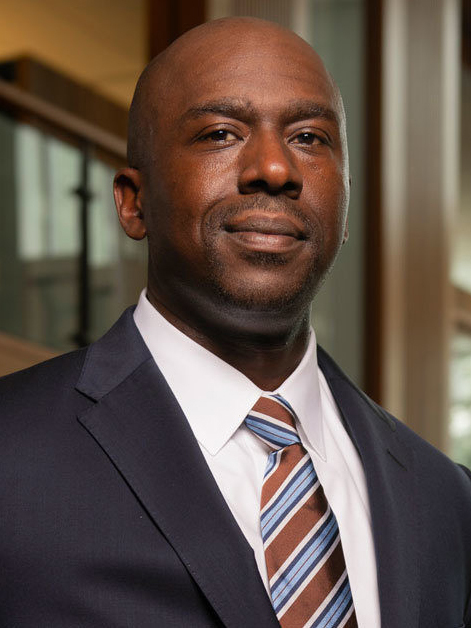
Jay-Paul Hinds. Photo via Princeton Theological Seminary
These increasing stressors of being a pastor in a pandemic are affecting the way many seminarians are thinking about their careers.
“It can put those who feel drawn to it at a crossroads when it comes to future employment, especially those looking to become ministers in the traditional sense of leading a congregation,” Hinds said.
One of Hinds’ colleagues, the Rev. Kenda Creasy Dean, a United Methodist minister and a professor of youth, church and culture at PTS, said those concerns are causing seminarians to look for other uses for their degrees. “Our students are far less likely to equate ministry with pastoring a church. They are very likely to see it as working with nonprofits and doing entrepreneurial stuff and … being in the helping professions in other ways, social work and other stuff.”
But given the needs of the church, and the inevitability that seminarians will hold a church job sooner or later, prospective clergy themselves are looking for ways to safeguard their mental health.
Young believes schools can do more to help their students’ mental health in this period by adjusting curriculum and workload. “I would love for there to be a ‘Less is more’ mentality,” he said, noting that some seminary texts essentially glorify unhealthily long hours.
Seminaries could design their programs to meet students where they are in their lives, Young said. Students with young children or other responsibilities at home as well as a job, he suggested, might be allowed to take classes without the additional work required outside of the classroom, and to move through the curriculum at their own pace.
But Young also offered that those making the transition from seminary to full-time work need to emphasize the positive. After his panic attack, he said, “I kind of readjusted my expectations and my attitude. I honestly came in pretty ignorant and not too gung-ho but wanting a quick fix instead of having to persevere.”
The turning point for Young was the young adult group that he and his wife started together, which they called Do Good, “not just for our church but for anyone who wants to come.”
Before long, he said, “people in the area I didn’t even know were checking out the church.” At the same time, he said, the uproar about mask wearing subsided as well.
“God was definitely moving and doing things,” said Young.
This article was produced as part of the RNS/IFYC Religious Journalism Fellowship Program.