Henry Louis Gates’ New Book and TV Series Distills Centuries of Black Church History
February 10, 2021
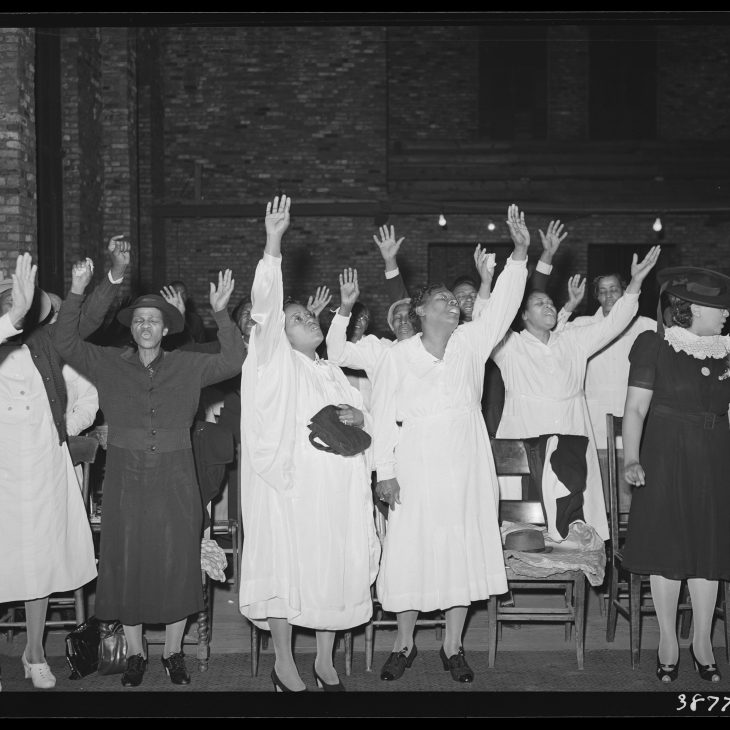
(RNS) — The history of Black Christianity in America will come to television screens this month in a documentary series based on a new book by Henry Louis “Skip” Gates Jr., a Harvard University historian who is simultaneously an admirer and a critic of its influential role in American society.
Gates’ book, “ The Black Church: This Is Our Story, This Is Our Song,” will be released Tuesday (Feb. 16), the same day the four-hour documentary will begin a two-day run on PBS stations, airing at 9 p.m. EST. Musicians John Legend and Yolanda Adams are featured in the series.
Gates, who describes himself as a “spiritual person,” said at a virtual news conference Friday (Feb. 5) that while he is a critic of the Black church’s history of male domination and homophobia, he has celebrated its culture and rejoiced in what it has overcome.
Gates said that during his summer visits to Martha’s Vineyard, he attends services at Union Chapel, which features prominent Black preachers. “We all come together to experience that circle of warmth,” he told Religion News Service at the news conference.
When Black people come together for worship, he said, it is “a celebration of our culture, our history, of who we are, of how we got over, how we survived the madness, the claustrophobic madness of hundreds of years of slavery and then a century of Jim Crow and then anti-Black racism that we saw manifest itself at the Capitol.”
The series captures the broad sweep of this history in interviews with scholars and well-known Black clergy such as African Methodist Episcopal Bishop Vashti McKenzie, Bishop T.D. Jakes and the Rev. William J. Barber II.
Stacey Holman, who produced and directed the series, spoke to Religion News Service recently about how she and Gates distilled centuries of history into the four-hour series, her thoughts on the Black church’s future and how Oprah Winfrey made the final call on the name of the documentary.
The interview has been edited for length and clarity.
You have worked on films about the Freedom Riders and historically Black colleges and universities. What struck you most about the Black church history you helped present with Henry Louis Gates Jr.?
What struck me was that we did not come here empty-handed. There were Africans who were practicing Muslims who were brought here in the transatlantic slave trade. That connection still exists today. A religion that is very actively practiced among Black people was here when this country was first being formed. Also, just how rich the history is and just how there’s so much connective tissue to Africa, to our worship and to our praise.
Mixed in with the interviews with scholars and clergy are the personal stories of Black celebrities about the Black church. Whose stories did you find to be particularly worth telling?
I think Kirk Franklin’s story was quite moving. He talked about his friend that he lost, who was killed, and someone who was a good kid, and he was not, so — one of those situations where it’s like, wow, God, you spared my life. And I think even John Legend’s story, hearing how the church has really informed his career, but also how he was brought up and raised going to church and then becoming the choir director.
You’ve worked with Gates before. Was this series different because the subject matter related to him personally? At one point he breaks into song with Episcopal Church Presiding Bishop Michael Curry and tells some of his faith story from the pulpit of the West Virginia Methodist church he joined at age 12.
Yes, very much so. When he was giving, as we say, his testimony, my crew was crying. It was just beautiful, just seeing him coming back home. When I have traveled to my grandparents’ church in southern Ohio, it was like that welcome home. And to see that with Skip just brought fond memories to me.
John Legend, who was an executive producer, as well as Shirley Caesar and Yolanda Adams talk about the importance of music. How did you address its influence in the Black church?
I think having those voices that you just mentioned was important. These are individuals who have used the music — John is more contemporary and pop and R&B, but there are definitely elements of the church in what he plays. Even Kirk Franklin, the crossover songs that they’ve had, just speaks to the richness that music has played over the centuries of the Black church.
The series shows various forms of faithful fervor, from ring shout to speaking in tongues. Why was it important to delve into that aspect of Black American faith?
I think that people think that’s all that the Black church is: We go in and people are hooting and hollering and jumping around. I think even just talking about the Great Awakening says, yeah, there were white folks doing it, too. So this whole idea of this fervor in worship is nothing new, but I think (the documentary is) really breaking it down so that people can understand the history of it. And it’s not an act. It’s a feeling. It’s an emotion that people get.
The show makes a revelation about the Rev. Martin Luther King Jr.’s inspiration for the phrase ‘I have a dream.’
(Minister and civil rights activist) Prathia Hall was listed (as an influential preacher) by the pastors we asked — at least a good third or half of them would say Prathia Hall. And I didn’t really know that story until we sat with Reverend Senator (Raphael) Warnock. I was amazed. It just spoke to the testimony of just how influential Black women are in the church and were influencing major iconic speeches. We’re running churches; we are really the staples behind the everyday activity. Our series will really give her the limelight that she’s due.
Franklin and Legend talk about their anger with the Black church for rejecting changes in music and society. Can the Black church survive the rejection of some millennials and some Black Lives Matter activists?
I think it’s a case-by-case situation. It’s a denominational question as well. Certain stories that we left on the cutting room floor were really looking at that question. There are some churches that we spoke to that are really trying to engage that. I know Reverend (Otis) Moss III, his (Chicago) church is engaged in Black Lives Matter. I do believe there are churches that will need to kind of say, hey, we need to kind of catch up with the times and embrace this. But I think the church has always been evolving and will continue to evolve.
How did you distill Henry Louis Gates’ research, and that of so many others, into just a four-show series?
It was a privilege and it was like, “Oh my gosh, I’m telling 400 years in four hours.” Just to work with him was great. He gives you that freedom as a creator (where) you’re able to collaborate and talk with him about your ideas. We did argue about the title of the film. I wanted it to be “How I Got Over,” and he was like, “Oh, ‘Blessed Assurance’ (whose chorus begins ‘This is my story, this is my song’).” And then, who broke the tie but Oprah Winfrey. Skip gave her a list of names and she left a voicemail, singing, “This is our story. This is our song.” And so he’s like, “See? That’s the title.”
Share
Related Articles