
Harvard’s ‘Atheist Chaplain’ Is No Contradiction. It’s A Chance To Grow As A Nation.
September 7, 2021
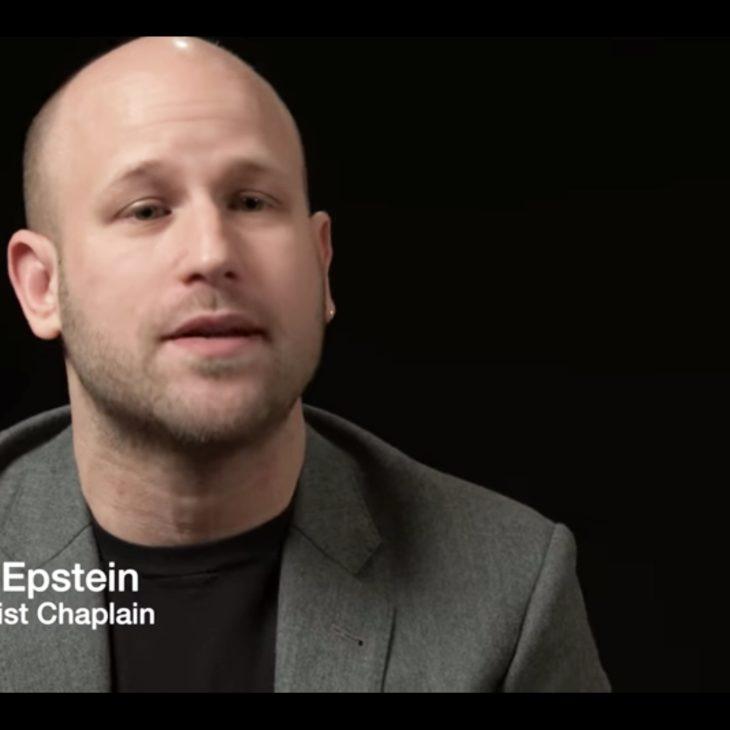
(RNS) — The news that humanist chaplain Greg Epstein had been named president of Harvard University’s chaplains was, for many, a moment to celebrate. It was a meaningful inclusion of an underrepresented community, given that atheist, agnostic and nonreligious individuals are often overlooked in religious spaces. Prominent humanist leaders marked it as a time to hold their heads “just a bit higher.”
The news of a nonreligious chaplain in this role at the nation’s iconic academic institution was too much for others, however. Prominent evangelical Tim Keller congratulated Epstein on Twitter, sparking a number of heated replies about why the appointment was not something to celebrate. Babylon Bee, a satirical Christian magazine, offered the punchy headline “Harvard Hires Satan As New Head Chaplain.” The Harvard Christian Alumni Society’s response to Greg’s election was to graciously affirm his leadership, while rejecting the attempt to frame the appointment as a triumph of the secular.
Seeing the elevation of an atheist or agnostic at Harvard as one more skirmish in our nation’s ongoing culture wars misunderstands the significance of this historic moment — and misses an opportunity to live up to the promise of American pluralism.
As a graduate student at Harvard Divinity School, I got to know Greg Epstein through our classes together and, when he became the humanist chaplain, he quickly supported me by hiring me as his first intern as humanist chaplain. Greg’s vision was formative for me as a young adult. He had a name for the values I held — humanism — and beautifully articulated a set of affirmative, positive beliefs, rather than focusing on a disbelief in God.
In a time when the so-called angry atheists seemed to be the standard for unbelief, Greg has been a compelling alternative who stood for community, humanity, common good and working constructively across difference. In every way a modern chaplain does, Greg provided me with powerful faith formation, albeit not a faith in God. Rather, Greg shaped my faith in humanity, my faith in community, my faith in the power of working across lines of difference.
This last virtue is how best to understand Greg’s election, which was led, in part, by an evangelical Christian, alongside a Lutheran, a Christian Scientist and a Baha’i. Why did this group of individuals from diverse identities choose to elevate Greg as a leader? Because they know that Harvard’s campus, like many major universities’ today and indeed our country at large, is a complex of belief and nonbelief, of thriving religious communities and secular groups, often working together, bound by a desire to do good.
They also know Greg as a leader, and they know he is well-equipped to lead in this pluralistic community. Greg’s track record of collaboration and service to the common good, his commitment to the thriving of religious communities and his listening ear and open heart make him ideal for this role.
Despite this, we should not dismiss some Christians’ real sense of lament. Many Christian leaders are also devout pluralists, deeply committed to their theological beliefs and deeply committed to an inclusive America. Nevertheless, some perceive Greg’s election as an important loss. One evangelical acquaintance noted that Harvard started as a training ground for religious leaders, only to see religion relegated to the chaplaincy program over time.
“And even now,” this Christian said, “we’re asked, ‘Where’s the space for the nonbelievers?’ The answer is literally anywhere else!”
This is the state of our dialogue about faith in the public square today. Many Christians perceive that their space in culture and society is shrinking, their role ever diminished while the truth of their beliefs remains as salient as ever. Many secular Americans think of themselves as marginalized and underrepresented in a largely religious — make that Christian — nation.
Painted in these terms, we see only secularists and conservative Christians jockeying for power in a rapidly diversifying landscape, where one community’s success in representation and leadership is another community’s loss.
There are better ways to approach our cultural struggles over belief and values. Rather than assume we’re trapped in a zero-sum game, we can — need to — build our skills for empathy. We can welcome the celebrations of the humanists who finally feel represented, and we can appreciate another step toward inclusion for all.
We can also sit alongside the Christians who lament the implications of this choice, seeking to understand the beliefs that inform this view. We can maintain our own perspectives while respecting the authenticity and sincere motivation of others.
As his friend, I’m celebrating with, and for, Greg, but I’m listening and seeking to understand.
I learned that from Greg.