Curiosity on Campus: Using Stories to Connect to Faith
July 27, 2022

As a part of the Deep Differences Project in partnership with the Heterodox Academy, Interfaith America spoke with three educators about their roles on campuses across the country and how they foster curiosity in students, in and out of the classroom.
For more about the importance of curiosity and the Deep Differences Project, read What If We All Practiced More Curiosity?
Interfaith American’s Jane Ulring and Gracie Webb spoke with Russ Arnold, an Associate Professor and Chair of the Department of Religious Studies at Regis University in Denver, Colorado.
This interview has been edited lightly for length and clarity.
Jane Ulring: I’d love to hear a little bit about where you’re located and what the campus is like.
Russ Arnold: Most of the teaching work I do is mainly with students in other fields and majors in their required religious studies courses. Those courses are really designed to engage students with different approaches to life. A lot of what I do is introduce students to things that they’ve likely not to have seen, heard, or experienced before, with an eye to how they choose to live in the world. There’s an emphasis from the Jesuit and Ignatian tradition on formation, on becoming intentional people. On choosing how to live in the world. And so, I try to make my courses driven by student’s curiosity, so that courses inform the possibilities for students.
They’ve encountered people who identify differently, but rarely do they have the experience of hearing the story or participating in a practice that is different from what their family did. The work that I do generally, and is true of all my classes, is that if I can lower the threshold, the bar, or the fear to trying something new, encountering something new, or asking someone a question about what matters to them, that’s a success. I try to give relatively easy, simple low stakes practices of talking about their own approaches to life and experiencing those of others. I’m less concerned in the end if they can rattle off the 5 Pillars of Islam or the [Buddha’s] noble truths. But could they ask someone, what is fasting like for you and your family?
A particular assignment I use to help students engage curiosity is in a course that helps students engage multiple religious traditions around some key questions. The assignment that I‘ve started using in relation to the Valerie Kaur book, “See No Stranger,” is that I ask them to identify three issues or topics related to justice or injustice and then seek out an individual’s story related to that issue. And sometimes they know someone personally, or they can listen to videos. The challenge is to really listen to the stories of people who might disagree with them, and to listen to that story and understand the other person’s perspective. Then, they reflect on what the story is asking of them.
An example from last semester: a white, male student who is a big football fan – before class, he’s always talking about the Broncos. And he decided to listen to an interview with Colin Kaepernick. When the kneeling during the national anthem started, he was really bothered and upset by it. But he reflected on his own experiences and the events of 2020, [including the murder of] George Floyd and Black Lives Matter. And he didn’t agree with all of it, but he understood for the first time some of the integrity of that story, what [Kaepernick] was trying to do by kneeling, and how that was different than what he had heard or imagined. So, he sought out someone who was really thinking differently about something.
Gracie Webb: Where do you see fear coming from in your students’ lives, and what approaches do you take to help them get past that?
RA: I think that’s a really great question, I think it’s not the same for everyone, the experience of that fear. I think one of the things that might be surprising is that it’s not really a fear of the other. For a lot of them it’s a fear of going into someone’s space and doing something they’re not supposed to or something that would be offensive.
Related to that is a fear of inquiring or asking someone about a practice that’s important to them. There’s a fear of prying, of putting someone on the spot. And that’s something I try to engage with, because when people are given the opportunity to tell their own story, they realize that people really like to be able to tell their own story. I think there’s also a fear for a lot of students that they don’t have their own stuff worked out well enough to talk about it. The fear is, “They’re going to ask me, I don’t know, and I’m supposed to?” And that’s a fear driven by the assumption that everyone else has it figured out, that I don’t, and that I’m going to get found out. But most people are figuring it out along the way.
JU: I hear a theme of storytelling in your approach. Why do you think that’s effective in getting students to engage with these topics of religious diversity and difference?
RA: I think the main reason is driven by my own experience of the inability for any official religious label or category to effectively communicate my experience. My class is very clearly not about Judaism, Islam, Sikhism, and Atheism, but is about Josi Klein Alevi, Ta-Nehisi Coates, and Valerie Kaur, because each of our lives are more complicated with respect to religious or spiritual identities.
Each one of the stories that we read are about people connecting across lines of difference and complicating their own understanding by those connections. The students are then invited to bring their various experiences, practices, beliefs and belongings that are parts of their lives. Any questions or curiosities that someone has are going to connect with someone much more if it comes from their story instead of a Wikipedia article. They’re used to reading stories, they know stories, they have stories, so it lowers the hurdle.
JU: What calls you back to this work and why do you feel it is important to call students back to this work?
RA: There’s a personal and a political response to this question. The personal is that I like learning and learning from others’ experiences. But the political side is that if we, as a society, don’t figure out how to be curious and wonder about other people, then we are not going to survive. Our planet’s not going to survive, and our government is not going to survive. Our society is not going to survive. Because if we know our opponent already, then we think we have nothing to learn from them. They cease to be human, and they cease to be alive in our thought processes. And if they’re not alive, then we can do whatever we want with them. I’m nowhere near figuring out my own life, and this space of curiosity is where I live.
Share
Related Articles
American Civic Life
American Civic Life
Higher Education
What Does Interfaith Engagement Mean from an Evangelical Perspective?
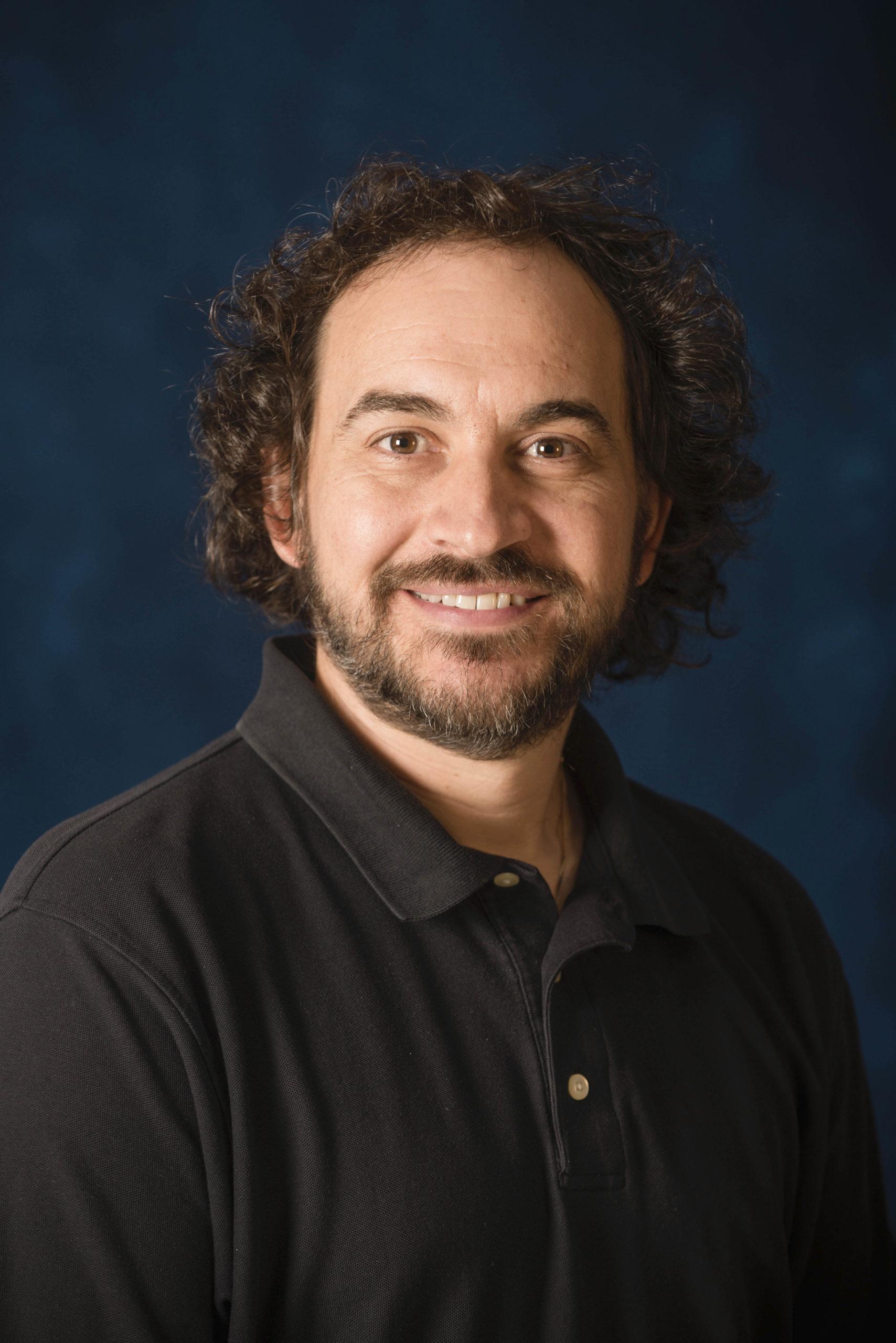
Russ Arnold
Russ Arnold is an Associate Professor and Chair of the Department of Religious Studies at Regis University in Denver, Colorado. He teaches courses in Interfaith Studies, Biblical Studies, and Jewish Studies. He came to the study of religion in college in an attempt to understand why and how Jews and Christians read the shared texts of the Hebrew Bible/Old Testament but come to understand them very differently. Since moving to Regis, he has been active in interfaith dialogue and building strong relationships between Regis and local Muslim and Jewish communities. His teaching focuses on building the skills and capacities needed to achieve religious and worldview pluralism on our campuses and in our communities