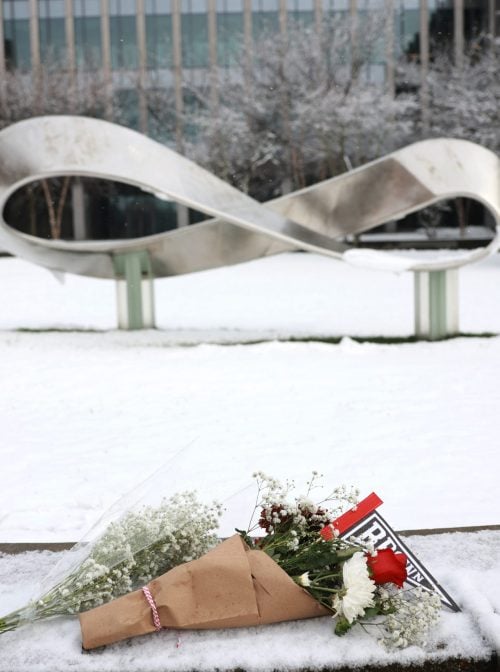
PROVIDENCE, RHODE ISLAND - DECEMBER 14: A bouquet is left outside of the engineering and physics building at Brown University, the site of a mass shooting yesterday that left at least two people dead and nine others injured, on December 14, 2025, in Providence, Rhode Island. A suspect in the shooting was detained overnight at a hotel in a nearby community following a manhunt across the prestigious university and the greater Providence area. The shooting took place around 4 p.m. on Saturday as students were preparing for exams and the holiday break. (Photo by Spencer Platt/Getty Images)
During my first week at Brown University, I attended a two-day diversity seminar. After two days of talking about seemingly every imaginable aspect of diversity except religion, I struck up a conversation with a Muslim woman from Bangladesh who was as eager as I was to talk about this aspect of our lives and identities that was central for both of us. Our lives had been so different, and yet we found much in common as religious people arriving in this secular space.
Brown is where I learned to pray songfully on the floor in a circle with fellow Jews of all backgrounds. Where I stayed up until the early hours of the morning in Interfaith House, talking with my roommates who were Catholic and secular. Where I studied both Palestinian literature and Zionism. Where we filled Sayles Hall with beautiful harmonies at the annual Lessons and Carols service. Where I left campus with my a cappella group each year to sing carols at a local community organization to bring boundless joy during the Christmas season. Where I spent Thursday night supper most weeks at the chaplain’s house. And so much more.
Brown is a sacred space for me. My memories there are filled with so many beautiful moments — of being deeply challenged intellectually, of meeting people from all walks of life, of connecting with my Judaism in radically new ways, and of being part of holy celebrations with people from other traditions.
This weekend, that sacred place became the site of deadly gun violence that lefttwo people dead and many others terrorized and grieving. My heart was shattered. And less than a day later, another mass shooting in Bondi Beach, Australia, killed 16 Jews celebrating the first night of Hanukkah together. My grieving heart shattered again, wondering when people will be able to learn or pray without fear of violence.
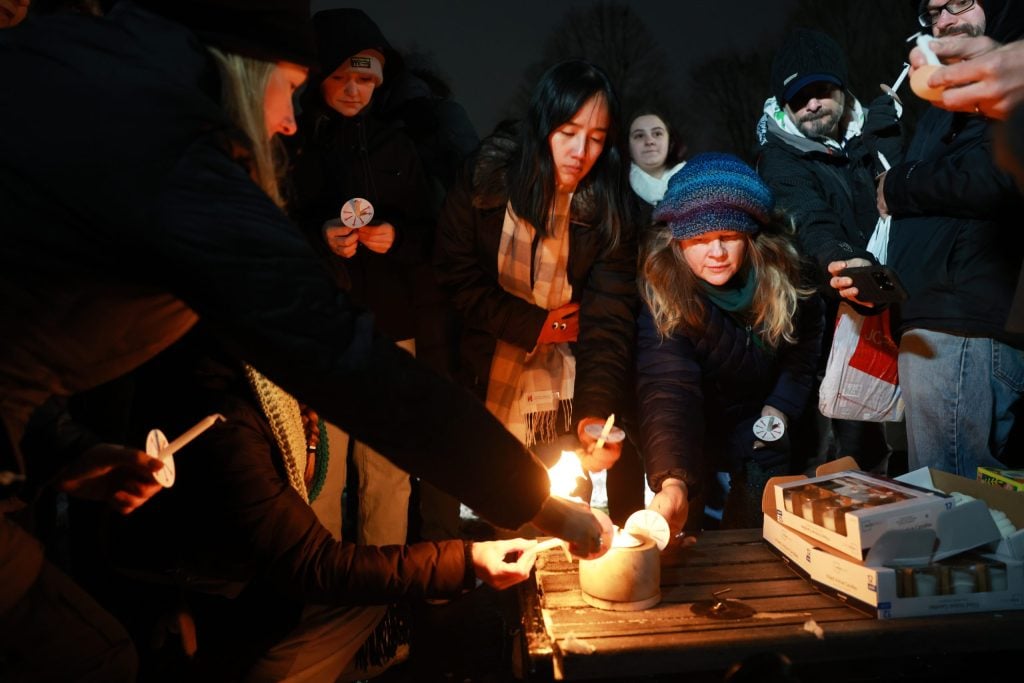
PROVIDENCE, RHODE ISLAND - DECEMBER 14: People gather for a candlelight vigil following a mass shooting yesterday at Brown University that left at least two people dead and nine others injured, on December 14, 2025 in Providence, Rhode Island. A suspect in the shooting was detained overnight at a hotel in a nearby community following a manhunt across the prestigious university and the greater Providence area. The shooting took place around 4 p.m. on Saturday as students were preparing for exams and the holiday break. (Photo by Spencer Platt/Getty Images)
My friend Tamar Cytryn shared a beautiful piece from Rabbi David Hartman, where he recounts our sages asking why Hanukkah is celebrated for eight days rather than seven:
“Since there was, by all accounts, sufficient oil for one day, only seven of the eight days of burning may be designated as miraculous days… What strikes me as being the miraculous feature of the initial day was the community’s willingness to light the lamp in spite of the fact that its anticipated period of burning was short-lived… Hanukkah celebrates the miracle expressed by those who lit the lamp and not only the miracle of the lamp’s continued burning for eight days.”
I love the celebration of human agency in Rabbi Hartman’s explanation, highlighting the role of the people who lit the lamp. Even amidst oppression and deep uncertainty about the future, my ancestors had the courage and hope to light the lamp that first night. Rabbi Hartman continues: “Only lamps which are lit may continue to burn beyond their anticipated life span.” The miracle of the remaining seven days — that the oil lasted well beyond the time expected — could not have occurred had those brave people not chosen to light the lamp on that first night.
In the face of horror and uncertainty, my family joined on Sunday with friends to celebrate at our kids’ Jewish school, with gratitude to the security officers at the door who keep us safe. We ate latkes (potato pancakes – my favorite) and sufganiyot (jelly doughnuts – I’ve never understood the appeal of these), laughed together, watched in awe the talents of the Jesse White Tumbling Team, and sang Hanukkah songs. And we joined with my parents and uncle that night to bring a little more light into the world as we lit our first Hanukkah candle proudly in front of the window.
After this devastating weekend, I’m choosing to join with colleagues and partners again in our shared work — because we, together, are the lighters of that first light. We are inspired not by those who kill and destroy but by those who step in to help. They are heroes like Ahmed al Ahmed, a Muslim man who intervened to disarm the attacker at Bondi Beach, getting shot twice while preventing more Jews from being killed. We can’t create the world we want to see unless we start to build it ourselves.
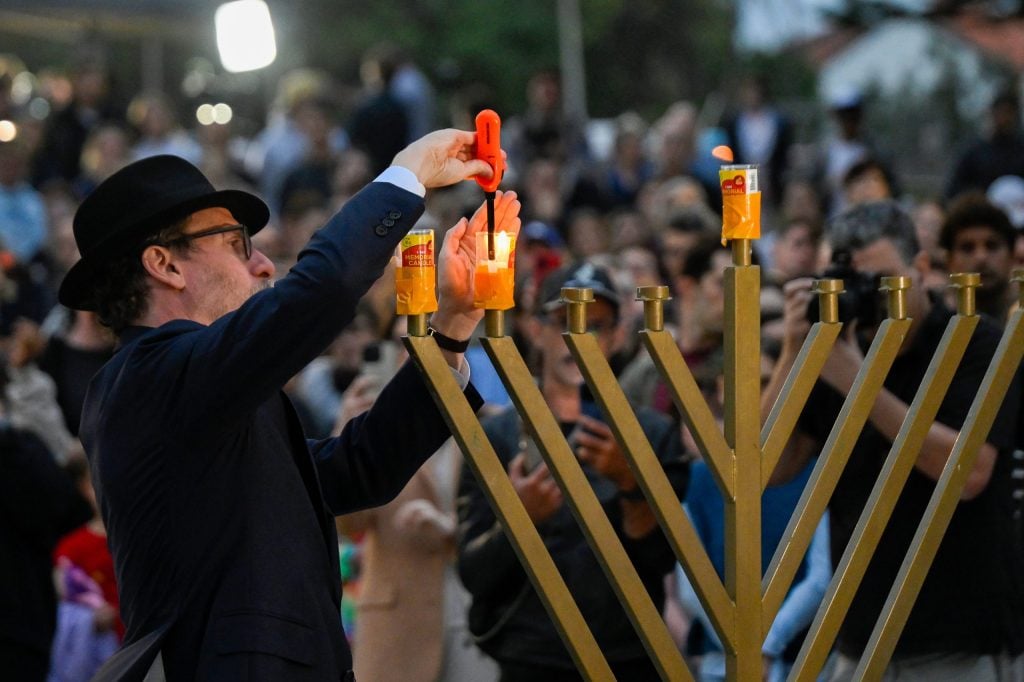
SYDNEY, AUSTRALIA - DECEMBER 15: Mourners gather at the Bondi Pavilion as people pay tribute to the victims of a mass shooting at Bondi Beach yesterday, on December 15, 2025. Police say at least 16 people, including one suspected gunman, were killed and more than 40 others injured when two attackers opened fire near a Hanukkah celebration at the world-famous Bondi Beach, in what authorities have declared a terrorist incident. (Photo by Izhar Khan/Getty Images)
Even as we face rising hate, even if we don’t know whether our lights will outshine the forces that seek to destroy connection and collaboration, we know that “only lamps which are lit may continue to burn beyond their anticipated life spans”… and that we are the ones who can light those lamps.
As I send my love to all those injured, terrorized or grieving — and especially to the families and friends of those beautiful human souls who were killed in both of these attacks — I also hold the resilience of the Brown community and the Jewish community in my heart. The Brown fight song includes the line: “And the people always say, that you can’t outshine Brown men (and women!)”
We will continue to shine our lights into the darkness, starting with that first light, knowing that when we come together, we shine even brighter.
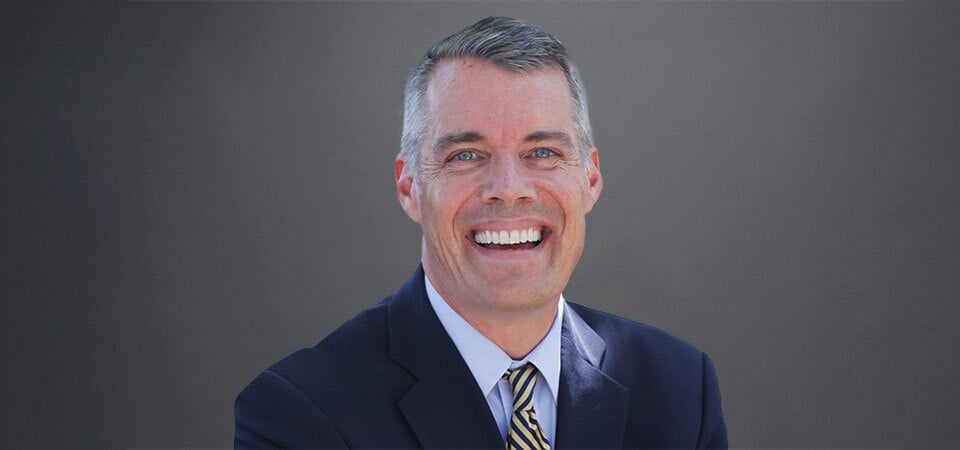
Rebecca Russo is Vice President of Higher Education Strategy at Interfaith America.
Interfaith America Magazine seeks contributions that present a wide range of experiences and perspectives from a diverse set of worldviews on the opportunities and challenges of American pluralism. The opinions expressed herein do not necessarily reflect those of Interfaith America, its board of directors, or its employees.