The Role of Blackness in the Hamline Islamic Art Controversy
January 14, 2023
(RNS) — In early October, Erika López Prater, a professor at Hamline University in Minnesota, showed her online Islamic art history class an image of the Prophet Muhammad. A Muslim student in the class complained, citing Islamic tradition barring representations of the prophet. Other students joined in to express their view that this incident was part of a larger problem of Islamophobia on campus. The administration agreed, and eventually López Prater’s contract to teach during the spring semester was rescinded.
Since her firing, other professors, including Islamic studies scholars, have rightly rallied around her, drafting petitions and op-eds calling her dismissal a case of censorship trammeling academic freedom.
We’ve heard little in the media coverage of this fiasco, however, about the students who initiated the complaint — why they objected, who they are and what their lives are like at Hamline and in the Twin Cities. Most of all, we need to understand why a perceived attack on the body and dignity of the Prophet Muhammad may have felt like an attack on them.
What has been written about the students has at times been unfortunate. The Chronicle of Higher Education, for instance, described Muslims who believe it is wrong to display images of Muhammad as ascribing to the “most extreme and conservative Muslim point of view.” Never mind that using the term “extreme” insinuates that these students are violent; the point is not to discuss the history of iconoclasm in Islam, but why these particular Muslims objected to the image when and where they did.
Our many decades of learning and experience as scholars of Black American Islam tell us that the missing context is race. The Muslim students were hurt by what they saw as an attack on the dignity of the prophet, whether they are doctrinally correct or not. This hurt paralleled the attacks on their dignity they experience daily as Black Muslims. Violence toward Black Muslims, rooted in slavery and Jim Crow and perpetuated in post-civil rights America, is an embodied phenomenon.
Attacks on the Prophet Muhammad’s body for someone living in this reality may be felt as an assault from the whole surrounding community. In an interview with The Oracle, the school’s student paper, Aram Wedatalla, who was in López Prater’s class, said, “as a Muslim, and a Black person, I don’t feel like I belong, and I don’t think I’ll ever belong in a community where they don’t value me as a member, and they don’t show the same respect that I show them.”
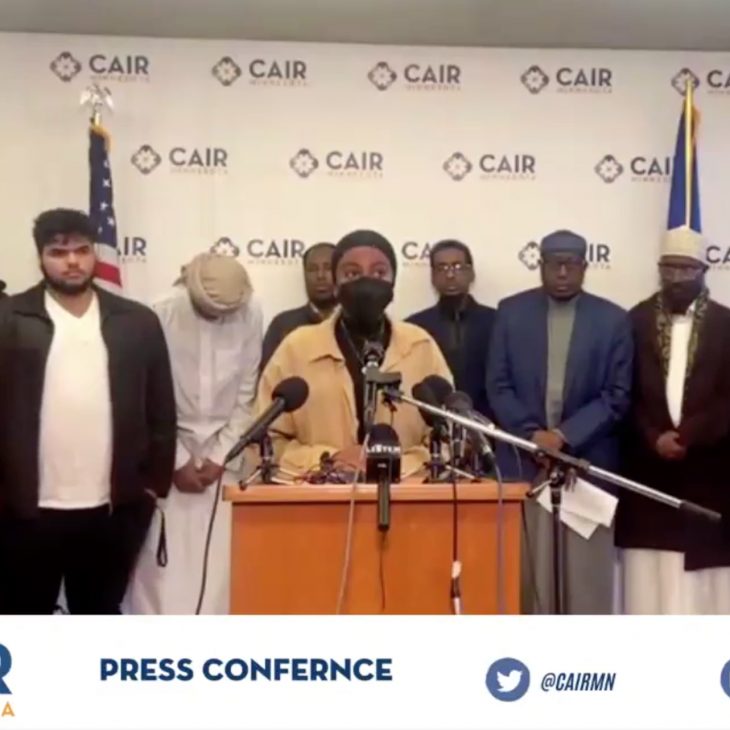
Black students account for 11% of Hamline’s student body, according to U.S. News & World Report — a smaller percentage than Black residents’ in Minneapolis (but about the same as African-descended people in the city’s metro area). In a forum at the university in early December, according to The New York Times, a student panel of Black Muslim women “spoke tearfully about struggling to fit in at Hamline.”
Beyond Hamline’s campus, Islamophobia in Minnesota is often colored Black: Muslims in Minnesota, especially Somalis, have faced discrimination and violence as well as state-sanctioned Islamophobia, often in the form of police harassment.
The Countering Violent Extremism program, launched by the Obama administration in 2011, aimed at partnering with the American Muslim community to reduce violence; it ended up marginalizing Musllms further. Minnesota Somalis were disproportionately affected by CVE, as the program was known. The Trump administration’s iteration of CVE “rebranded and refunded the programs, exacerbating ongoing racial discrimination, surveillance, and police brutality in the Twin Cities,” according to one study.
Minnesota’s Black Muslims have also watched as their elected representatives, Keith Ellison and Ilhan Omar, have received death threats and been called terrorists.
Anti-Muslim anti-Black violence is not just a problem in Minnesota. It’s an historic national issue. Black Muslims have been depicted in the media as irrational, violent and incompatible with American values for nearly 100 years. Look no further than how Malcolm X, Muhammad Ali (depending on the decade) or the Nation of Islam under Elijah Muhammad were described by journalists, academics and law enforcement. Consider how images of the Black Muslim boogeyman (and in later cases, boogeywoman) were used to justify harassment and discrimination against Black Muslims and by 9/11, all Muslims.
This is the context missing from the current conversation about López Prater’s firing.
The solution, however, is not be to ban images of the Prophet Muhammad in the classroom or to fire professors for doing their jobs. (No report has shown that the students even asked for López Prater to be fired.) There is immense theological diversity and varying views among Muslims on the permissibility of depicting Muhammad, as López Prater is aware; she made efforts to soften the blow to Muslim students who might be offended.
In the eyes of these Muslim students, she and the university did not go far enough, but rather than address students’ concerns as a community, the university administration chose to deal with its institutional Islamophobia as a problem between an overworked and underpaid contingent faculty member and marginalized students.
We live in a deeply Islamophobic society where Muslims face both interpersonal and institutional oppression that affects how young Muslims experience everyday life. This incident is simply the latest example. López Prater has unjustly lost her job, and Hamline University Muslim students have been vilified in the media, while the underlying problem — Islamophobia — still persists on Hamline’s campus and beyond.
(Kayla Renée Wheeler is an assistant professor of critical ethnic studies and theology at Xavier University. Edward E. Curtis IV holds the William M. and Gail M. Plater Chair of the Liberal Arts at Indiana University. The views expressed in this commentary do not necessarily reflect those of Religion News Service.)