At the Intersection of Faith and Climate, Work Worth Building On
April 21, 2022
I brought you into a fertile land to eat its fruit and rich produce. But you came and defiled my land and made my inheritance detestable.
— Jeremiah 2:7
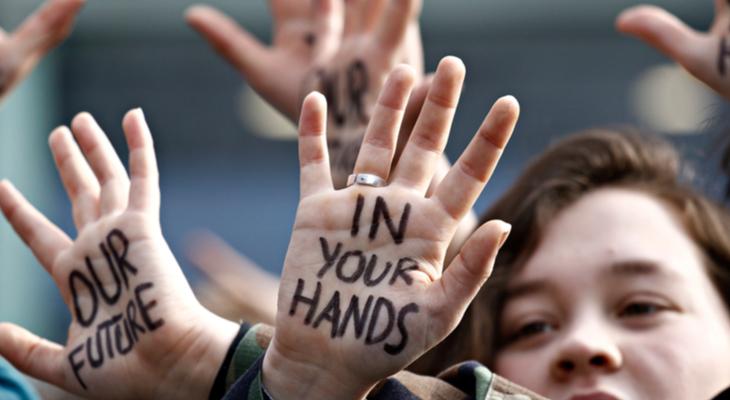
Think about the fact that our oceans are in serious danger. Think about how due to drought and desertification each year the earth loses land to grow on. These aren’t just political, economic, or local problems. These are existential ones that challenge the way that we have been living. To me, climate change has always been about faith.
Right now, solving these problems is the conversation happening across the globe. In the parlance of the United Nations process, we are in the midst of “taking stock” of the agreements made at #COP26. People of faith need to be involved in this “taking stock.” Now more than ever the faithful need to be leaders in the protection of our planet.
This is an ongoing conversation for me. I talked to my friend Marianna Schaffer who is the Vice President of Programs, Geraldine R. Dodge Foundation, which gives out funds exclusively in New Jersey. In the past she’s also managed the New Climate Unitiative, a partnership with the Sundance Institute focused on climate change-related media projects. Marianna’s a thoughtful and collaborative leader and one of my thinking partners.
“Think about engaging folks in actual art-making,” Marianna advised, “like creating a collective creative space where they (faith-based communities) can work towards participatory art projects and have it be part of the Climate March.”
She encouraged faith-based groups to think institution to institution: “In New Jersey what is emerging is a lot of faith-based organizations working on social and racial justice.”
Marianna advised that “someone should support, maybe establish a fund, to support smaller emerging organizations working on faith and climate.”
She’s right. And there is already some amazing work happening at the intersection of faith and climate.
One group, GreenFaith, is acting on critical issues like deforestation and organizing around climate finance. They have announced a “Sacred Season for Climate Justice” to connect the work to five major sacred observances this spring, including Easter, Ramadan, an Equinox, and Earth Day. GreenFaith notes: “Together, these days collectively attract billions of people of diverse faiths and none to worship, pray, listen to sermons, reflect, and commit to act on what matters most.”
A day like that resonates with my dear friend and fellow National Urban Fellows alumni, Essen Otu, manager of diversity, equity, inclusion and belonging strategies for the 3rd largest public utility in the nation, Arizona’s Salt River Project. Essen has always been a proud Christian.
“The basis of our faith,” he said, “is a belief in the Bible and the world. Going back to Genesis and the creation story, what does He think of what’s happening? You look at it from that angle to discern what is compelling.”
“As stewards, that sacrifice of Jesus,” Essen continued, “allows us to live on this planet with our sins forgiven, so there’s that stewardship, a sense of responsibility.”
I talked to my mom about it. The Rev. Dr. Khadijah Matin raised us to be both mindful of our role as stewards and with a Muslim identity that is knowledgeable of others traditions. She wears a few different hats at One Spirit Learning Alliance, where she specializes in spiritual counseling and one in health care administration.
She insisted that organizations working at the intersection of faith and climate justice need to also do the work internally. “Looking at mission, goals, and values,” Khadijah stressed, “decolonizing language or assumptions and ensuring that they are not being elitist.”
My mother teaches a class about sacred service this coming semester where she will be working with a group of people across faiths and asking them an incredibly relevant set of questions, including: “What do they understand about their faith’s relationship, and their own relationship, to the earth?”
They envisioned establishing a healing circle of Black women practitioners of different faiths, who met periodically. Given the scale of the climate crisis these types of circles, where participants examine their own relationship to God and their relationship to the planet, need to be happening amongst people of faith with spaces inclusive of people of all faiths combined as well.
This conversation took me to the Eagle Rock of Topanga Canyon in Southern California. It is a long steep climb. It twists and turns, but the rock is smooth and easy to walk on — even if it is strenuous.
I was hiking with Kerri Kelly. She is the founder of CTZNWELL, which has a mission to mobilize people into a powerful force for wellbeing for all. She spent seven years as executive director of the non-profit Off the Mat, Into the World working in collaboration with community organizers, spiritual leaders and policy makers like Marianne Williamson, the Rev. angel Kyodo williams, Sharon Salzberg, Seane Corn, Mark Gonzales, Valarie Kaur and others. We worked together at Civic Hall a social justice co-working space in New York City, before the pandemic.
Kerri’s idea bordered on eco-tourism, “so you would have to be careful,” she said. “How can we get people to have an experience of bearing witness to the impact of extractive economies?”
That would mean going to places where mining and war have ravaged and seeing first-hand the carnage. Maybe this is an apt use of viritual reality technology and the Metaverse — to show people the damage of this way of life. Either way, we do not have to go very far. The impacts of coal, strip mining, and other evidence of extraction and destruction of land is very much local to almost every human. Ten percent of the world’s arable acres lie within the United States, but these lands are constantly under threat by development.
Kerri reminded me, “The land around us is our spiritual bond.” We surveyed the burn from recent forest fires, and she pointed to the new growth amidst the charred.
This article was originally published on January 28, 2022.
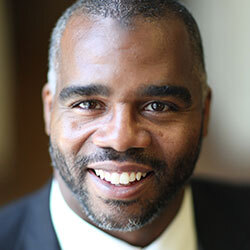
Ibrahim Abdul-Matin
Ibrahim Abdul-Matin is the author of Green Deen: What Islam Teaches About Protecting the Planet and is the co-founder of Green Squash Consulting, a management consulting firm based in New York that works with people, organizations, companies, coalitions and governments committed to equity and justice and specializes in dynamic strategic and focused stakeholder management and partnership development.