
They say faith can move mountains, but can it build bridges too?
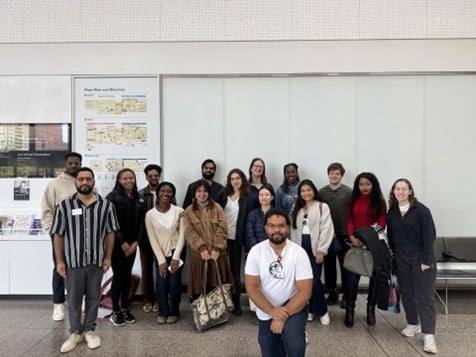
Earlier this month I had a soul-shifting, heart-igniting, perspective-bending experience at the Interfaith America BRAID Fellowship Convening in Utah.
Three days. Countless faiths. One mission: to build a world where differences don’t divide but drive us to deeper understanding. Let me tell you, we didn’t just talk about bridgebuilding, we lived it.
Respect. Relate. Cooperate.
That was our rhythm. Our mantra. Our mission. We learned that curiosity isn’t just a trait. It’s a tool. It opens doors, breaks barriers, and turns strangers into story-sharers. Because when you approach someone not to debate, but to discover, you find that even across creeds and convictions; our humanity speaks the same language. “Let every person be quick to listen, slow to speak, and slow to anger (James 1:19).”
And that listening? It went deep, not the kind where you nod and wait your turn to speak, but soulful, silent, sacred listening. It is the kind that says, I see you. I hear you. I value you. We delved into topics many shy away from: faith and identity, religion and reality, culture and conviction.
Unfiltered. Raw. Transformational.
True bridge-building isn’t about staying comfortable; it’s about getting courageous. We played powerful, purpose-filled games, like deciding where we stand in hypothetical life scenarios, learning that values are more than words. They’re choices. They’re anchors in a shifting world.
One moment, I was laughing with someone whose beliefs were oceans apart from mine. The next, we were tearing up at the realization that our stories, though different, still rhyme. Then, there came the grand finale: Speed Faithing, think interfaith “speed dating,” quick-fire exchanges where beliefs clashed, connected, and coexisted beautifully. In minutes, we saw the spectrum of spirituality, the depth of devotion, and the miracle of pluralism in motion.
“How good and pleasant it is when God’s people live together in unity” (Psalm 13:3).
Let’s get this straight. Diversity is a fact. Pluralism is a choice, and I choose it, loudly, boldly, joyfully, because I saw what happens when we do. Walls crumble. Stereotypes fade, and a new kind of world begins to bloom.
Here’s the truth. We don’t have to think alike to love alike. We don’t need the same faith to fight the same fight, for peace, for justice, for compassion. Now, I hold a different view, a broader lens. Because bridgebuilding isn’t just an event, it’s a lifestyle. Its leadership is wrapped in love. Its ministry disguised as mutual respect. It’s choosing dialogue over division, curiosity over criticism, and it starts with me.
It starts with you. It starts with us. Here’s my pledge. I pledge to carry this fire into every space I walk into, every circle I lead, every conversation I spark. I pledge to spread the good news of pluralism like a flame that lights others without burning out. At the end of the day, faith that doesn’t build bridges only builds walls, and I’m in the business of tearing walls down. To Interfaith America, thank you for the vision. To my fellow bridgebuilders, thank you for the journey.
Let’s build bridges, not barriers. Let’s seek understanding, not uniformity. Let’s make pluralism not just a practice but a promise. To the world, I’m just getting started.
“Blessed are the peacemakers, for they shall be called the children of God” (Matthew 5:9).
Joel Omanye Thompson is a student at Livingstone College and an Interfaith America BRAID Fellow.