An Unexpected Visitor: My Journey as a Spiritual Support Volunteer for Muslim Patients
May 5, 2022
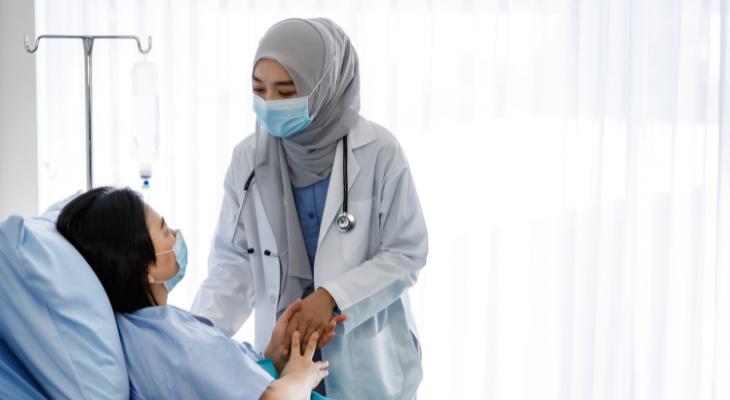
I stepped into the next patient room after morning classes and Friday prayer to visit the patient who had that toothless grin that was as radiant as it was goofy.
Mike was a boisterous man who tried to give me a kiss on my forehead as soon as he heard why I was there — clearly, his battle with leukemia with so many potential years ahead of him failed to dampen his spirits. His proclamation of gratitude to Allah in the face of such a serious medical condition was inspiring and intriguing, to say the least. After we recited a few Islamic prayers of healing together, I asked Brother Mike, as I called him, if he could tell me a little about himself. If I wasn’t “inspired” already, I cannot think of the right word to describe how I felt after he shared his story with me. Stories like this continue my drive as the founder of a patient visitor program for hospitalized Muslims at the Johns Hopkins Hospital.
Born in Washington D.C. but having grown up forty-one miles northeast in Baltimore, Mike grew up in a single parent household in a complex that was home to some of the highest gang activity on the entire East Coast. There were no internships or career opportunities beyond dealing amphetamines, and no student organizations or youth mentorship beyond initiation into gangs, so Mike indulged in both. He quickly learned the tricks of the trade and was successfully working his way up in the underground hierarchy until he was charged with a serious crime that landed him in prison. Surprisingly, I saw tears roll down Mike’s cheek as he emphasized each word: “Going to jail was the best thing to ever happen to me.”
It was during the two decades he spent in jail that Mike was introduced to Islam. He had no prior exposure to reading or writing, but through daily lessons with the prison chaplain and fellow inmates, Mike was soon able to read entire books about the religion that so intrigued him. This reminded me of the story of the Prophet Joseph, who also spent many years in a prison cell but never let his connection with God wither away.
When I asked Mike what it was about Islam that he felt himself so drawn to, he replied without hesitation: “The sense of community and brotherhood.” It was not long after he was released from prison that he fell ill and was diagnosed with leukemia, but he was still able to find a warm welcome in the Baltimorean Muslim community in that brief time. I was amazed at how I, an Afghan American Muslim, could ease into a friendship with Mike due to our bond of Islam. One thing that people may not know is that Muslims span a plethora of ethnic, linguistic, and cultural identities but largely come together through their belief in one God and his final messenger, Prophet Muhammad.
However, since his hospitalization, that very same community and sense of brotherhood that he so craved was gone, just as fast as it had come. COVID-19 visitor restrictions had barred friends and family from coming to see him, further compounding his sense of loneliness and isolation. The grimmest realization for me was knowing that had he been hospitalized just a few weeks earlier, neither myself nor any other Muslim would have had the privilege to learn about Mike’s story, as the hospital did not have a spiritual care service specifically geared to the Muslim population.
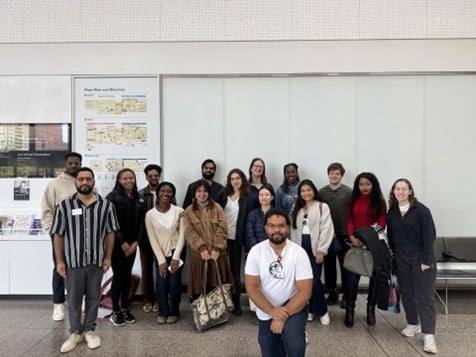
To ensure similar interactions between visitors and Muslim patients in the hospital, I recently started Anees, which in Arabic symbolizes one of the highest forms of friendship, literally translating to “a friend whose presence brings calm and happiness.” I started this program with Muslims in Medicine — a nascent medical organization that brings together Muslims clinicians and trainees to brainstorm patient care solutions and innovative professional growth opportunities—which spread the program to two hospitals in Texas and New York. After establishing the patient visitation service program at Johns Hopkins Hospital two years ago as a sophomore, I am working with a team of Muslim chaplains and student organizers to expand this to other hospitals nationwide with a standardized training curriculum for spiritual care volunteers. Through this, we humbly hope that we follow the legacy of Prophet Joseph, where those in a place of isolation can find a light to God through camaraderie.
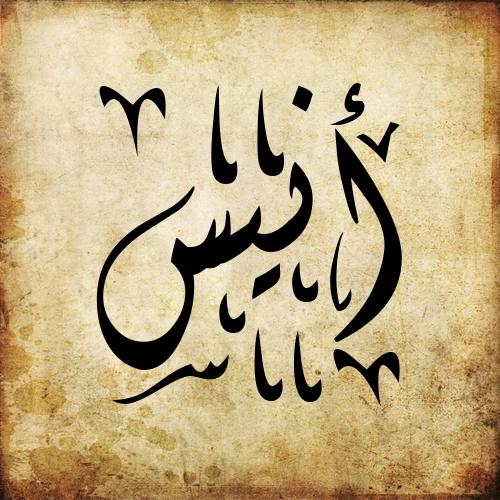
The volunteer chaplaincy program is called Anees, which in Arabic symbolizes one of the highest forms of friendship, literally translating to “a friend whose presence brings calm and happiness.”
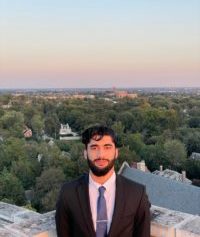
Muzzammil Ahmadzada
Muzzammil Ahmadzada is a fourth-year undergraduate student in the biology department at the Johns Hopkins University, originating from Afghanistan and having grown up in Elk Grove, California. His career interests lie at the intersection between medicine and religion, with his long term goal being the service of disadvantaged populations in the United States.