• About Us
    • Mission & Vision
    • Team
    • Eboo Patel
    • Adam Nicholas Phillips
    • Board of Directors
    • Reports & Financials
  • Where We Work
    • Higher Education
      • Senior Leaders
      • Faculty
      • Students
    • Workplace
      • Health
    • Civic Life
      • Emerging Leaders
      • The Team Up Project
  • Get Involved
    • The Learning & Action Bridge
    • Courses, Curricula & Tools
    • Grants & Leadership Awards
    • Events
    • Campus Training & Consulting
    • Corporate Training & Consulting​
    • Speaking
  • Magazine
    • Interfaith America Magazine
    • Voices of Interfaith America
    • Money, Meet Meaning
    • Press
  • Contact Us
    • Subscribe
    • Support Us
    • Our Supporters
    • Careers
    • Contact Us
  • About Us
    • Mission & Vision
    • Team
    • Eboo Patel
    • Adam Nicholas Phillips
    • Board of Directors
    • Reports & Financials
  • Where We Work
    • Higher Education
      • Senior Leaders
      • Faculty
      • Students
    • Workplace
      • Health
    • Civic Life
      • Emerging Leaders
      • The Team Up Project
  • Get Involved
    • The Learning & Action Bridge
    • Courses, Curricula & Tools
    • Grants & Leadership Awards
    • Events
    • Campus Training & Consulting
    • Corporate Training & Consulting​
    • Speaking
  • Magazine
    • Interfaith America Magazine
    • Voices of Interfaith America
    • Money, Meet Meaning
    • Press
  • Contact Us
    • Subscribe
    • Support Us
    • Our Supporters
    • Careers
    • Contact Us
Subscribe
Support Us
Civic Life

The Religious Identity of Third Culture Kids

By
Sonia Mehta

June 9, 2020

Embracing my religion has always been a struggle for me because I was embarrassed of being different. I am a Third-Culture Kid (TCK), which is a way of identifying kids who are raised in a culture different from their nationality. I was born in Glenview, Illinois, but have grown up in Dubai, United Arab Emirates. I have spent the past 8 years in an international school and while that has allowed me to gain a unique perspective on the world and the way identity and religion relate to each other, it has sometimes left me to question my place and identity.

When I was younger, I faced internal conflicts about my identity. My grandparents immigrated to the United States from India in the 1970s, and they provided my parents with a better life with assimilation into American culture at the expense of our cultural and religious identity. As my parents grew up and started their own family, religion was not a large part of our life as it was something that differentiated us from other American kids. My father is Jain and my mother is Hindu and they did the best they could to have my sister attend our Hindu temple and Sunday School when I was in elementary school.

However, these practices were soon lost when I moved to Dubai at the age of eight. I felt completely lost navigating a new country, culture, school, and people. I was immediately classified by my classmates in Dubai as too American for the Indians and too Indian for the Americans. I never felt so alone because I never thought of myself as different, but here I was singled out for just being me. Even though geographically, we were closer to our country of origin (India), I had never felt further away from my identity. As I grew into a young adult, religion became a topic of conversation amongst my friends and I was teased for “not being a good Hindu or Jain.” While these little jokes seemed non-quintessential, I was really affected by these words and it left a feeling of hollowness within me. In Dubai, I also experienced the Holy Month of Ramadan and had friends who were praying and fasting and were so comfortable practicing and embracing their religion. I often pondered: why not me? As I grew older and had conversations with my peers, I realized that this issue is more common than I realized. There are so many third culture kids that feel unfamiliar with their own identity and their religion.

This juxtaposition of beliefs and the sense of not belonging has allowed me to understand how complex the internal struggle is for many people. When I was young, I often did prayers, but I did not always understand the meanings in Sanskrit. Now, I am more focused on the spiritual aspect of religion and looking at it as a way of life. This really changed my mindset as I have become a more calm and happy person due to my beliefs in God.

Even though I was not brought up to follow all of the rituals or practice the scripture of Hinduism and Jainism perfectly, I have been able to establish a comfort with knowing who I am and what I believe which I think is one of the most important things when learning about one’s self.

Share

Related Articles
  • Civic Life

    Faith Based Efforts Work in Vaccine Uptake: Now Let’s Make it Easy

  • Civic Life

    Seven in 10 Americans Feel Compelled to Connect Across Differences

  • Civic Life

    Race, Religion and Healing in American Healthcare

Interfaith America Magazine seeks contributions that present a wide range of experiences and perspectives from a diverse set of worldviews on the opportunities and challenges of American pluralism. The opinions expressed herein do not necessarily reflect those of Interfaith America, its board of directors, or its employees.

Latest Articles

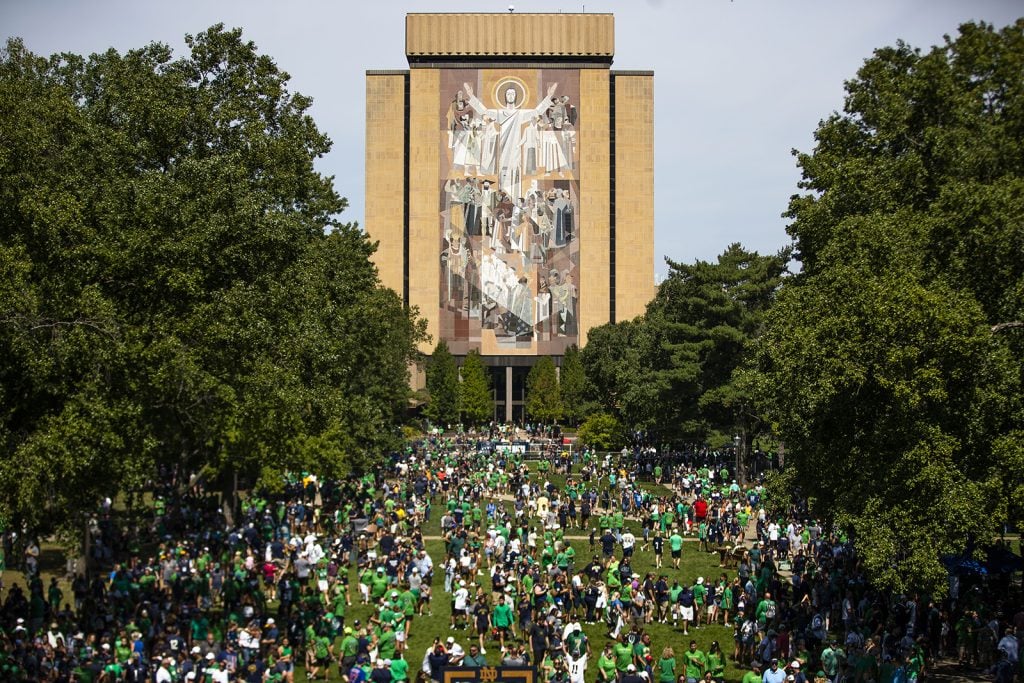
FILE - Fans gather on a University of Notre Dame green space near the front of The Word of Life mural, aka "Touchdown Jesus," on the Hesburgh Library before a college football game on Sept. 2, 2023 in South Bend, Ind. (AP Photo/Michael Caterina)
  • Campus

Catholic Universities Search for Tricky Balance on Trump Anti-DEI Push

Dec 04, 2025
Group of young people on college campus. Daniel de la Hoz/Moment via Getty Images
  • Campus

Most Colleges Score Low on Helping Students of All Faiths – or None – Develop a Sense of Belonging. Faculty Can Help Change That

Dec 02, 2025
Students at the Museum of Science for the Hall of Human Life in October 2025 as part of the Field Trip Series. Photo courtesy of Tufts
  • Campus

Tufts Chaplains Reimagine Pre-Orientation to Deepen Interfaith on Campus

Dec 01, 2025
WASHINGTON, DC - NOVEMBER 21: U.S. President Donald Trump shakes hands with New York City Mayor-elect Zohran Mamdani (L) during a meeting in the Oval Office of the White House on November 21, 2025 in Washington, DC. Trump congratulated Mamdani on his election win as the two political opponents met to discuss policies for New York City, including affordability, public safety, and immigration enforcement. (Photo by Andrew Harnik/Getty Images)
  • Civic Life

This Thanksgiving, You Should Absolutely Talk About Politics

Nov 25, 2025
End of content
No more articles to load
Interfaith America, 141 W. Jackson Blvd, Suite 3200, Chicago, IL 60604, US

© 2024 Interfaith America

Instagram Youtube Facebook X-twitter Tiktok
  • Privacy Policy
  • Terms of Use

Copyright @ 2024 Interfaith America. All Rights Reserved. Interfaith America is 501 (c)(3) non-profit recognized by the IRS. Tax ID Number: 30-0212534