
Why Cal State’s New Caste Discrimination Policy is a Critical Step
January 27, 2022
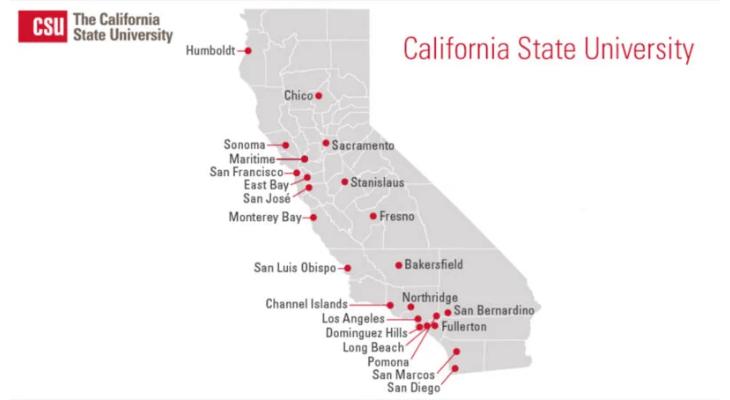
(RNS) — This January, California State University, the largest public university system in the United States, added caste to the anti-discrimination policy in its faculty collective bargaining agreement. This momentous, hard-fought victory followed years of activism by caste-oppressed students, alumni and faculty.
So it might puzzle some who follow social justice movements to hear that some Cal State faculty members and Hindu affiliated groups are pushing back against what seems like a move toward equality and fairness. Their arguments do not come as a surprise to those who follow caste politics and Indian nationalist discourse. Casteist pushback to this measure is expected.
Caste and Hinduism remain unfamiliar to many Americans, and so caste discrimination can seem niche and distant. But as the sizable South Asian American population grows — it has doubled every decade since 1980 — caste is playing an increasingly important role in the United States. Right now, California is prosecuting a case alleging caste-based discrimination at Cisco Systems, a Fortune 100 company. Other university campuses, including Brandeis, Colby, Harvard and University of California, Davis have already included caste in their discrimination policies along with race and gender.
If the first step to resolving a problem is to acknowledge it, the second step is to understand it. As scholars and practitioners of South Asian religions, we both continue to wrestle with our caste privilege by naming this privilege and working to dismantle the caste discrimination we witness in our communities.
California’s state university system also made an effort to grapple with the facts about caste: The system’s decision was driven in part by a 2016 study conducted by the anti-caste advocacy organization Equality Labs. That research showed that of 1,500 participants who were surveyed, 25% of those identifying as Dalit (literally: broken, oppressed) experienced casteist remarks in the workplace. Some 33% reported discrimination in educational settings.
This study is one of the few to offer concrete data on how caste hierarchies continue to oppress those at the bottom in diaspora South Asian communities, particularly in the U.S.
Share
Related Articles
American Civic Life
Is This a Time for Bridgebuilding? 5 Leaders in Conversation
American Civic Life
The Interfaith Legacy of Muhammad Ali: “The Wise Man Changes”
American Civic Life
Faith Based Efforts Work in Vaccine Uptake: Now Let’s Make it Easy
If the first step to resolving a problem is to acknowledge it, the second step is to understand it.
If the first step to resolving a problem is to acknowledge it, the second step is to understand it.
Here’s how we would describe it to our students. Caste is a social system that is determined at birth and that assigns hierarchical roles to various communities within society. Caste is established and given credence in premodern Hindu texts, and other religious communities have adopted discriminatory caste practices as well. Today, caste operates within South Asian communities of all religious backgrounds, and it continues to constrain social and cultural practices, including marriage, meal sharing and friendship.
Though we think of caste as an Indian question, it has long been a part of the South Asian immigrant story. In 1920, a U.S. Army veteran named Bhagat Singh Thind applied for citizenship after serving in World War I. Thind’s lawyer argued that Thind was a Caucasian and should therefore be granted citizenship. Thind’s lawyer tied this claim to Thind’s dominant-caste status, stating, “The caste system prevails in India to a degree unsurpassed elsewhere. With this caste system prevailing, there was comparatively a small mixture of blood between the different castes.”
In other words, Thind’s claim to U.S. citizenship rested on his dominant-caste identity and its parallels with whiteness.
The U.S. Supreme Court eventually rejected the argument, saying that he did not appear white and therefore couldn’t be considered for citizenship. But his attempt to claim whiteness, in part based on his caste identity, shows us an important linkage between caste and race — both are socially constructed mechanisms for cultural power. It also underscores how long caste has been an operative category of identity in the United States.
Nearly 100 years have passed since Thind’s Supreme Court case. And, while much has changed, only in the past few years are we beginning to recognize the need to listen to and protect those who are at the bottom of the caste hierarchy.
The critics who have opposed California State’s move — some of whom are affiliated with groups with dominant-caste leadership and a history of caste apologist and Hindu nationalist views — argue that nondiscrimination policies should not consider caste because the policy would only apply to one group: South Asians. They further claim that calling attention to caste inequities actually risks creating negative stigmas and endangering an already vulnerable Hindu minority.
While it is true that white supremacy harms South Asians, this duplicitous stance obfuscates how power and privilege work: It’s possible to discriminate against people who share your South Asian identity while also being marginalized by others for being South Asian. Discrimination is not mutually exclusive, or zero-sum.
Recognition of casteism in the South Asian diaspora is important because of what it signals to these communities: They might be racialized and minoritized by virtue of their ethnicity, but they can still have privilege and oppress others based on other identities they hold.
The attempt by some caste apologists to uphold caste, overlook its discriminatory structure and downplay the harm it causes shows us why this is an important civil rights win and why policies like these are so crucial. As Cal State, East Bay alum and Dalit activist Prem Pariyar notes in his reaction to the news, “This recognition is huge, but not enough.”
(Dheepa Sundaram is an assistant professor of religious studies at the University of Denver who writes about digital culture, yoga, nationalism and religion. Simran Jeet Singh is executive director of the Religion & Society Program at the Aspen Institute. Both are columnists for Religion News Service. The views expressed in this commentary do not necessarily reflect those of Religion News Service.)