Toward Community: How the “Other” Impacts Our Ballot
October 16, 2020
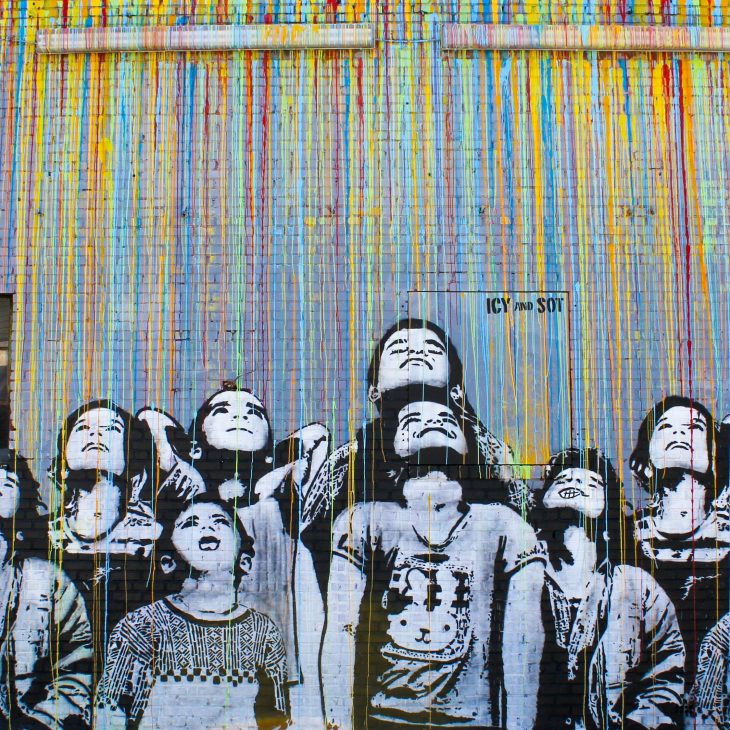
All are made in the image of God, bestowed with inherent worth and dignity. We have been created for the purpose of belonging to one another, serving one another in our shared image-bearing.
These are fundamental truths that I hold as a Christian.
Yet, Christians in America are in desperate need of an education in belonging. Our imagination of the world must be reoriented so that we might see the needs of the marginalized and oppressed, the burdened, and disenfranchised.
As our nation grows increasingly diverse in nearly all aspects of public life, we must decide if our diversity will drive us toward cooperation or division. Will our differences turn us against one another, or serve as a catalyst for cooperation and meaningful change? Will we live into this theological and spiritual reality of belonging, or deny this reality and instead retreat to our own social or political tribe, thereby distancing ourselves from the cries of our neighbors?
Josh Dickson, who serves as Faith Engagement Director at Biden for President, answered these questions directly in our conversation on Tuesday. Dickson offered several important observations to this cultural malady which certainly apply across faith traditions, but also speak uniquely to the important questions arising within the Christian community.
The primary factor that forms diversity into a catalyst for cooperation, Dickson argued, is a relationship. In other words, it is a lived, experiential knowledge of the “other” that drives cooperation and a desire for the betterment of one’s entire community. In relationships, issues of police brutality, affordable healthcare, equal rights, and protecting refugees are given a name and face. Willful ignorance and cliché platitudes are confronted by the soul-filled bodies of those around us. In this way, the problems that pervade our society become inherently religious issues, issues that are not simply about legislation, but about the wellbeing of our neighbors.
As we have all witnessed, diversity apart from this kind of knowing breeds hostility and fear. A lack of relationship leads one to conclude those on the other side of the border are the culmination of our greatest fears, that Black bodies must be inherently guilty of something, that those who are receiving unemployment benefits are stealing from the government, and the like. It fosters the accusatory language of a “China virus,” or “Muslim ban” that clearly denote who belongs in America, who does not belong, and who holds the greatest power. Diversity apart from a relationship allows us to make unquestioned and unchallenged assumptions of the “other.”
As Christians, Dickson’s argument should sound familiar. Throughout his entire ministry, Jesus did not climb the ranks of the Roman empire but rather fled to the corners of society where he communed with “tax collectors and sinners,” with fishermen and sex workers, with the disabled and the sick. Those whom the religious elite deemed unclean, Jesus touched and healed. Where the governing authorities refused to go, Jesus went with a message of liberation and hope:
“Blessed are the poor in spirit, for theirs is the kingdom of heaven.”
Dickson also affirmed and elaborated upon a commonly held sentiment: we are living in a historical moment during these the closing months of 2020. The decision we make (or have already made) this November will speak to the current state of American life. How will we respond to the cries of our community? Will we acknowledge the systemic sins of our nation? Will we seek restitution and advocate for reparations? Can we make meaningful change? This is what is on the ballot this November.
In closing, Josh Dickson affirmed the hope I have in my fellow citizens. A hope that we will become a society of equal representation across ethnicity, class, gender, and ability. As an evangelical Christian, I have hope that my tradition can change as young believers repent of our own tradition’s history and reject the immorality of our leaders. I have hope that, in a relationship, charitable and equitable conversations may be held among families, friends, and colleagues.
As we head to the polls this November or submit our mail-in envelopes, may we remember that we have been made to be in community, to see ourselves in light of the “other,” and to love our neighbors as we love ourselves.
Why did you come here?
I was looking for you.
Who told you to find me?
I am not sure, but I think it was God.
— Willie James Jennings
Amar Peterman is a graduate student at Princeton Theological Seminary, focusing his studies on American religious history. You can follow his work on his website and on Twitter: @amarpeterman. Amar, an Evangelical Christian, was invited to write in response to a public conversation between Eboo Patel, IFYC’s Founder and President, and Josh Dickson, the Faith Engagement Director at Biden for President. Watch that conversation here.
Share
Related Articles
American Civic Life
Racial Equity
American Civic Life