
The Swastika And The 4 H’s
March 25, 2021
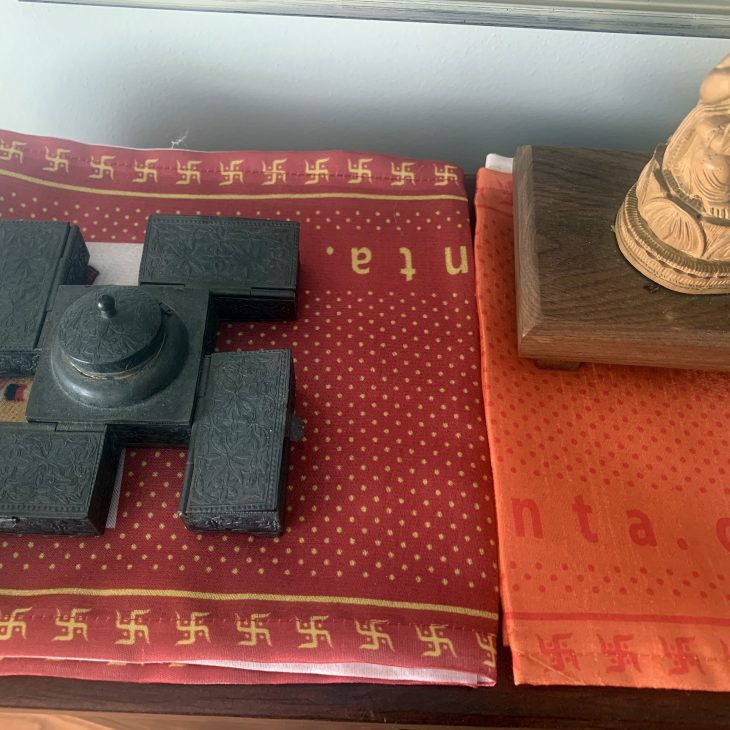
(RNS) — As our nation cleans up the political, social and spiritual mess of the last four years, from Charlottesville in 2017 to the attempted coup d’état on Jan. 6, we are learning to recognize the importance of symbols. In this critical, introspective work we need to avoid knee-jerk reactions and politically easy “zero tolerance” policies.
Late last year, the New York state Senate passed a bill that would require schools to teach about the swastika “as the emblem of Nazi Germany” and names it as one of two “symbols of hate.” (The other is a noose.) A renewed version of the bill is back before the state Senate again in this year’s session.
Most people associate the swastika with three H’s: hate, Hitler and the Holocaust. The Nazi symbol, its simple graphical form, black on white, was adopted by Adolf Hitler and has been revived today by white supremacists in the U.S. and Europe. It is a painful reminder to Jewish people worldwide of the Holocaust and its enduring harm to survivors and families.
There is a fourth H: heritage. For Hindus, as well as for Buddhists, Sikhs, Jains, Native Americans and other indigenous people around the globe, the swastika is an ancient symbol of prosperity and good fortune. Alongside a handful of other symbols, like the om (ॐ), it is commonly seen in Hindu sacred spaces.
My family painted red swastikas on the front porch when we moved into our suburban Atlanta home in the 1970s. Barely 8 years old, I only knew the symbol’s religious significance; I didn’t know about Nazis or the Holocaust.
Had our house not been on a hill — had our porch been visible from the street — our swastikas could have caused a misunderstanding or even anger and violence.
By the time I was a teenager, I saw my Christian friends wearing crosses and my Jewish friends wearing Star of David or Chai pendants. I realized if I wanted to wear a religious pendant outside of India, it needed to be an om. A swastika would require too much explanation, and could make me a target. I have a swastika pendant my grandfather gave me, but I won’t wear it except in my ethnic community.
I don’t regard this as a sacrifice. Having studied the Holocaust at Yad Vashem and the Hebrew University of Jerusalem, I recognize how much pain the symbol causes for many Jews. I have other Hindu symbols I can wear instead.
I make that choice because living in a religiously pluralistic democracy is about we and not just me. That means considering our colleagues, neighbors and students, and making personal religious choices that respect others. I’m not losing any of my religion by considering the pain the swastika causes somebody else.
There’s a portion of the Hindu wedding ceremony when a cloth barrier called the antarpat is held up between the bride and groom, symbolizing their separation before marriage. At my wedding, the antarpat was printed with a large red and gold swastika.
Among wedding guests were numerous Jewish friends, including a Holocaust survivor. One of my bridesmaids that day is an observant Jew. Before our wedding day, we spoke privately to each of them, explaining the symbol’s meaning in the ceremony. We also seated the Holocaust survivor so he would not have a view of the swastika on the antarpat.
Some argue that a detailed parsing will solve the dilemma. They imagine we could defuse the symbol by pointing out the Nazi image is black, or turned at an angle, while the Hindu swastika points in this other direction or is some other color. Such talk ignores the emotional impact of the symbol — an impact felt regardless of the angle, color or even context.
But banning the swastika, or writing laws that treat it as only a Nazi symbol, would violate the First Amendment (as New York Gov. Andrew Cuomo has admitted). Just as important, bans sidestep the real issue such as dealing with our differences and coexisting as Americans.
In one school district where I’ve facilitated training on topics related to equity and justice for several years, a fourth-grade teacher gave her students an assignment to share their cultures by drawing pictures. One of her Indian American students’ drawings included a swastika.
The teacher was alarmed but thoughtful: She only knew the swastika as a symbol of hate, but she also knew this child of Indian immigrants was not a Nazi. She brought the drawing to her principal and superintendent, and they called me. I offered my recommendations on how to respond to and teach about swastikas, and explained: “This child has done exactly what you asked in the homework assignment, which is drawing and talking about their family and culture.”
While recommending the student receive credit and not punishment, I also advised not to post the assignment — not just that student’s, but any student’s — in the hallway as elementary schools often do. There’d be too much opportunity for that symbol to shock a passer-by who lacks the benefit of context and understanding.
At any age, learning about the swastika is an opportunity to weigh and balance our own beliefs, feelings and decisions with others’. In a pluralistic society like ours, increased diversity will cause increased conflict. But outright bans do little to reconcile the value we put in pluralism with raw feelings of shock and anger.
Living in a pluralistic democracy means holding our democratic principles and our personal feelings in tension. Recognizing there will be tension, and it can be messy, isn’t easy but creates a valuable opportunity to consider how we thrive as a nation.
Share
Related Articles
American Civic Life
American Civic Life
Is This a Time for Bridgebuilding? 5 Leaders in Conversation
American Civic Life
The Interfaith Legacy of Muhammad Ali: “The Wise Man Changes”