With Race in Mind, Christians Reconsider Language of Dark and Light at Advent
December 9, 2022
(RNS) — The Rev. Bruce Reyes-Chow has always been bothered by Advent’s emphasis on the imagery of light and darkness.
For at least the last decade, the Presbyterian Church (U.S.A.) pastor has been urging other clergy to be thoughtful in how they use the language — often equating light with good and dark with bad — during the liturgical season of Advent in the roughly four weeks leading up to Christmas.
“My annual plea to preachers that during Advent we be aware of how much and how often we equate dark with bad and light with good,” he tweeted last year as the season began.
“The idea that darkness is inherently bad needs no reinforcement, so let’s let go of the confining imagery and embrace creative reimagination.”
The conversation about that Advent imagery of dark and light — and how readily it can be associated with skin color — is one many Christians are having years into a racial reckoning for both the church and the country, sparked by the murders of George Floyd and other Black people in 2020.

The Rev. Bruce Reyes-Chow. Courtesy photo
And, Reyes-Chow said, it seems like more Christians are listening — or at least, he told Religion News Service, fewer Christians are objecting as loudly as they once did in the comments on his social media posts.
Reconsidering the language and imagery Christians use at Advent isn’t about “banning words,” Reyes-Chow said, but about expanding Christians’ understanding of God and how God speaks to them.
“I just think that this is a liberating time, and so why let ourselves be, in some ways, still bound by this imagery that is not liberating for many people? In fact, it’s more confining,” he said.
There are several reasons why the imagery of light and darkness comes up so much during the season of Advent — including in the lyrics of the best-known Advent hymns, like “O Come, O Come, Emmanuel”: “O come, thou Dayspring from on high / And cheer us by thy drawing nigh: / Disperse the gloomy cloud of night / And death’s dark shadow put to flight.”
Part of it is simply meteorological. The dark winter nights stretch longer during Advent in the Northern Hemisphere, said the Rev. Wil Gafney, an Episcopal priest and professor of Hebrew Bible at Brite Divinity School.
And, as some point out in defense of the imagery, it appears in the Bible, including many of the Scripture passages read during Advent: “The light shines in the darkness, and the darkness has not overcome it.”
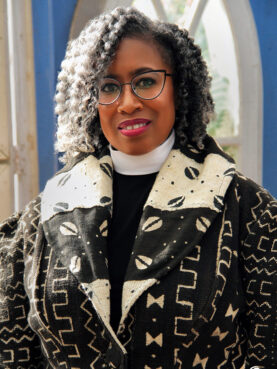
The Rev. Wil Gafney. Courtesy photo
But the context in which the writers of Scripture composed those metaphors is very different from the context in which they are read today, according to Gafney, who has been translating Scripture for more than 20 years.
In Western Christianity, she said, all those things come together in a church that profited from slavery and has for centuries misrepresented holy peoples as white. It associates the language and imagery of whiteness with “virtuous things to be admired” and presents the language of darkness as “virtually always negative.”
“We are hearing in praying language, which is innocent, the ancient use of metaphors for light and dark and shadow. But we are hearing it in a world and in a church that is deep in white supremacy and often has the images of white supremacy on the wall,” she said.
That context changes the way those words are received and understood, perpetuating the evils of white supremacy and institutionalized racism, Gafney said.
“I think any and all spiritual symbols can be used for good or bad,” said the Rev. Steven Charleston, the former Episcopal bishop of Alaska and author of the book “Ladder to the Light.”
To Charleston, dark and light aren’t in competition but mutually interdependent. That’s what makes Advent’s message of light in the darkness so universal.
For many Indigenous peoples in North America, the dark winter months are a time of regeneration and rest, of “deep spiritual awareness” when sacred stories are shared that aren’t told at any other time of year, said Charleston, who is Choctaw.
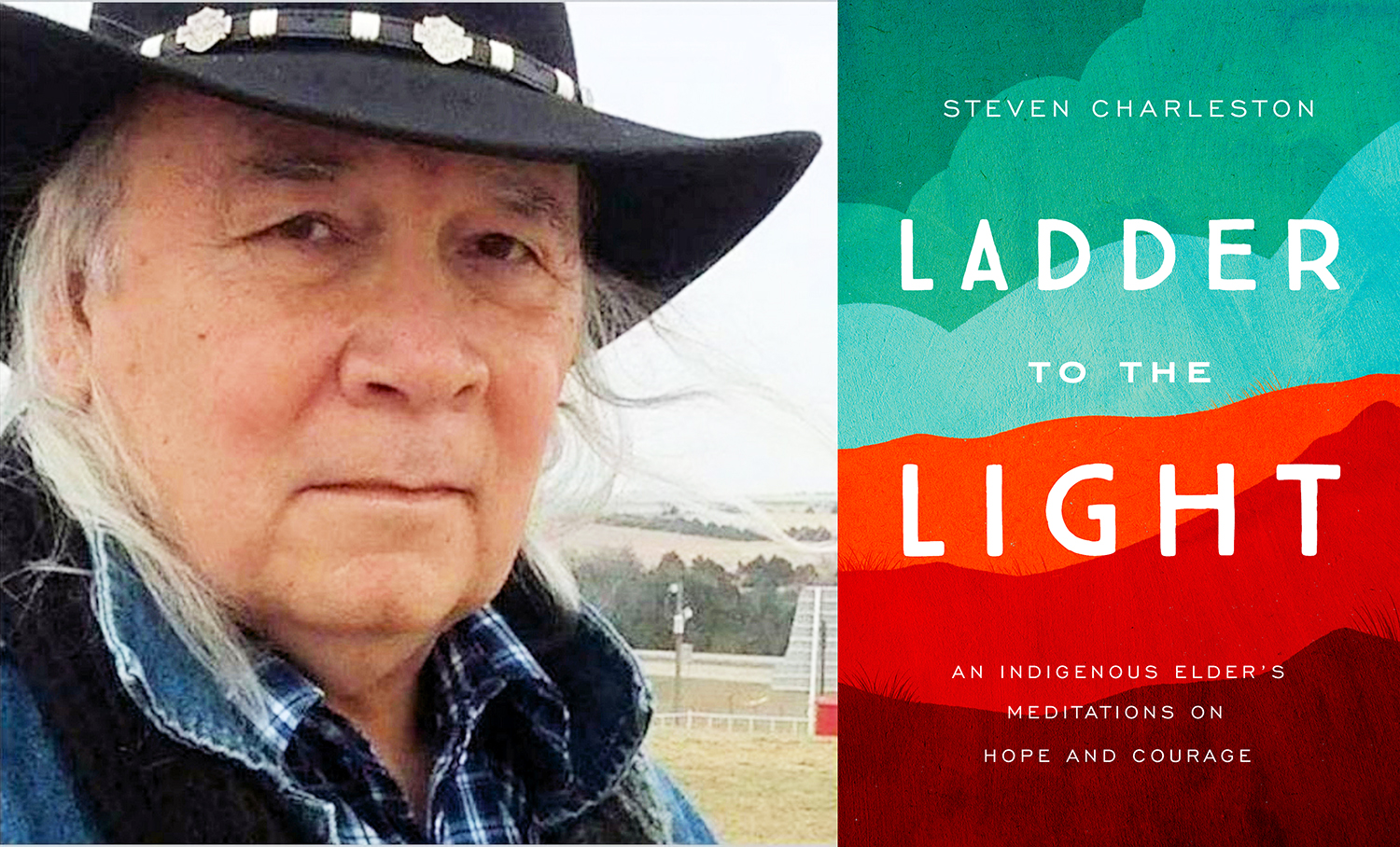
The Rev. Steven Charleston, author of “Ladder to the Light.” Images courtesy of 1517 Media
Darkness is a place where new life is formed, he said. You cannot be born without darkness. You cannot take root. You cannot have light.
It’s not something to fear or to deny, but to embrace and live into, he said.
“The darkness, as we understood it over centuries, is a time that is full of the potential insight, wisdom and power of the sacred, so it becomes this really essential part of our whole spiritual cycle. It’s a season, just as we recognize Advent as a season,” Charleston said.
Positive imagery of darkness also can be found in Scripture.
Authors Sharei Green and Beckah Selnick point out a number of those images in familiar Bible stories in the picture book “God’s Holy Darkness,” published earlier this year. They name what they describe in the book as “the beauty and goodness and holiness of darkness and blackness and night.”
Selnick said the idea for the book came to her after reading a Living Lutheran column titled “God’s Beautiful Dark Works” by her mother, Presiding Bishop Elizabeth Eaton of the Evangelical Lutheran Church in America.
Maybe it was because she had a toddler at the time, but all of the images of darkness in Scripture read to Selnick like a children’s book — the kind of book she wants her two children to read.
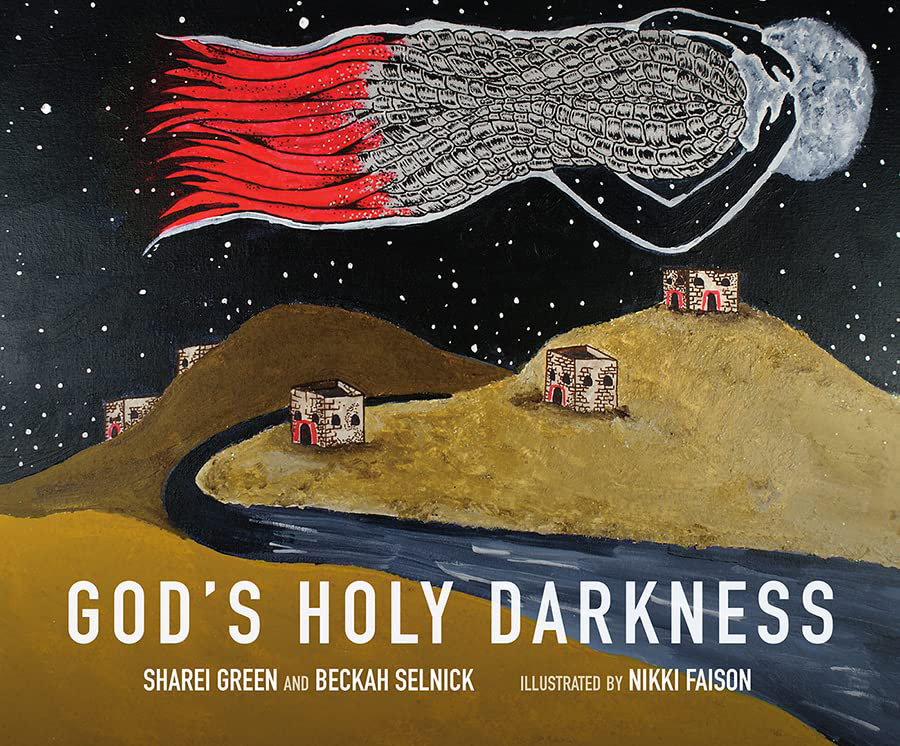
“God’s Holy Darkness” by Sharei Green and Beckah Selnick. Courtesy image
When Selnick approached Green with the idea for “God’s Holy Darkness,” knowing it was a story she as a white woman couldn’t tell by herself, Green said she tried to think of what she would’ve needed to read when she was a young Black girl.
Even now as an adult, Green said, seeing God depicted with dark, flowing locks by the book’s illustrator, ELCA Program Director for African Descent Ministries Nikki Faison, moves her to tears. It makes her believe, she said, “I, too, am made in the image of God.”
“It’s one thing to do the work to believe it as an adult. It’s another thing to see it,” Green said.
Even with those positive associations with darkness, Faison said, there are other images and themes Christians can draw on during the season of Advent. It’s a time of waiting, a time of preparation, a celebration of God appearing in a human body.
“If we only choose to talk about darkness during Advent, we are lazy theologians,” she said.
Last year, Reyes-Chow abandoned the imagery altogether at the congregation he was pastoring, First Presbyterian Church of Palo Alto. With everything happening in the world at the time, he didn’t want to perpetuate the idea that darkness was bad in any way, he said.
“Once you choose to see that dark and darkness and lightness are perceived in a certain way, I think you can’t go back,” he said.
This Advent, he’s taking a further step. A decade into urging his fellow Christians not to center whiteness in their observance of Advent, Reyes-Chow blogged earlier this week that he realized he was doing that very thing.

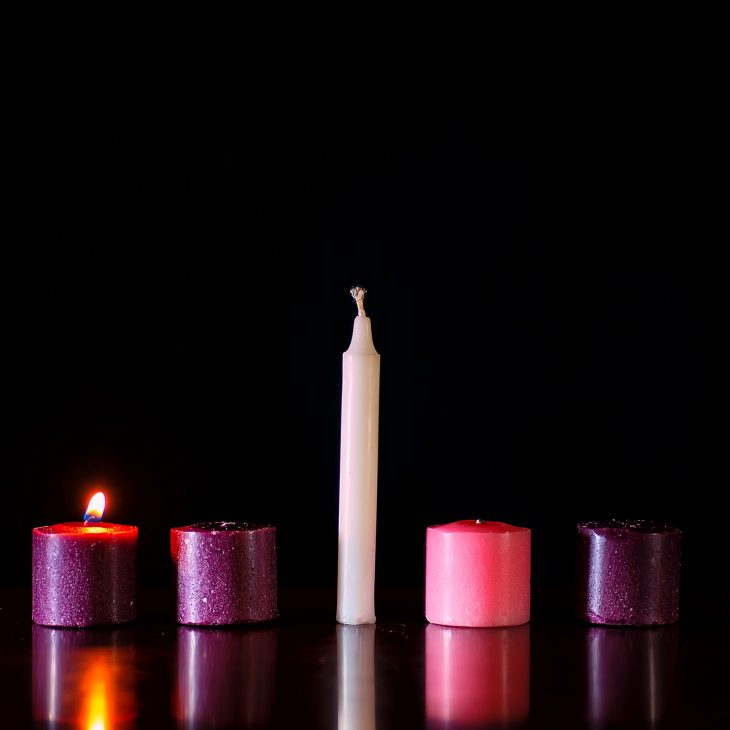
Advent wreath by JayBanWorks with dark brown Christ candle, center. Photo via Etsy/JayBanWorks
Literally.
When he pulled out his Advent wreath this year, he realized he had placed the traditional white candle at its center — “the LAST one, the BEST one, the MOST IMPORTANT ONE,” the one symbolizing Jesus, whose birth Christians celebrate at Christmas, he wrote.
Inspired by a conversation with the Rev. Carlton David Johnson, associate director for theology, formation and evangelism at the Presbyterian Church (U.S.A.), who mentioned placing a black candle at the center of his Advent wreath, Reyes-Chow replaced his with one that is dark brown and urged others to consider what might happen if they did the same in their churches.
Some churchgoers may object that the Christ candle should be white when Scripture describes Jesus as the “light of the world,” he wrote. But it makes sense to him, he continued, when Jesus himself — who Christians believe was born thousands of years ago in what is now the West Bank — would have been dark-skinned.
“The thing is, the light is not generated by the color of the candle but from the light that that candle gives to the world,” Reyes-Chow wrote.
“Candles of all colors can be a light to the world, even black and brown ones.”