Orthodox Jewish Women Scholars; Growing Authority is Recognized in Push to Publish
March 30, 2022

(RNS) — According to the Talmud, the first instructions on how Jews should celebrate the holiday of Purim were set down by one of its founders: Queen Esther, who with her cousin Mordechai helped saved the Jews in Persia from the evil Haman. In writing her book on Purim, Esther became one of two women, with Jezebel, whose writing is recorded in the Bible.
Today, 50 years after the first woman was ordained a rabbi in America, and 100 after the first bat mitzvah, Orthodox Jewish women are being urged to write and publish more widely on religious topics than ever before, as publishers, schools and websites are opening the way to make women’s scholarship and thinking more widely available — including two new programs named for Esther’s decision to publish.
In May the Matan Women’s Institute of Torah Studies in Jerusalem will announce its first group of Kitvuni Fellows. Named for Esther’s command to her rabbis, “Kitvuni l’dorot” (“Record me for all generations”), the program invites female scholars and educators to develop books on the Torah, supporting them with workshops, access to experts and a monthly stipend.
“It is time to make room on the bookshelf,” said Rabbanit Yael Ziegler, who became academic director at Matan last fall and began “thinking what is the next stage of women’s learning.”
Traditionally men, and especially male rabbis, have been granted exclusive authority in Orthodox Judaism, and only recently have women begun to be accepted as Torah scholars and earned the title “rabba” or “rabbanit.” The recent push to publish women’s views on the Torah represents a coming of age for the idea that learned women can claim authority in interpreting Jewish law.
Women’s scholarship itself is new, though there have been exceptional women seen as learned in all eras of history, such as Bruriah, whose opinions are quoted in the Talmud. Opportunities for women to study Torah have been growing for decades, but without access to publishing, learning is rarely recognized. According to Ziegler, female scholars’ accomplishments “have not been reflected in the written Torah scholarship that has emerged.”
After more than 30 years of existence, Nishmat, a center for women’s Torah study in Jerusalem, published Nishmat HaBayit, its first collection of answers to women’s questions about Jewish law and the first book of Jewish legal responses authored entirely by women. The book contains entries on pregnancy and pregnancy loss, birth, nursing and contraception. According to its website, over 400,000 questions asked by women have been answered by the 160 female experts who have trained there.
Ziegler is conscious that changing minds about women’s place in Torah study means providing examples for younger women scholars. If publishers “fill bookshelves with that kind of scholarship that we are looking for, it will be a message to young women,” she said.
Share
Related Articles
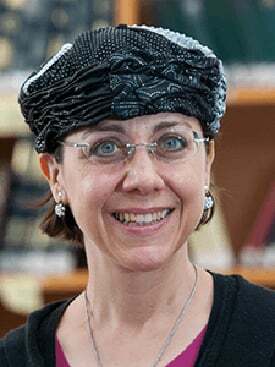
Rabbanit Yael Ziegler. Photo courtesy of Matan
Encouragement to write is given to post-high school women in a three-year-old effort at Ohr Torah Stone’s Midreshet Lindenbaum, a yeshiva for Orthodox women started in Jerusalem in 1976, called Matmidot. The program tutors high school-age women to “cultivate (their) ability to research and produce high-quality Torah scholarship,” according to its website.
Rabbanit Sally Mayer, who founded the program in 2019, told RNS that one year her students decided to hold a year-end sale of books written by their teachers. Of the dozen books, only one was by a woman, even though the teaching staff was evenly split between the two sexes. The students asked, “Why aren’t women writing?” and Mayer says, “That has reverberated.”
Now in its third year, Mayer decided to start a journal for a select group of students to publish original research papers at the end of their year of studies. Mayer sees the value in this as something that will “enable those who have capability to spread Torah.”
An increasing number of initiatives are also being designed to encourage women who have four years of post-college Jewish learning to write more. Last year, the Sefaria Women’s Writing Circle began providing coaching, editing and peer mentorship, as well as a paid fellowship, starting with a group of 14 participants.
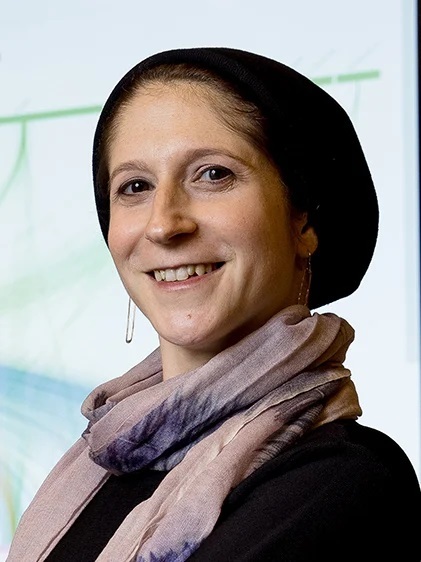
Rabbanit Sara Wolkenfeld. Photo courtesy of Sefaria
According to Rabbanit Sara Wolkenfeld, the chief learning officer at Sefaria, the initial idea was to have a smaller program, but the volume of applicants led them to expand the number of writers. This year the program Va’tichtov: She Writes (a quote from the Book of Esther 9:29) is being run by Yeshivat Maharat, an institution based in The Bronx, New York, that trains women to be Orthodox “rabbas,” “rabbanits” or a title of their choosing at the end of their course of study.
Darshanit Miriam Udel, the newly appointed head of the Yeshivat Maharat program, said of the new publishing initiatives, “I think there is a natural progression, a bid for some degree of permanence, the longevity of the ideas that we have.”
At the 41-year-old Drisha Institute in New York, a six-week program starting in April will have workshops in fiction, non-fiction, poetry and translation, according to a phone interview with No’a bat Miri, the program’s coordinator.
Jonathan Sarna, university professor of American Jewish history at Brandeis University, explained the importance of publishing in Jewish settings, saying, “Books are to power” just as “diamonds are to wealth, a visible display of who you are, what you are and what you can afford.”
He added, “Until there are women whose writing is read and disseminated and studied, there is a realization that women will not fully have been empowered in Jewish life.”
Sarna’s daughter, Rabbanit Leah Sarna, participated in the Yeshivat Maharat writing fellowship this past year. In a Zoom interview, Leah Sarna spoke of the importance of writing in leaving a legacy, noting that her grandfather, the late Bible scholar Nahum Sarna, has many books that help her “feel connected through his writing” to him and that the texts “give him immortality.”
Matthew Miller, the publisher of Koren, which will be publishing the work of Matan’s Kitvuni scholars, said, “Women’s scholarship is finally getting the respect it deserves.”
Queen Esther would agree.
(Beth Kissileff is the co-editor of “Bound in the Bond of Life: Pittsburgh Writers Reflect on the Tree of Life Tragedy” and author of the novel “Questioning Return.”)