In New York, Interfaith Coalition Makes Common Cause Against Rising Tide Of Hate
April 27, 2021
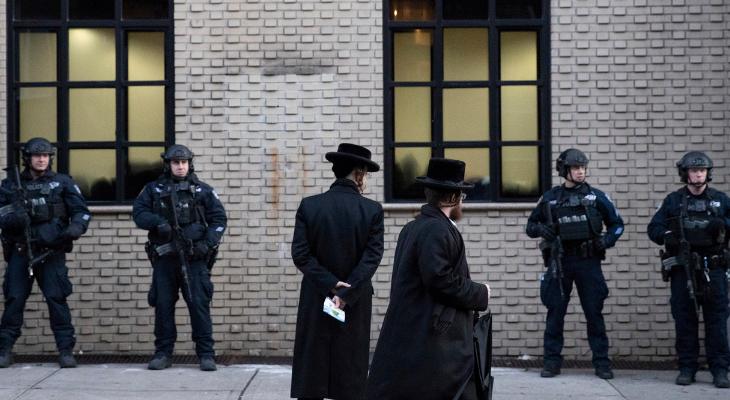
(RNS) — Synagogue safety has been a growing concern for American Jews ever since the October 2018 Pittsburgh massacre in which a gunman walked into the Tree of Life Synagogue and killed 11 people.
Nowhere has been more affected than the New York metropolitan area. In the Bronx alone last week, four synagogues in the Riverdale neighborhood were vandalized by a person throwing rocks and kicking in windows. Police are still searching for a suspect.
On April 16, clergy from 20 New York congregations, including Muslims, Hindus, Buddhists, Jews and Christians, met as the Interfaith Security Council held its first meeting to talk about how to share expertise and improve relations with law enforcement.
“Often the default is to look out for your own,” said Rabbi Bob Kaplan, executive director of the Jewish Community Relations Council of New York’s Center for Community Leadership. “In this environment where resources are scarce and the threat is so real, we have to make sure we are all communicating with each other and sharing best practices.”
The council was founded with support from two Jewish organizations, Community Security Service, which trains volunteers to provide physical security around synagogues and another Jewish group, the Community Security Initiative, which assesses buildings for vulnerability to attack.
A third partner is the 67th Precinct Clergy Council of Brooklyn, which supports mostly churches in the borough’s East Flatbush area.
“With a heightened level of white supremacy and a heightened level of hatred we can benefit from the research, information and training that these Jewish organizations have and that can then trickle down to our organizations so we can protect ourselves as well,” said Pastor Gilford Monrose, the founding president of the clergy council and the pastor of Mt. Zion Church of God 7th Day.
Monrose said East Flatbush has seen a proliferation of gun violence at churches. In one instance, a funeral service for a young man killed in a gang-related shooting was interrupted by shots fired from a rival gang. In another case, a young man fleeing the police ran into a church during a church service.
The FBI’s latest hate crime report from 2019 found that 20% of hate crime victims were targeted because of the offenders’ religious bias, accounting for 1,650 offenses reported by law enforcement.
The number of hate crimes targeting minority groups appear to be increasing. In recent months, the country has witnessed a string of high-profile attacks on Asian Americans, including a mass shooting at Atlanta-area spas that killed eight people, including six Asian women, and a shooting at a FedEx warehouse in Indianapolis that left eight people dead, including four Sikh Americans.
Last week, the U.S. Senate passed a bill to help law enforcement respond to hate crimes and report them to the federal government, alongside legislation that specifically combats anti-Asian hate crimes.
While large churches can afford to hire off-duty police officers or professional security teams to guard their places of worship, smaller congregations, and especially minority faiths, don’t have budgets for that. Those are also the congregations that may be more vulnerable to white nationalist violence.
In addition to the Community Security Service’s one-hour Zoom training, future training opportunities might revolve around trauma or attending to physical and mental health crises that result from bias attacks.
Despite living in close quarters in New York’s densely packed streets, congregations have not always enjoyed the best relations.
“If we’re only doing it on our own, I may feel safer in my own building,” said Kaplan. “But if we’re doing it together, my building becomes safer because of the nature of the atmosphere in the community.”
Evan R. Bernstein, CEO and national director of Community Security Service, said the need for coordination among houses of worship has never been greater.
“A lot of different faith-based organizations are impacted by the rise of hate in this country,” said Bernstein. “The fact that we can incubate this now in New York is really special.”
Share
Related Articles