Fortitude Through Faith: The Muslim Pandemic Experience
April 1, 2022
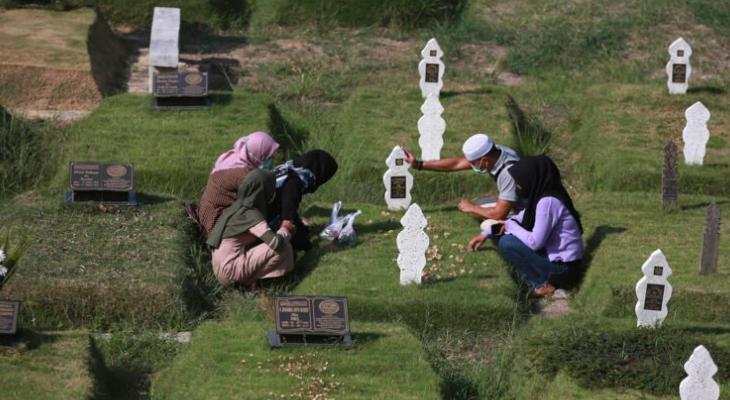
(RNS) — In March 2020, a month before Ramadan, Islam’s holiest time, many mosques around the world were shut down for the first time in living history. Not only did the accustomed daily communal prayers abruptly end; so did numerous social, educational and spiritual activities that define Ramadan.
Even in Mecca, the doors to the holy sanctuaries were shuttered and hajj, the once-in-a-lifetime pilgrimage to Mecca required of all Muslims, was canceled.
Two years later, Muslims’ pandemic story is still not over. Though we have adapted to new ways of working, socializing and worshipping, many of us are exhausted by what feels like endless uncertainty about an ill-defined world to come, not to mention the prospect of COVID-19 cases rising again.
For many Muslims, as with others, this exhaustion is coupled with new, or newly intensified, mental health challenges such as anxiety, depression, trauma, substance use and suicidal ideation.
There has certainly been no shortage of research and recommendations on what challenges people are experiencing and how best to alleviate them. Many of us have coped with the uncertainty of the past two years by bingeing a favorite Netflix show or eating our woes away with ice cream. For others, the pandemic has highlighted the necessity of more seriously addressing mental health.
But a narrative is missing in our pandemic story, about the role that faith has played, and will likely continue to play, in helping us cope.
Share
Related Articles
American Civic Life
American Civic Life
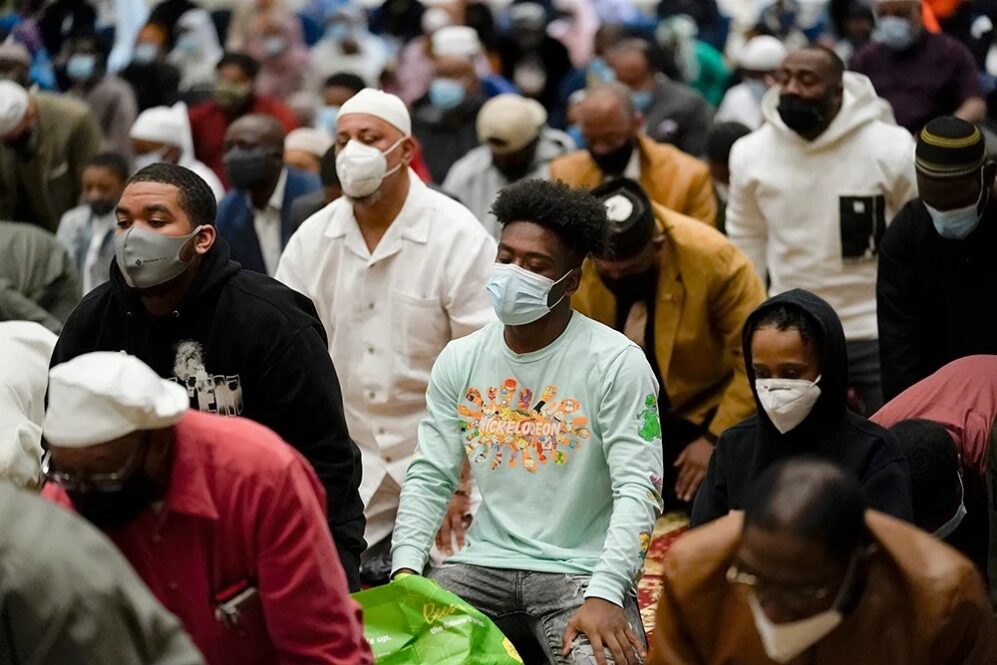
Worshippers perform Eid al-Fitr prayers at the Masjidullah Mosque in Philadelphia, May 13, 2021. (AP Photo/Matt Rourke)
The Muslim community is a prime example. Our research institutes, the Muslim Mental Health Lab at Stanford University and the Yaqeen Institute for Islamic Research, partnered to survey nearly 9,000 Muslims globally from the outset of the pandemic through the end of 2021. We wanted to understand how Muslims were thinking about and dealing with the pandemic, especially the unprecedented level of uncertainty.
In one of our recent studies, we reported that Muslims primarily relied on religious coping behaviors to deal with the pandemic — they increasingly asked God for forgiveness, continued to perform the five daily prayers, read more Quran and made more du’a (praying to God outside of the ritual prayer).
In fact, 69.5% of Muslims turned to their faith, compared with just 28% of non-Muslim Americans who said that the pandemic strengthened their faith. We also found that those with a higher level of uncertainty intolerance had a 60% increased chance of developing major depressive disorder.
Furthermore, higher levels of intolerance to uncertainty corresponded with lower levels of religious routine. Negative coping strategies, such as substance use or excessively watching the news, corresponded with worse mental health outcomes across the board.
This leads to the conclusion that there was a direct correlation between a clinical mental health condition and faith-based coping in Muslim populations. This incredibly important finding speaks to the importance of faith to increase resilience. Faith communities owe to their members to provide religious programming that improves and sustains mental health.
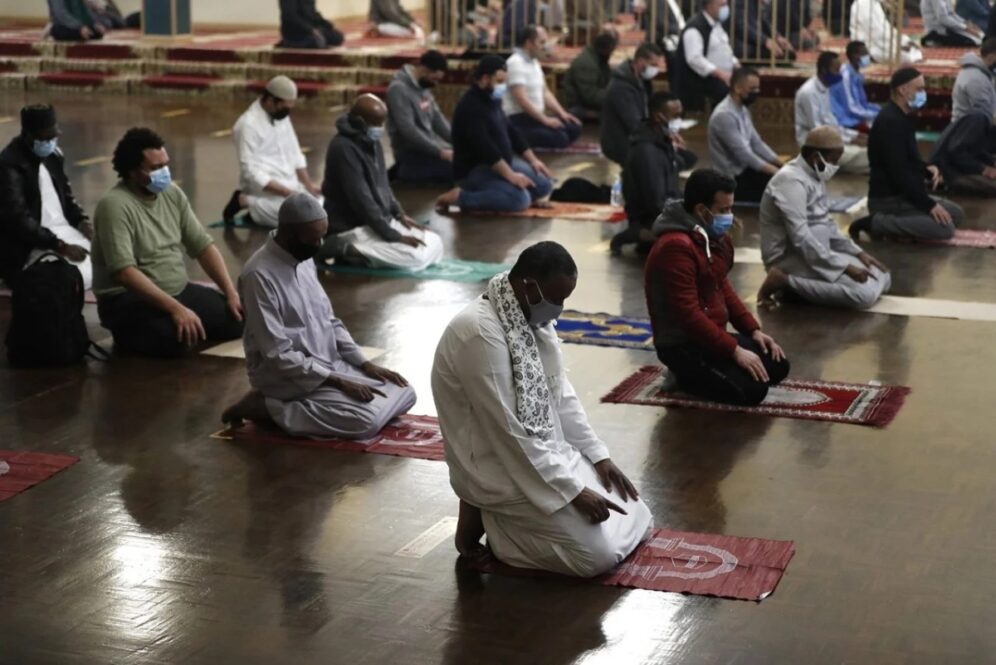
Muslims pray as they practice social distancing during an evening prayer called tarawih, marking the first eve of the holy fasting month of Ramadan, at Chicago’s Muslim Community Center on April 12, 2021. (AP Photo/Shafkat Anowar)
This seems an obvious role for houses of worship: Religious programming is, after all, what they do. But mental health increasingly operates under the umbrella of science and secularism, and despite research that acknowledges the connection between the two, religion has a way of being discussed as separate from mental health and well-being.
When the role of religion is minimized, communities like ours are missed and excluded from the bigger picture. The Muslim pandemic narrative that we discovered should underscore the invaluable contribution of faith communities. While some have noted that the connection between faith and mental health is nowhere “more obvious” than in the practice of Islam, studies have suggested that resilience is higher among other believers as well.
As we emerge from the pandemic with an increased sensitivity to the importance of mental health, we must be willing (and brave enough) to illuminate the role that faith plays in the mental health of people worldwide and appreciate the fortitude gained through faith.
(This Islam Beyond Phobia column was co-authored with Rania Awaad and Taimur Kouser. Awaad is a clinical associate professor of psychiatry at Stanford University School of Medicine, where she directs the Stanford Muslim Mental Health & Islamic Psychology Lab, and executive director of Maristan, a holistic mental health nonprofit serving Muslim communities. Follow her @Dr.RaniaAwaad. Kouser is a researcher at the Stanford Muslim Mental Health & Islamic Psychology Lab. The views expressed in this opinion piece do not necessarily reflect those of Religion News Service.)