Evangelical Scientist Katharine Hayhoe Finds Hope in United Nations’ Climate Report
March 14, 2022
CHICAGO (RNS) — “Like doorstops of doom.”
That’s how climate scientist Katharine Hayhoe describes the recently released report by the United Nations Intergovernmental Panel on Climate Change. Thousands of pages of unrelenting evidence the climate is changing: Heat waves in the summer are getting stronger, flooding is increasing, invasive species are moving into new areas.
Still, the chief scientist for The Nature Conservancy does not think the planet — or humans — are doomed.
The bestselling author of “Saving Us: A Climate Scientist’s Case for Hope and Healing in a Divided World,” Hayhoe is dogged about not giving in to despair and about the power of individual and collective advocacy. She recently worked with Netflix to create a website encouraging viewers to take action to stop climate change after watching the Oscar-nominated film “Don’t Look Up.”
Raised in the Plymouth Brethren tradition and married to a pastor, Hayhoe also frequently speaks about the intersection of science and her Christian faith.
After all, when you are studying science, “what are you studying other than God’s creation?” observed Hayhoe, a Paul Whitfield Horn distinguished professor and the political science endowed chair in public policy and public law in the Department of Political Science at Texas Tech University.
On her way through Chicago while “bundling” a number of recent speaking engagements across the Midwest — doing them in one swoop makes for a smaller carbon footprint than multiple trips back and forth from her home in Texas, she explained — Hayhoe spoke with Religion News Service about faith, hope and science.
This interview has been edited for length and clarity.
How do faith and science fit together for you?
I grew up in a home where my dad was a science teacher as well as a teacher in the local church, and so I grew up with the perspective that if we truly believe that the same God created the universe and inspired the Bible, then how could the two possibly be in conflict with each other? How could studying God’s written word be in conflict with God’s expressed word?
Now, of course, sometimes they appear to be in conflict. But isn’t that just because of our limited understanding of our theology or our science or sometimes both?
If we begin with the fundamental premise that if they come from the same place they can’t be in conflict, then we have a very different perspective on it than the one you commonly hear today in the United States, which is that somehow studying science is against faith, against God or against Christianity.
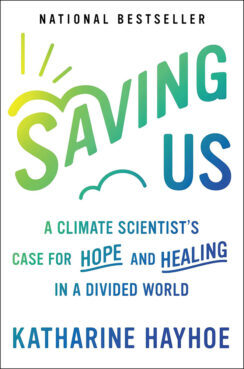
“Saving Us: A Climate Scientist’s Case for Hope and Healing in a Divided World” by Katharine Hayhoe. Courtesy image
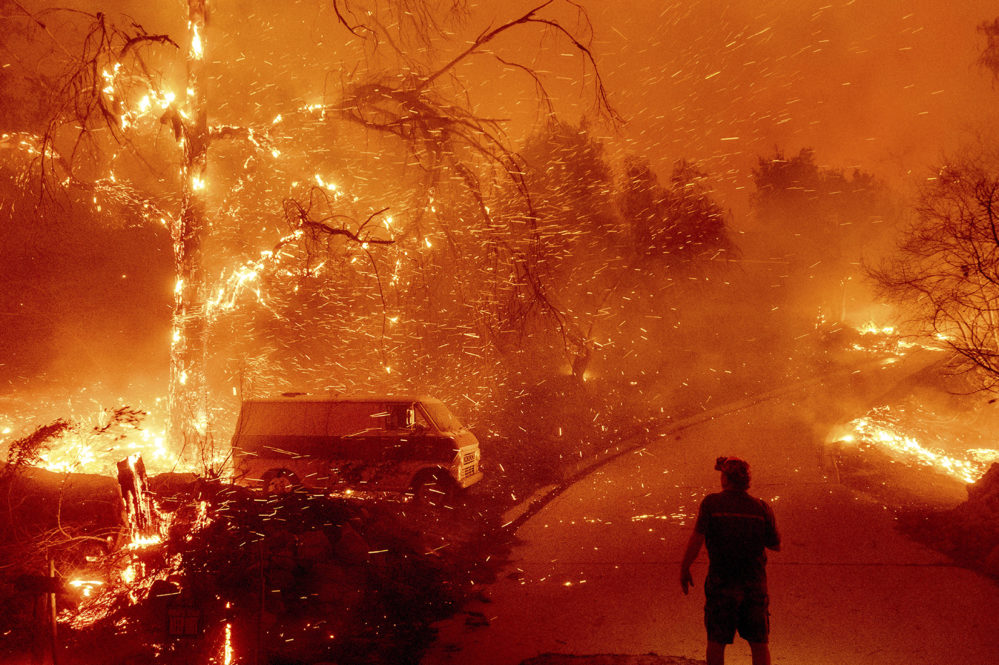
FILE – Bruce McDougal watches embers fly over his property as the Bond Fire burns through the Silverado community in Orange County, Calif., on Dec. 3, 2020. The United Nations on Monday, Feb. 28, 2022, released a new report on climate change. (AP Photo/Noah Berger, File)