• About Us
    • Mission & Vision
    • Team
    • Eboo Patel
    • Adam Nicholas Phillips
    • Board of Directors
    • Reports & Financials
  • Where We Work
    • Higher Education
      • Senior Leaders
      • Faculty
      • Students
    • Workplace
      • Health
    • Civic Life
      • Emerging Leaders
      • The Team Up Project
  • Get Involved
    • The Learning & Action Bridge
    • Courses, Curricula & Tools
    • Grants & Leadership Awards
    • Events
    • Campus Training & Consulting
    • Corporate Training & Consulting​
    • Speaking
  • Magazine
    • Interfaith America Magazine
    • Voices of Interfaith America
    • Money, Meet Meaning
    • Press
  • Join Us
    • Subscribe
    • Support Us
    • Our Supporters
    • Careers
    • Contact Us
  • About Us
    • Mission & Vision
    • Team
    • Eboo Patel
    • Adam Nicholas Phillips
    • Board of Directors
    • Reports & Financials
  • Where We Work
    • Higher Education
      • Senior Leaders
      • Faculty
      • Students
    • Workplace
      • Health
    • Civic Life
      • Emerging Leaders
      • The Team Up Project
  • Get Involved
    • The Learning & Action Bridge
    • Courses, Curricula & Tools
    • Grants & Leadership Awards
    • Events
    • Campus Training & Consulting
    • Corporate Training & Consulting​
    • Speaking
  • Magazine
    • Interfaith America Magazine
    • Voices of Interfaith America
    • Money, Meet Meaning
    • Press
  • Join Us
    • Subscribe
    • Support Us
    • Our Supporters
    • Careers
    • Contact Us
Subscribe
Support Us
Everyday Pluralism

As a Country We’re in Need of Healing. Here’s How Shabbat Can Help.

By
Aliza Kline

October 4, 2022

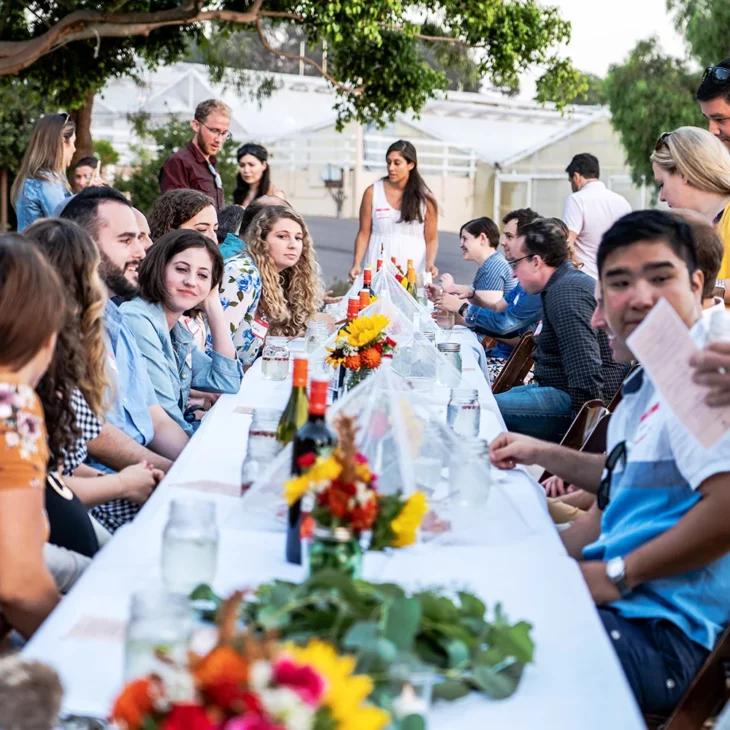
Shabbat dinner is one of the many times to bring family and friends together to connect in person. Photo courtesy of OneTable

(RNS) — It’s no surprise that many Americans in their 20s and 30s are struggling. As we come out of the pandemic, financial strains, gun violence, the pressures of social media, climate fears and widening political polarization all operate to make young adults more stressed and more socially isolated than ever. There’s no magic fix for the causes of their stress, but we can offer them antidotes to their negative feelings.

We’ve known for some time that interpersonal connections can help people live longer. New research shows the power of regular common rituals to make room to build these kinds of connections, strengthen mental health and mitigate loneliness. In a world that can feel chaotic and unwieldy, a few hours of dedicated space and time once a week can truly make an impact.

These are some of the reasons I helped to launch an organization nearly a decade ago called  OneTable, which builds on the ancient Jewish ritual of Shabbat, or Sabbath, to empower young adults to sit down to Friday night dinners with their peers and navigate modern obstacles to well-being.

We surveyed 2,000 young adults who have hosted or been guests at a dinner through OneTable, and they overwhelmingly say that they’ve become closer with people and “felt less lonely.” The dinners have also led to new friendships: 1 in 3 guests surveyed met up again with someone they met at a dinner.

Beyond making connections, young adults search for inviting spaces to share feelings and thoughts about their personal lives, fears and ambitions. They are deeply influenced by the world they see and experience around them — and as one young person put it, Shabbat dinner offers “community, safety, and freedom.”

In the same survey we asked young adults how they have been affected by rising antisemitism and the conflict between Israelis and Palestinians. While they expressed concern over both antisemitism in general and the conflict, those areas were not their greatest concern. More pressing to young adults are climate change, racism and, at the time they were surveyed, the ongoing pandemic.

Importantly, and somewhat surprisingly given the polarization we see on social media, not everybody is looking for a group of like-minded individuals. Many young adults want to be with people who will be supportive, respectful and understanding, even when having difficult discussions and disagreements.

While young adults seek out Shabbat dinners as a way to center these issues in their lives in meaningful ways with peers, they also find respite from them, a time to “just be.” At the same time, while Shabbat dinners impact all who attend, we have found they make the deepest impact on the hosts, likely because hosts have a stronger sense of agency over their gathering.

This research has only motivated us more to understand how Shabbat dinner is linked to human flourishing — and how the elements of Shabbat could be adapted to support people of all faiths and no faith. Thanks to a grant from the Templeton World Charity Foundation, George Washington University’s Collaborative for Applied Studies in Jewish Education will work with OneTable over the next three years on a rigorous study in this area. Our findings could inform how other communities develop their own programs to combat a national epidemic of loneliness and social fraying.

There’s no quick fix to many of the trends troubling young adults today, but we can contribute to the making of healthier people, mentally and physically, living in a more connected, supportive society.

(Aliza Kline is president and CEO of OneTable. The views expressed in this commentary do not necessarily reflect those of Religion News Service.)

Share

Related Articles

  • Civic Life

    Is This a Time for Bridgebuilding? 5 Leaders in Conversation

  • Civic Life

    Faith Based Efforts Work in Vaccine Uptake: Now Let’s Make it Easy
  • Civic Life

    What Interfaith Leadership Looks Like Online

Interfaith America Magazine seeks contributions that present a wide range of experiences and perspectives from a diverse set of worldviews on the opportunities and challenges of American pluralism. The opinions expressed herein do not necessarily reflect those of Interfaith America, its board of directors, or its employees.

Latest Articles

Video Screenshot of Cherie Harder and Chris Crawford in discussion.
  • Civic Life

Cherie Harder on Pluralism and Virtue in a Diverse Democracy

Jan 13, 2026
View of American clergyman and civil rights campaigner Martin Luther King Jr (1929  - 1968) (centre) and others as they sit in First Baptist Church, Montgomery, Alabama, May 22, 1961. (Photo by William Lovelace/Express/Getty Images)
  • Civic Life

Listen, Read, and Watch: 3 Stories for MLK Day

Jan 12, 2026
Holy Quran books in a row standing on a wooden shelf inside a mosque, English translation of the Arabic Text (The Holy Noble Quran), it's the central religious text of Islam, revelation from God Allah, selective focus
  • Civic Life

Generous Gifts, Radical Openness: Adding the Quran to My Bookshelf

Jan 06, 2026
Miguel leads a freedom school in a Catholic church's meeting hall, Oct. 12, 2025, in Los Angeles. (RNS photo/Aleja Hertzler-McCain)
  • Civic Life

How an LA Interfaith Coalition is Using ‘Freedom Schools’ to Defend Against ICE

Dec 24, 2025
End of content
No more articles to load
Interfaith America, 141 W. Jackson Blvd, Suite 3200, Chicago, IL 60604, US

© 2024 Interfaith America

Instagram Youtube Facebook X-twitter Tiktok
  • Privacy Policy
  • Terms of Use

Copyright @ 2024 Interfaith America. All Rights Reserved. Interfaith America is 501 (c)(3) non-profit recognized by the IRS. Tax ID Number: 30-0212534

Corporate EVENT
Faculty at the 2025 Teaching Interfaith Understanding seminar in Chicago, Illinois in June 2025.
Interfaith Summit 2025
Faculty at the 2025 Teaching Interfaith Understanding seminar in Chicago, Illinois in June 2025.
Interfaith-11.12.25-463
Interfaith-11.12.25-379
Interfaith Summit 2025
Students at the 2025 Interfaith Leadership Summit.
FacultySeminar25-KF-603
FacultySeminar25-KF-408

Subscribe

Join the network for our latest Magazine articles, resources, and funding opportunities!

Join Us