Chris Crawford: Politics is Loving Your Neighbor
October 20, 2020
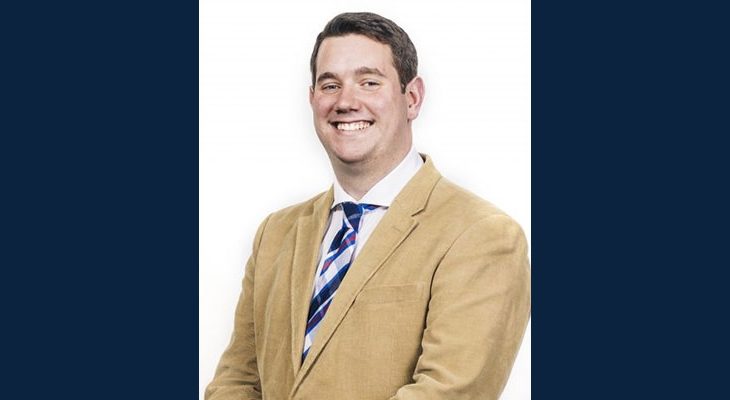
Chris Crawford is a Senior Program Associate at Democracy Fund, that describes itself as “an independent and nonpartisan, private foundation that confronts deep-rooted challenges in American democracy while defending against new threats.” In recent months, Crawford has played an essential role in the National Election Task Force on Election Crisis, in which IFYC has partnered. Interfaith America Editor, Paul Brandeis Raushenbush, sent questions to Crawford on the work on the Task Force and his personal beliefs on the intersections of religion, interfaith cooperation, and democracy.
Q: You are assisting The National Task Force on Election Crises with their outreach to religious leaders. Why was the task force started, who is participating, and what is its mission?
The National Task Force on Election Crises is a cross-partisan group of over 50 experts who are dedicated to ensuring a free and fair election by recommending responses to a whole range of potential crises, including premature claims to victory or premature attempts to stop counting the votes. They have one goal: a free and fair election. Members include former national security officials from both political parties, former elected officials, civil rights leaders, and others from across the country.
As an outreach captain, I help get this information into the hands of leaders who can make a difference in their communities.
Q: Talk a bit about your own professional or vocational journey and how you got to this point, doing this work.
As a Catholic, my beliefs don’t belong in either political party. I started my career working in the pro-life movement, and my belief in the value of every person from conception to natural death continues to guide my political engagement.
In 2015 I started working at Democracy Fund, a private and nonpartisan foundation based in Washington, D.C. that champions organizations and advocates working toward an open and just democracy in the United States. I manage the Faith in Democracy portfolio, which supports religious leaders in their efforts to promote pluralism, build bridges, and support our democracy. I have been especially proud of how we – as a secular foundation – have been able to do this work in a way that allows faith leaders to bring their deeply held beliefs to the table.
I see politics as a way of loving your neighbor and believe that democracy is the best form of government to allow people to reach their full potential. All of the freedoms that we cherish – including religious freedom – rest on the foundation of free and fair elections. The right to vote is more than a democratic right. As Dr. Barbara Williams Skinner and Rev. Jim Wallis have written, “Protecting the right to vote affirms the divine imprint and inherent value of all of God’s children.”
At this crucial moment, I feel called to do everything I can to ensure that each eligible person can cast their vote, that their vote will be counted, and that we have an election result that we all trust.
Q: The Taskforce has the word ‘Crisis’ in it. What Crisis or Crises do you foresee and how can we avoid it/them?
I’ll break the challenges into “Three P’s”: Pandemic, process, and politics.
The pandemic has created an unprecedented situation this election year. More Americans will be voting by mail, many older Americans who usually staff our polling locations are not able to do so, and polling places require more space for social distancing and higher sanitary standards. The Task Force has created materials on how to run an election during a pandemic as well as an excellent report on what we learned from the primary elections that can help the general election run smoothly.
In addition to the ways that the pandemic complicated our voting processes, some leaders have raised questions about the processes of casting and counting votes. The task force has responded by providing explanations that clarify how our election laws actually work. For example, the president cannot postpone the election, state legislatures cannot appoint their own preferred slate of electors to override the will of the people, and we have an Electoral Count Act that provides the legal framework for how the official election results are decided.
We have seen some public figures attempting to sow doubt in the integrity of our election process, by, for example, making false claims that voting by mail would lead to fraud. The task force’s “six elements of a successful election” notes that our leaders should not make unsubstantiated claims that the election is “stolen” or “rigged.”
Some states will not be able to count their absentee ballots until the polls close on Election Night. As a result, we probably won’t know the results on Election Night. In the time that it takes to count those ballots, Americans must be patient with the counting process and officials need to ensure that every vote is counted before the results are finalized. The media must avoid “calling” the election until the results are clear and must give accurate information to the public throughout the process.
There is one thing that every person can do to help ensure a free and fair election: Make your plan to vote. Do the research on how you can safely vote during this pandemic, and carefully follow all of the rules for submitting your ballot.
Q: What role can religion play in this difficult moment in American history to prevent crises and unify our country?
With over 380,000 houses of worship and 228,000 faith-based nonprofits in the United States, our religious institutions have enormous influence in their communities. Religious leaders can promote our election by:
Leaders of faith are among some of the most trusted leaders in the United States. In the event of crises, religious leaders can be a voice of moral clarity. Leaders of faith should raise their voices to protect the civil rights of all Americans, and to promote a peaceful transition of power, whether that transition is into a second term of the Trump administration or the first term of a Biden administration.
Q: Wave your magic wand (you have one, right?) and vision America you would like to see in the future where this task force doesn’t need to exist.
Our democracy is a constant work in progress and will require individuals and organizations to stand up each election cycle to defend it.
I think the core mission of the task force will always be important. In each election, we need nonpartisan sources of information to keep us informed. This task force has been a valuable addition to our civic landscape. That said, I would love it if we simply needed, “A National Task Force on Important and Helpful Information”, rather than a “National Task Force on Election Crises.”
If we’re using magic, my Yellow Brick Road to get to a future of free, fair, and trusted elections would lead toward a time when:
Ultimately, the challenges that we face this election season are requiring Americans of all beliefs and backgrounds to step up and serve our democracy in ways they never have before. Rising to meet these challenges in 2020 will strengthen our political culture and our institutions for years – and decades – to come.