A Virtual Event That Builds Genuine Connection
June 9, 2020
Virtual Interfaith Get-Togethers : What Are They?
Virtual Interfaith Get-Togethers are informal events for people to make connections and build understanding across diverse values and beliefs. They are hour-long events on Zoom that begin with community-building and expectation-setting among the whole group, then transition into interfaith dialogue utilizing the breakout room feature to organizing participants in random pairs. We try to mimic the notion of bumping into someone just as you might on campus when you’re walking through the quad or when you meet someone new at IFYC’s Interfaith Leadership Institute.
There are many ways to foster the kind of experience for which we’re aiming. Our approach is chiefly concerned with balancing access, security and establishing the necessary considerations for fostering community.
The Pre-work
Your first step is to create a Zoom or other virtual meeting that requires registration. It’s important that people who show up to your meeting understand its purpose and opt-in. Creating the step of registration helps establish this.
Next, choose someone to be the conversation facilitator and another person to be in charge of tech. I’ve found that while it’s possible to do both, it’s better to separate these roles so full focus is always on “reading the room” and facilitating most impactfully. Meanwhile, the tech point person will manage the breakout rooms, broadcast the discussion questions to the group and monitor the chat box. Beyond this, there are several helpful tips and tricks for facilitation via any platform. Zoom and others have great resources to hone your skills on all the tools that come with every level of license.
If you’re anything like me, part of your pre-work might also entail managing your jitters. When I ran my first event, I was nervous about what could go wrong with the technology and how it might be awkward to attempt deep conversations via Zoom. To help quell my anxieties, I did a practice round with my colleagues. I also simply named my personal worry outright at the real event itself. I explained to participants that this is something new, and that I was so excited to test this with them, so their patience and grace would be well-received in case I fumble. Everyone had a big smile and unanimously gave me the “thumbs up” while nodding along, which then made me feel much more comfortable. It ended up being a great way to model vulnerability for participants so that everyone felt disarmed and ready to speak to one another more openly.
It’s Showtime: Event Flow
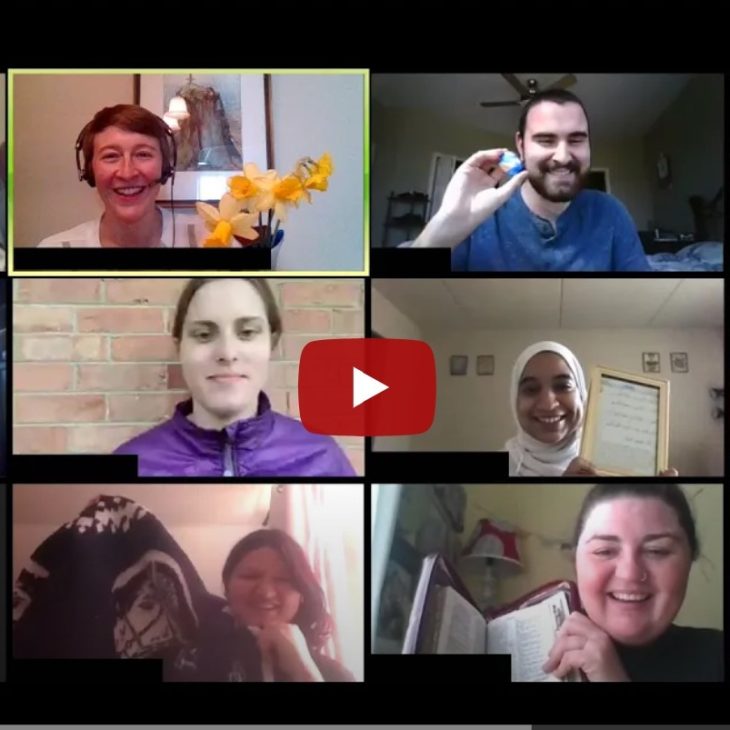
Begin by welcoming everyone to the space, initiating a round of introductions. Even if everyone knows one another, it’s still nice to connect more personally and compensate for what we miss in the absence of face-to-face encounters. If this is the case, do a “show and tell” round and have folks share an object near them that has significance to their lives. It can also be nice to have people share their geographic location. The bottom line is to begin the call with humanizing yourself and participants.
Explain the purpose of the event. I often say, “We’ll be using this time to learn about one another’s beliefs, values and worldviews. Creating spaces where we build mutual understanding around who we are and how we act in the world is something we believe will make us stronger and more impactful leaders—especially now.” Anything to this effect is good, but make sure they know that this isn’t your typical meet and greet. Participants need to know up front that this conversation will necessarily be personal. In fact, it’s good to share these expectations in the invitation – this is not an event where you can multitask or come and go. We need people’s full participation to make it work.
Given the personal nature of the conversation, set expectations for the space. I like to instruct people to speak in “I” statements to keep things focused on their particular point of view, as well as to enter conversations with mutual respect. After laying the foundation for a community agreement, ask participants to make any additional suggestions in the chat box. Once it seems that the expectations for the space have been set, literally ask everyone to opt in with a “thumbs up.” This is a meaningful gesture to signal that we’re all in it together, even when we’re physically apart.
Outline the programmatic flow and relevant technology logistics. Tell participants they will be randomly assorted into pairs (by your tech point-person), and they’ll have x minutes to discuss the first question. “What tradition has been an important part of your family or upbringing? Is it connected to a particular religion?” Whatever your first question is, read it a couple times and note that it will be broadcasted to the top of users’ screens once in their breakout rooms (again, thanks to your tech person). You may choose to “close the room” (in the settings) to foster a closer sense of community with those present – this clearly has positives and draw backs and should be conveyed in both the confirmation e-mail and the live conversation.
Time to begin! Folks will join their respective breakouts, take their few minutes to connect and then return to the main room. At this point, feel free to roll on to your next question or debrief a little. It’s good to ask participants if they felt they had enough time, allowing for some live assessment that helps you make real-time tweaks so everyone gets the best experience. I typically run our Virtual Interfaith Get-Togethers events for one hour, and I’m able to comfortably ask five questions in that hour.
Prepare to be charmed. The level of connection will be deep, and smiles will be abundant. During times when connection overall is rare, it’s clear that people have a thirst to share what’s most meaningful to them and what makes them tick. Perhaps more importantly, it feels just as meaningful to listen.
Try It Out: Starter Questions and Prompts
- Do you identify with a particular religious tradition? If so, can you share a personal role model from within it?
- In your value system, what is your greatest source of inspiration to be compassionate towards others?
- What’s the most powerful experience you’ve had with social justice and serving others?
- Do you pray, meditate, or contemplate? What does this practice look like for you—what shape does your inner-reflection take?
- Show and tell: Choose an object near you that has special value to your life and describe why.
Share
Related Articles
Higher Education
Higher Education