• About Us
    • Mission & Vision
    • Team
    • Eboo Patel
    • Adam Nicholas Phillips
    • Board of Directors
    • Reports & Financials
  • Where We Work
    • Higher Education
      • Senior Leaders
      • Faculty
      • Students
    • Workplace
      • Health
    • Civic Life
      • Emerging Leaders
      • The Team Up Project
  • Get Involved
    • The Learning & Action Bridge
    • Courses, Curricula & Tools
    • Grants & Leadership Awards
    • Events
    • Campus Training & Consulting
    • Corporate Training & Consulting​
    • Speaking
  • Magazine
    • Interfaith America Magazine
    • Voices of Interfaith America
    • Money, Meet Meaning
    • Press
  • Join Us
    • Subscribe
    • Support Us
    • Our Supporters
    • Careers
    • Contact Us
  • About Us
    • Mission & Vision
    • Team
    • Eboo Patel
    • Adam Nicholas Phillips
    • Board of Directors
    • Reports & Financials
  • Where We Work
    • Higher Education
      • Senior Leaders
      • Faculty
      • Students
    • Workplace
      • Health
    • Civic Life
      • Emerging Leaders
      • The Team Up Project
  • Get Involved
    • The Learning & Action Bridge
    • Courses, Curricula & Tools
    • Grants & Leadership Awards
    • Events
    • Campus Training & Consulting
    • Corporate Training & Consulting​
    • Speaking
  • Magazine
    • Interfaith America Magazine
    • Voices of Interfaith America
    • Money, Meet Meaning
    • Press
  • Join Us
    • Subscribe
    • Support Us
    • Our Supporters
    • Careers
    • Contact Us
Subscribe
Support Us
Civic Life

A Deadly Holiday

By
Kanika Magee

December 21, 2020

Kanika Magee is the Assistant Dean for Student Affairs and the Special Assistant for Interfaith Programming at Howard University, a leading HBCU in Washington D.C., and a 2020 Interfaith America Racial Equity Fellow.

What do you do to commemorate loss? To recognize death? To “get over it” and attempt to “move on with life?” There is, of course, the busyness that is the business of death: memorials, burials, finances, death certificates, etc. Beyond this, when someone we love deeply dies our world often stops – even if just for a moment – but often for more than a moment. The plans we had are disrupted. The future we planned is questioned. Some piece of our world is shattered. The wind is knocked out of us and, at least for a moment, there is a question of, “What is next?…Is this really happening?”…and “How will I ever get through this?”

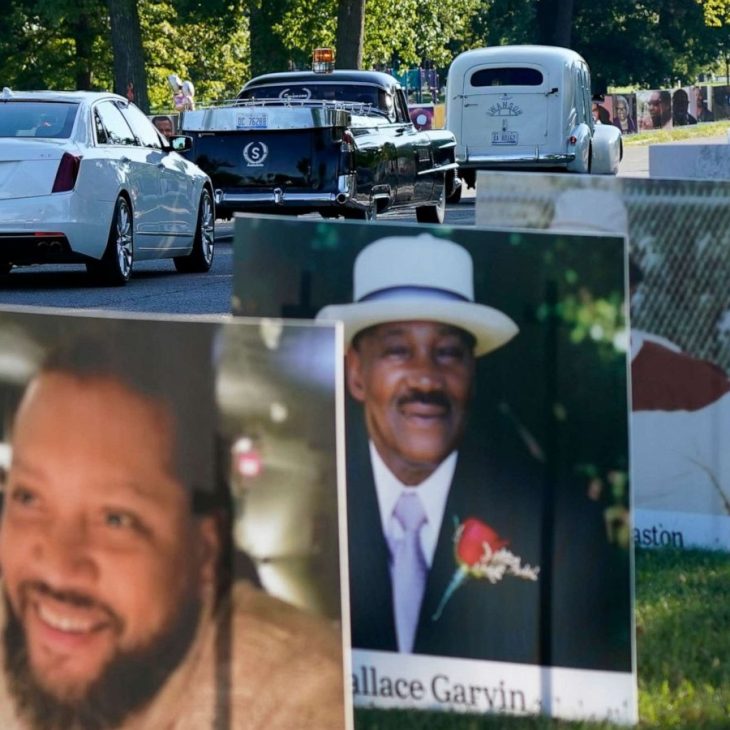
Every day in the U.S., more than 2,000 families (5,000 worldwide) are being forced to grapple with these questions due solely to COVID-19. One thing that connects us all – or most – is the deep sense of loss felt when someone we love leaves us permanently, particularly through death. As I reflect on this season in which several of our religions and much of our national culture centers on celebration, joy, giving, and love – whether through Hanukkah, Christmas or Kwanzaa – I am especially saddened when I consider just how many families and households will be missing a loved one this year – not because social distancing is being observed, but because they are among the over 300,000 nationwide and 1.6 million worldwide for whom COVID-19 hit too close to home.

I am also struck by the ways doctors and other medical professionals tell the dying and those nearest to them to contact their loved ones, knowing that death is imminent, juxtaposed with the current lived experience of those dying from COVID-19. Dying with COVID-19 has robbed families, in many cases, of the chance for one last hug, to hold their loved one’s hand, or to sit by their bedside as they face death. It has left many to die alone – a reality only exacerbated by travel restrictions, self-quarantine instructions, and other concerns about the spread of the virus. Beyond this, it has interrupted the ability to mourn in traditional ways that involve community – a reality that impacts all who have died in this time period, regardless of the cause of death.

When someone dies, some of us will gather in communities or find time to be alone. We may cry and sing, stand and remember, speak and reflect, wonder, and regret. We have traditions – some of which are time-specific, some involving treatment of the body, some involving tributes. Especially at this time and in these seasons, I am aware of so many for whom death has come too soon and for whom the sacred ritual of death has been interrupted or deemed impossible. In this season of joy, I am holding a place in my heart to share their pain and to mourn their loss: 1.6+ million with a shared fate due to a shared source. Let us each take the time and space to lift special prayers and thoughts, to light candles and share chants, to sing songs or to burn incense, to think deeply and hope for healing for the grieving families, the struggling sick, the amazing heroes in medicine and other first responders, and for all of us.

Share

Related Articles

  • Everyday Pluralism

    What Religious Holidays are Happening in November and December?
  • Everyday Pluralism

    What Religious Holidays are Happening this Spring?

  • Everyday Pluralism

    Honoring Ancestors: Samhain, All Saints’, And Día De Los Muertos

Interfaith America Magazine seeks contributions that present a wide range of experiences and perspectives from a diverse set of worldviews on the opportunities and challenges of American pluralism. The opinions expressed herein do not necessarily reflect those of Interfaith America, its board of directors, or its employees.

Latest Articles

Dr. Adam English with students at “Life, Death, and Everything in Between." (Courtesy Photo)
  • Campus
  • /Health

Campbell University Health Students Process Life And Death Together

Jan 14, 2026
Demonstrators organized by CU Stands Up hold a silent vigil near Columbia University in New York City. (Photo by Tanya Raghu)
  • Campus

With Limits on Campus Protests, Quieter Vigils are the Growing Voice of Protest

Jan 13, 2026
Video Screenshot of Cherie Harder and Chris Crawford in discussion.
  • Civic Life

Cherie Harder on Pluralism and Virtue in a Diverse Democracy

Jan 13, 2026
View of American clergyman and civil rights campaigner Martin Luther King Jr (1929  - 1968) (centre) and others as they sit in First Baptist Church, Montgomery, Alabama, May 22, 1961. (Photo by William Lovelace/Express/Getty Images)
  • Civic Life

Listen, Read, and Watch: 3 Stories for MLK Day

Jan 12, 2026
End of content
No more articles to load
Interfaith America, 141 W. Jackson Blvd, Suite 3200, Chicago, IL 60604, US

© 2024 Interfaith America

Instagram Youtube Facebook X-twitter Tiktok
  • Privacy Policy
  • Terms of Use

Copyright @ 2024 Interfaith America. All Rights Reserved. Interfaith America is 501 (c)(3) non-profit recognized by the IRS. Tax ID Number: 30-0212534

Corporate EVENT
Faculty at the 2025 Teaching Interfaith Understanding seminar in Chicago, Illinois in June 2025.
Interfaith Summit 2025
Faculty at the 2025 Teaching Interfaith Understanding seminar in Chicago, Illinois in June 2025.
Interfaith-11.12.25-463
Interfaith-11.12.25-379
Interfaith Summit 2025
Students at the 2025 Interfaith Leadership Summit.
FacultySeminar25-KF-603
FacultySeminar25-KF-408

Subscribe

Join the network for our latest Magazine articles, resources, and funding opportunities!

Join Us