3 Scholars Gather for a Female-led Interfaith Conference in the NC Mountains
August 2, 2022
(RNS) — Summers have long been a time for camp meetings and religious revivals, a week of preaching, singing and soul-saving in the great outdoors.
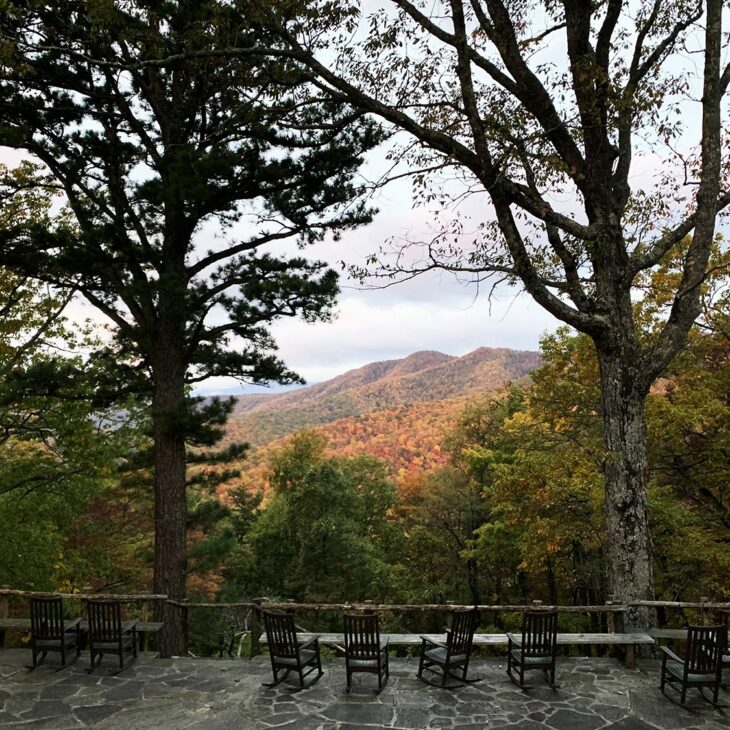
That tradition has faded some over the years, but a form of it still exists on a western North Carolina mountain off the Blue Ridge Parkway. Wildacres, a scenic retreat at an elevation of 3,300 feet, has always combined a bit of rustic Appalachia with a progressive religious streak.
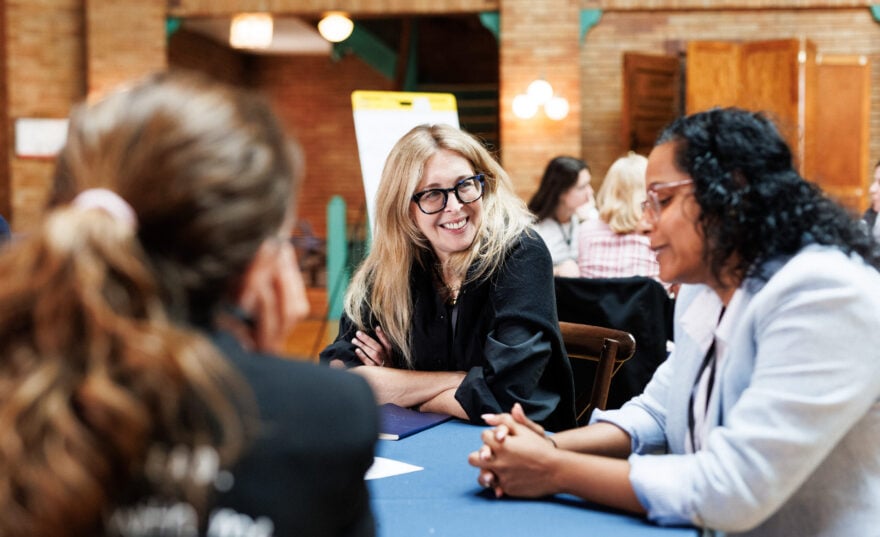
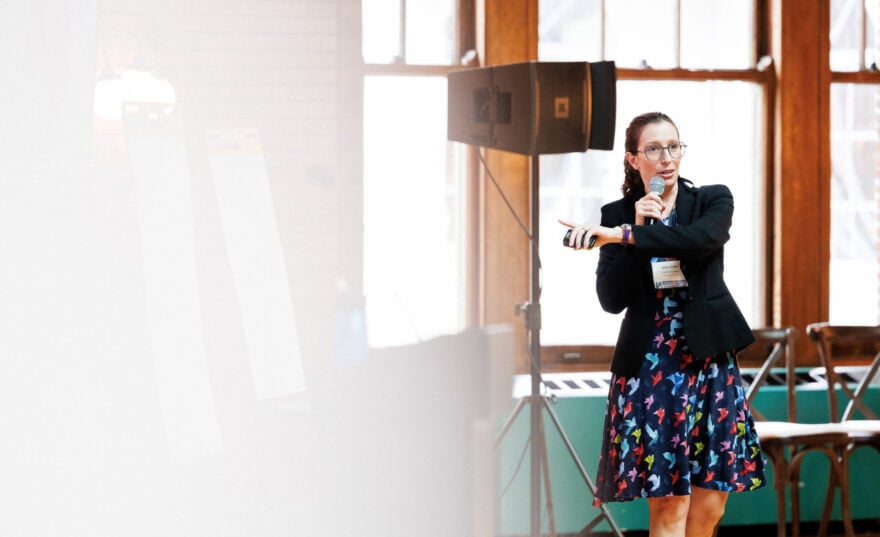
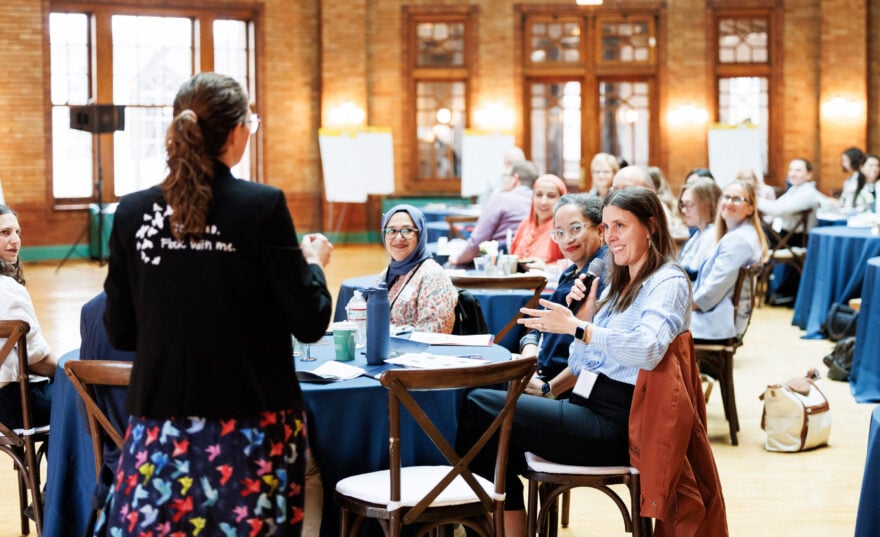
This year it is breaking ground again as its Interfaith Institute, a 40-year-old summer tradition, convenes a three-day meeting beginning Monday (Aug. 1), led entirely by female scholars — a Christian, a Jew and a Muslim.
The Interfaith Institute, which has long been hosted by the Greater Carolinas Association of Rabbis, was initially intended as a summer retreat where rabbis, ministers and priests could learn more about other traditions in a relaxed setting.
Increasingly, it is attracting lay people and this year is scrapping the traditional lecture format for a more relaxed conversational workshop in which scholars interact with participants.
The theme this year is breath, and the three scholars will explore it beginning with the Genesis creation story where “God formed a man from the dust of the ground and breathed into his nostrils the breath of life.” (The Quran includes two related passages.)
“When we gathered on Zoom to plan it, one participant said, ‘I just want time to catch my breath,’” said Amy Laura Hall, associate professor of Christian ethics at Duke Divinity School and this year’s program director for the Interfaith Institute. “We kept gravitating back toward that as a theme.”
The Interfaith Institute has not met in person for two years because of the COVID pandemic. Recognizing that many people are easing back into older ways of connecting, the theme of breath seemed appropriate.
“The idea was to hit reset after the stressors of the pandemic and to think about that in a bodily way,” said Anathea Portier-Young, professor of Old Testament at Duke Divinity School and one of the three featured speakers. “What does it mean to reconnect with self, with community, with God? The breath is a kind of metaphoric, metonymic focal point.”
Recognizing that many people are easing back into older ways of connecting, the theme of breath seemed appropriate.
Women, in particular, may be have felt like they were holding their breath this summer after the Supreme Court overturned Roe v. Wade and states began rolling back abortion without exemptions for rape, incest and the health of the woman, Hall said.
And then there are those who have also feverishly worked on racial justice in the wake of the “I can’t breathe” killing of George Floyd in 2020, she said.
“One key definition of life is respiration,” said Laura Suzanne Lieber, a professor of religious studies at Duke. “But it’s never just physical; it has a connotation of soul. Breath is a connective tissue.”
Wildacres, with its panoramic views of the Appalachian Mountains, is literally breathtaking. The 76-year-old resort, with its rustic stone lodges (sans TV and phone), is also testament to the changing social and religious landscape of the South.
Its 1,200 acres were originally bought by Thomas Dixon Jr. (1864-1946), a white supremacist Baptist minister, lawyer, writer and filmmaker. His book, “The Clansman: A Historical Romance of the Ku Klux Klan,” was adapted by film director D. W. Griffith into a movie, “Birth of a Nation,” considered one of the most racist Hollywood movies for its depiction of Blacks. In the 1920s Dixon bought Wildacres, but after the stock market crash of 1929, he went bankrupt.
A Texas bank ultimately sold Wildacres to I.D. Blumenthal, a successful Charlotte, North Carolina, businessman who was also Jewish. Blumenthal began inviting groups of artists, musicians and writers to spend a week each at Wildacres throughout the summer. In 1972, the resort became an independent nonprofit dedicated to “the betterment of human relations.”
“One key definition of life is respiration, but it’s never just physical; it has a connotation of soul. Breath is a connective tissue.”
While several Christian groups also met there each summer, Jewish groups from across the Southeast have adopted Wildacres as their favored getaway. B’nai Brith, the Jewish service organization, holds an annual retreat there, as do several synagogues in the region.
The Interfaith Institute retreat was originally intended for rabbis who planned to attend their own retreat a few days later. When there were openings, lay people were allowed to register, too. These days, it’s open to all.
The first Muslim speaker was invited to speak about 10 years ago.
“Some of the older Jewish rabbis were very concerned about it,” said Rabbi Edward Friedman, chairman of the Interfaith Institute. “A few of them said, ‘If you’re going to have Muslims there, I’m not going to be there.’ But that was the minority. Most people were open to learning about Islam.”
This year’s Muslim speaker, its first woman, is Mona Hassan, associate professor of Islamic studies and history at Duke University.
The Interfaith Institute would like to draw more Muslims as participants, too. This year’s 40-plus in attendance (a COVID low) doesn’t include other Muslims.
“We are not seeking religious Esperanto,” said Hall, the program director, referring to the international language of communication. “We don’t shy away from real differences in the three world religions. There are definitely politically pointed conversations. But overtly political conversations happen alongside conversations that are textually based.”
In keeping with the changing religious landscape, the institute also draws a good number of Unitarian Universalists as well as people of no faith who are curious to learn about different traditions.
“It’s an opportunity to catch your breath,” said Hall, “and leave some of the burdens behind.”