Gettysburg Discussion Guide
What can Gettysburg teach us about reconciliation, pluralism, and unity across our deepest differences today?
Interfaith Pilgrimage Reflects on the Gettysburg Address
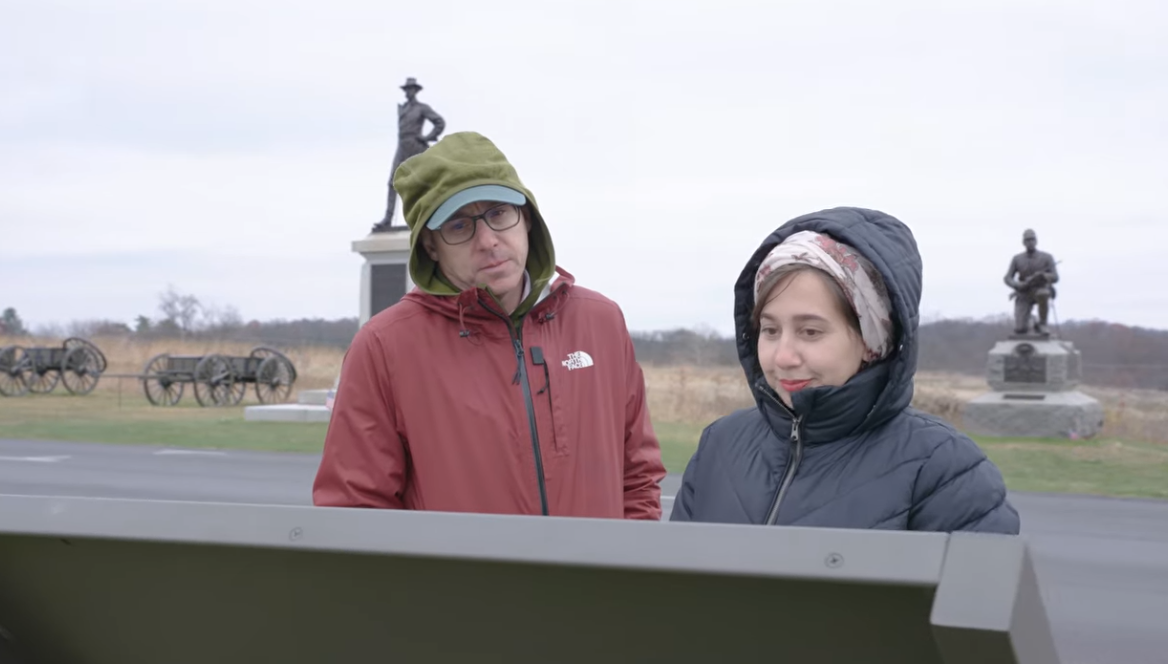
On the 162nd anniversary of the Gettysburg Address, Interfaith America convened an interfaith pilgrimage to Gettysburg—walking the battlefield, attending the commemoration ceremony, and reflecting together on Lincoln’s words in light of the challenges facing our nation as it approaches its 250th birthday. What can Gettysburg teach us about reconciliation, pluralism, and unity across our deepest differences today?
After watching the short video, use the discussion guide to guide reflection on how we might live into the proposition that all of us are created equal – and how we can all rededicate ourselves to government of the people, by the people, for the people.
Gettysburg Address Discussion Series
Gettysburg Discussion Guide
Question One
Take a moment to read the full words of The Gettysburg address President Abraham Lincoln delivered on November 19, 1863. Amid the Civil War, which would not end until 1865, President Lincoln shared the following dedication at Soldier’s National Cemetery in Pennsylvania.
What words or phrases from The Gettysburg Address stand out to you?
The Gettysburg Address, November 19, 1863
“Four score and seven years ago our fathers brought forth, on this continent, a new nation, conceived in Liberty, and dedicated to the proposition that all men are created equal.
Now we are engaged in a great civil war, testing whether that nation, or any nation so conceived and so dedicated, can long endure. We are met on a great battle-field of that war. We have come to dedicate a portion of that field, as a final resting place for those who here gave their lives that that nation might live. It is altogether fitting and proper that we should do this.
But, in a larger sense, we can not dedicate—we can not consecrate—we can not hallow—this ground. The brave men, living and dead, who struggled here, have consecrated it, far above our poor power to add or detract. The world will little note, nor long remember what we say here, but it can never forget what they did here. It is for us the living, rather, to be dedicated here to the unfinished work which they who fought here have thus far so nobly advanced. It is rather for us to be here dedicated to the great task remaining before us—that from these honored dead we take increased devotion to that cause for which they gave the last full measure of devotion—that we here highly resolve that these dead shall not have died in vain—that this nation, under God, shall have a new birth of freedom—and that government of the people, by the people, for the people, shall not perish from the earth.”
Gettysburg Discussion Guide
Question Two
The Commemoration’s keynote speaker, Dr. Jonathan White shared, “We live in a culture that is unforgiving; where online mobs if not physical mobs will seek to punish, cancel, harm, and even kill. It seems we give those we disagree with little room for repentance or personal growth. We rarely seek mutual understanding and, unlike Abraham Lincoln, we rarely really listen.”
Do you agree with Dr. White’s assessment of American culture today?
Where in your work or life would you like to increase mutual understanding? How might you bring deeper listening into that work?
Gettysburg Discussion Guide
Question Three
The video describes Interfaith America’s metaphor of a Potluck Nation – a country where everyone can contribute something to the shared table and we can cooperate in meaningful or new ways. Unlike the metaphor of a “melting pot,” a potluck does not seek to combine everything into one sameness. Instead, a potluck honors and succeeds because each dish is a different, unique part of the meal.
What stands out to you about the metaphor of a potluck nation? How do you like to contribute to your community in meaningful ways?
Gettysburg Discussion Guide
Question Four
The video’s participants discuss Interfaith America’s “Respect, Relate, Cooperate” framework: respecting diverse identities, relating in meaningful ways across lines of difference, and cooperating together for the common good.
Share about a time in your life where you built a meaningful relationship or cooperated successfully across differences. What was challenging? What worked?
Gettysburg Discussion Guide
Question Five
In The Gettysburg Address President Lincoln noted America’s unfinished work and urged those listening to dedicate themselves to “a new birth of freedom.”
What work remains “unfinished” in your community or in our country?
In what concrete ways might you dedicate your efforts or personal leadership towards addressing this unfished work?
Join us today!
Let’s build an interfaith America, where people of all beliefs work together for the common good.