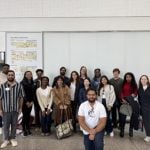
For the majority of incoming Tufts students, the first experience they have of their new school is Pre-Orientation – a multi-day experience planned by students and staff around a particular theme or identity.
At Tufts, we host eight Pre-Os and each has its own distinct culture and community. Many students stay connected to their Pre-O by returning to organize and lead, whether by backpacking into the woods for days in Tufts Wilderness Orientation ( TWO), serving our host communities in First Year Orientation CommUnity Service (FOCUS) or building up their identify-center communities in Students’ Quest for Unity in the African Diaspora (SQUAD).
The Tufts University Chaplaincy received the Advancing Religious Pluralism grant for the 2024-2025 academic year right when we were considering a major restructuring of our Pre-O program, Conversation, Action, Faith, and Education (CAFE). Our grant proposal included a project that would allow us to connect with each Pre-O program and create something for new students that fused our respective program missions. For example, we asked “what does the mission of the art school’s Pre-O CREATE have to do with ours?” Once completed, this would mean that the majority of incoming first years (and much more than the thirty or so CAFE participants we generally had) would have had an experience with the multifaith University Chaplaincy within their first days of coming to Tufts. The other Pre-O staff were very open to the idea, so we decided to pause CAFE and explore this option.
In spring 2024, we hired a student to do the essential work of collaborating with the student leaders of each Pre-O. Julia, a rising senior and an experienced leader as an Interfaith Ambassador, Community of Faith Exploration and Engagement (COFFEE) student org leader, and Hillel community member was the right choice because of her experience finding interfaith connections everywhere and anywhere. For this Pre-O experiment to be successful, we would have to truly collaborate with the programs; we couldn’t just insert a speed-faithing event into their schedule or compel a comparative religions workshop. We needed to work very intentionally with the essence of interfaith: authentic connection.
Julia spent time getting to know each Pre-O team, going to their planning meetings, seeing the spaces they used, and exploring their themes. University Chaplaincy staff and chaplains worked with her to brainstorm outlines, select resources, and draft agendas for different kinds of offerings. By August 2024, we were ready with seven new offerings developed.
One offering was a partnership with Cultivating Relationships by Engaging with Arts at Tufts Experiences (CREATE) and that illustrates a particularly neat fusion of missions. CREATE onboards incoming students hosted at the School of the Museum of Fine Arts (SMFA) at Tufts and has a mission to help students explicitly connect art and artistic expression to social justice issues. Early in collaborating, we identified that having difficult conversations, especially in times of conflict, was a key overlap for us.
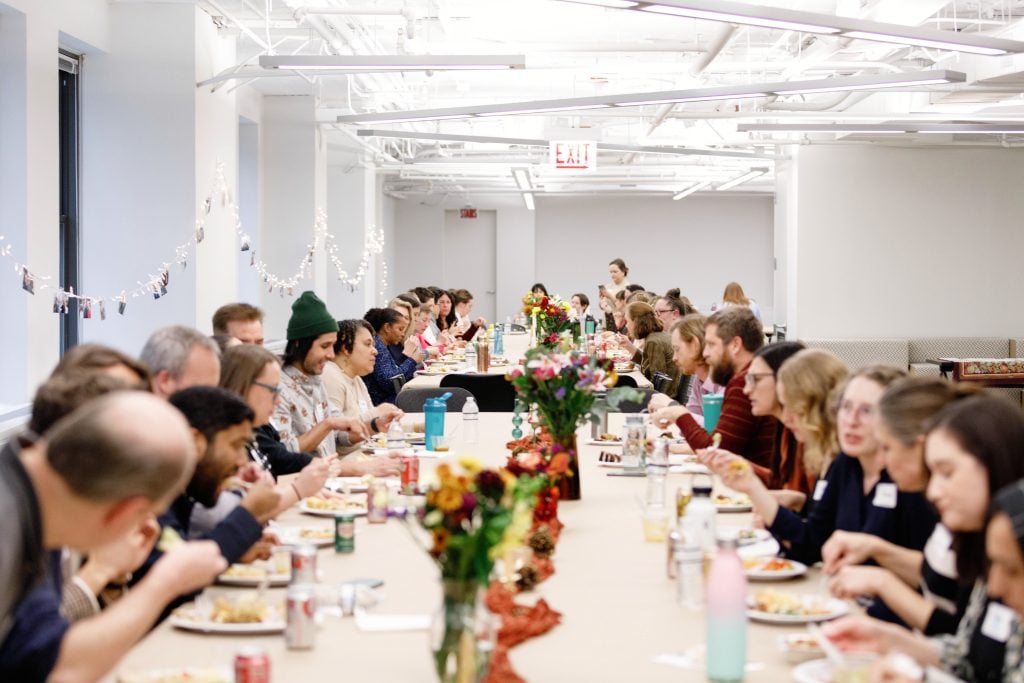
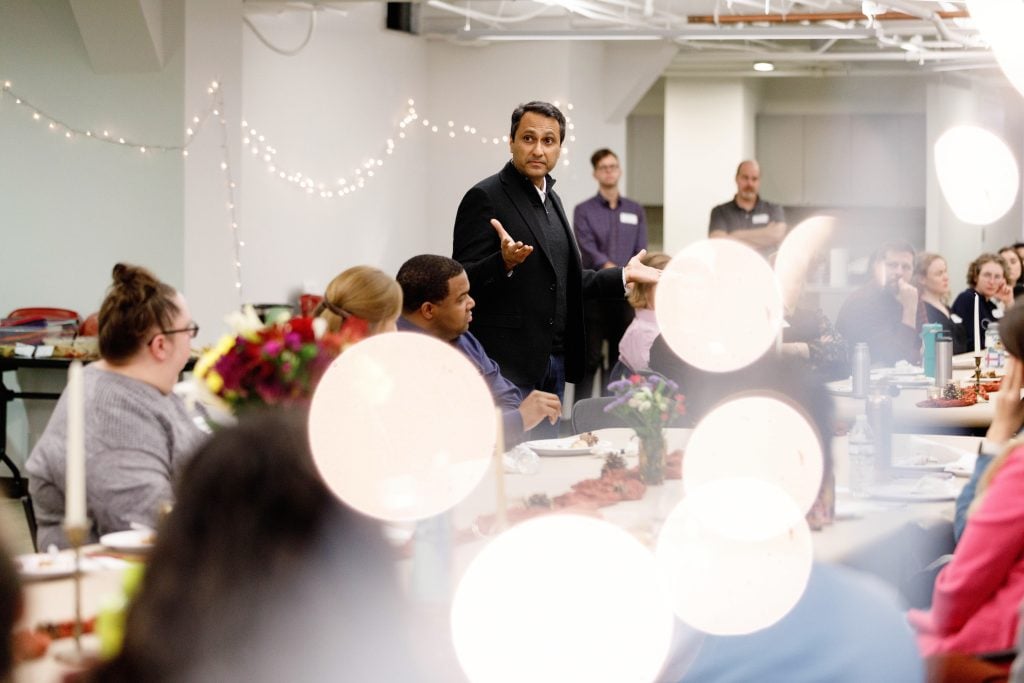
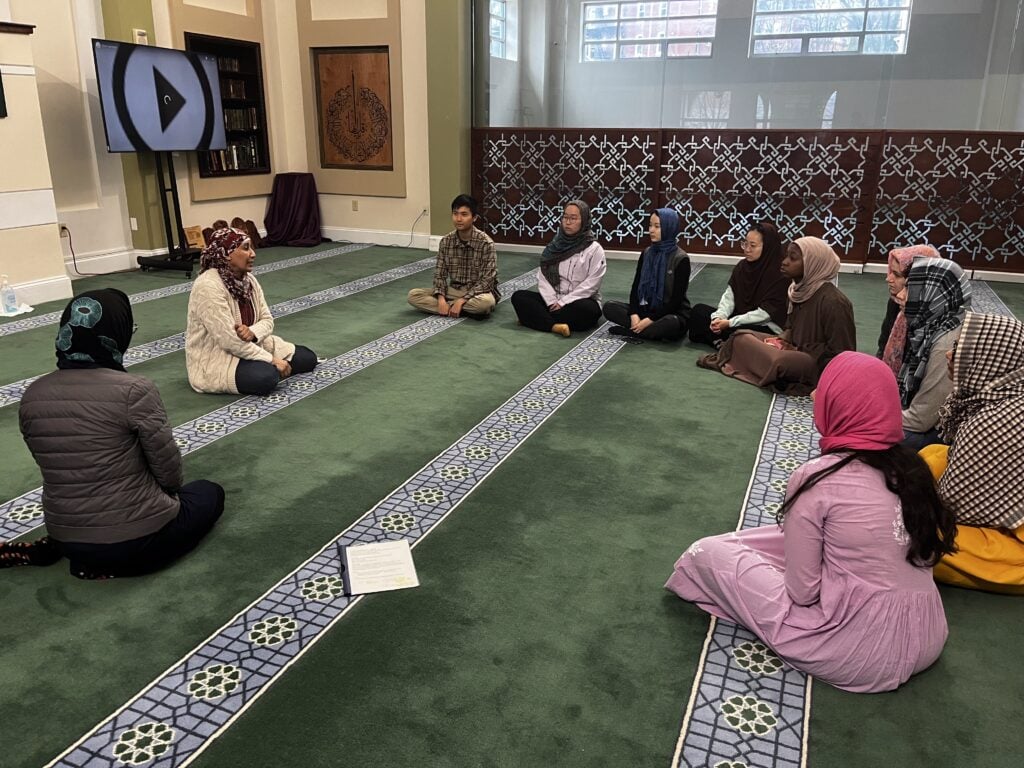
Artists and interfaith practitioners are, by necessity, often translating between and among ideas, people, cultures, and worlds. The planned program lasted about 90 minutes on the SMFA campus. University Chaplain Rev. Elyse Nelson Winger, Julia, and two additional student leaders from our undergraduate Interfaith Ambassador team adapted a “Picture Your Legacy” activity first introduced to us at an Interfaith America Summit. After distributing cards with various images on them and explaining guidelines and sharing storytelling best practices, each student was asked to choose three cards that related to their values the most, and three that related the least. The students then formed groups of three, rotating roles as speaker, listener, and observer for a “looping” activity, also first introduced to us at an Interfaith America event. Three questions were posed: When’s a time you felt really listened to? When have you had a difficult conversation? What difficult conversations do you anticipate having on campus this year? We then returned to a large group debrief and students shared how impactful it was to be listened to with intention, to practice listening closely, and to observe these interactions with care.
Finally, the students were invited to participate in a scavenger hunt of Religious Art at the Museum of Fine Arts (MFA). The unique resource, created by CREATE and the university’s chaplaincy, invites students into the collections at the MFA with attention to the artifacts and pieces that have religious themes – overtly or not! The small zine includes a map, brief descriptions of key pieces, and questions that invite the use of their sharpened communication skills. For a pendant depicting the incarnations of Vishnu, students are asked “What are some of the purposes of religious jewelry?” Next to a panel in the Islamic Cultures Gallery, viewers are asked, “Is calligraphy always art? What about other kinds of writing?” Students reported a very satisfying experience and participated with enthusiasm. We plan to offer this zine and its potential conversations to students for many semesters to come.
Thanks to the Advancing Religious Pluralism grant, we had a summer of kaleidoscope interfaith, and the results allow us to see our work anew too. In Fall 2025, we’ve been able to build on this work and continue our Field Trip Series. We were able to take over 40 students to the Museum of Science for the Hall of Human Life, in collaboration with the Humanist chaplaincy, the Museum of Fine arts, specifically to see religious artifacts; and Zen Therapeutics Academy, a Vietnamese Buddhist Temple in Brockton, Mass.
Most of us in the Interfaith America sphere know that our work permeates everything about campus life, but the granular work of making that true with our campus partners – from fitness instructors to civic leaders to painters to First Gen experience experts – changed us for the better. Our relationships across campus are stronger, and our respective missions make more sense to each other, and these authentic connections are how interfaith work thrives. We are grateful, on behalf of our whole Tufts community, for everything the Advancing Religious Pluralism grant allowed us to do and will continue to allow us to do well.