Opportunity Awaits: Supporting Social Change and Interfaith Skill-Building on Christian Campuses
April 1, 2021
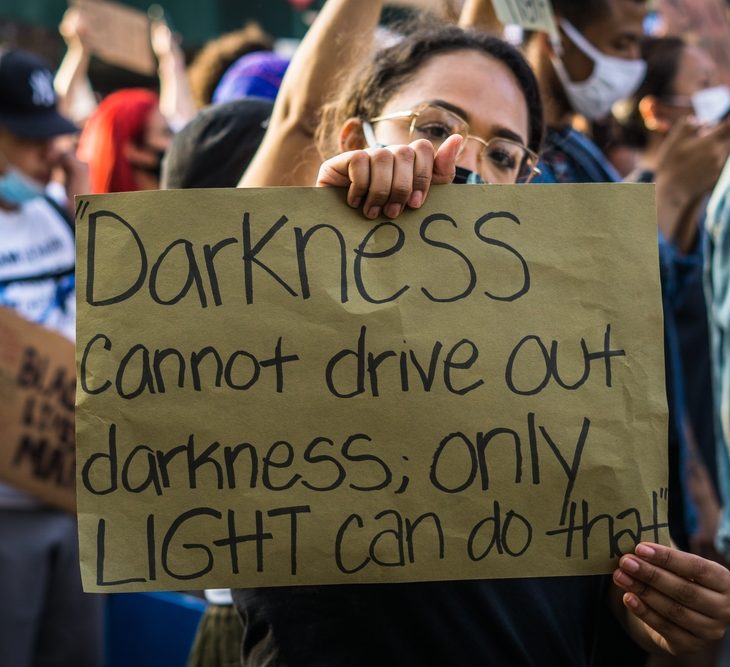
There is certainly dissonance within evangelical communities these days about whether and how to engage social issues at the forefront of national concern. But according to a recent Forbes article, members of the Council of Christian Colleges and Universities (CCCU) are making clear their position on several of those issues—namely immigration, prison reform, and racial justice—by speaking out and encouraging action. In doing so, they are positioning their institutions to help strengthen the social fabric of our diverse democracy.
When I read about the CCCU’s support of Dreamers and DACA recipients, programs at member institutions that enable inmates to take credit-bearing college courses, and efforts to acknowledge and address racism and political polarization, I was heartened … but not surprised. Last fall, I wrote an article for Interfaith America on the role of young evangelicals in the 2020 presidential election in which I noted increased activism among first-time evangelical voters on social issues like climate change. In the runup to November 3rd, it was also reported that 20- and 30-something evangelicals were wrestling with “the hypocrisy of evangelical leaders for the first time due to Trump’s election in 2016.” For many of these young adults, this translated into a vote for Biden and aspects of his agenda despite the strain it put on relationships with socially conservative family members and friends.
Yet while Gen-Y and Gen-Z evangelicals are exhibiting greater concern for various pressing issues, there are threads within our social fabric that require more of their attention: and religious diversity is among them. The recent Interfaith Diversity Experiences and Attitudes Longitudinal Survey (IDEALS) found that college-going evangelicals were below average in their commitments to building bridges across religious divides. Furthermore, there was a stark contrast between evangelicals—of whom 65% were highly committed to bridging religious divides—and many of their peers (more than 80% of Muslims, Jews, and Latter-day Saints placed a high value on bridge building across religious differences). And while students overall made gains in their religious literacy during the college years, those gains were less pronounced at evangelical colleges and universities compared to Catholic and mainline protestant institutions.
Fortunately, there is growing awareness among CCCU leaders when it comes to the importance of fostering interfaith appreciation and religious literacy among young evangelicals—and they are taking steps to address this important issue. Last year, CCCU joined forces with IFYC to develop Christian Leadership in a Multifaith World, an online curriculum that explores the Christian foundation for interfaith engagement, builds students’ knowledge of different religions, and equips students to lead bridge-building efforts in their communities. To encourage widespread adoption of the curriculum, grants are being offered to CCCU faculty and staff to support the development of programs and coursework. And the goals for this large-scale initiative are clear:
We think it’s vital to have Christian and particularly evangelical Christian participation in interfaith efforts. Young evangelicals are motivated to put their faith into action—from launching initiatives to end poverty to championing racial justice. We want to harness that energy and create opportunities for more evangelical Christians to participate in interfaith cooperation activities so that they can deepen their own faith commitment and cooperate with others to advance the common good.
It is promising to see CCCU leaders make public commitments to what Forbes’ Michael Nietzel called today’s “hot-button social issues.” Many Christian colleges have faced enrollment crises in recent years and have wrestled with how they must “change to survive.” For some, change has involved difficult decisions about budget, staffing, and program cuts. Responding to evangelical students’ social concerns—and committing to support them in their efforts to make our social fabric more cohesive—could be a compelling alternative strategy for attracting more students. Moreover, CCCU leaders can use social change work as an entry point for cultivating interfaith competencies to help students tackle the myriad challenges we face in today’s world.
In 2018, CCCU president Shirley Hoogstra was interviewed in an issue of Montreat College’s Reflection magazine that was themed “endurance.” When asked about the key ingredients for Christian colleges to persevere and thrive in the higher education marketplace, she remarked:
One of Christian higher education’s greatest strengths is its holistic approach to shaping and educating students. As a result, our graduates are more likely to be in fields that may not maximize earnings but deliver social benefits, such as human services and education … In other words, our graduates are committed to working for the common good … These are the kinds of thoughtful, engaged, faithful people the world desperately needs today.
I would advocate for two additional ingredients in these challenging and divisive times. To best serve the “thoughtful, engaged, faithful” young evangelicals at today’s CCCUs, Christian higher education leaders should continue paying attention to the social issues these students care deeply about and support their engagement of those issues. And to ensure graduates “committed to working for the common good” are prepared to do so amidst the deep religious and political polarization that characterizes our nation, CCCU leaders must also continue to advance interfaith learning and development on their campuses. With these priorities at the forefront, Christian colleges and universities will be well positioned to persevere and thrive.