A Native American Student’s Message This Season: ‘We Are Still Here.’
November 23, 2021
You may have noticed there are a few nuances that have come about since your high school history books left off. Terms and concepts relating to current Native American affairs can be confusing, and some people expect everyone to know meanings without explanation.
I write this article based on my understanding and from my own perspective. Both of my parents are of Cherokee descent, and I identify as Cherokee as well. I grew up a short distance from my father’s tribe in central Alabama and then moved to Mississippi near Cherokee relatives from my mother’s side. However, I also acknowledge I have always lived with white privilege and never on a reservation myself.
With that being said, let’s start off light with something everyone can do to support.
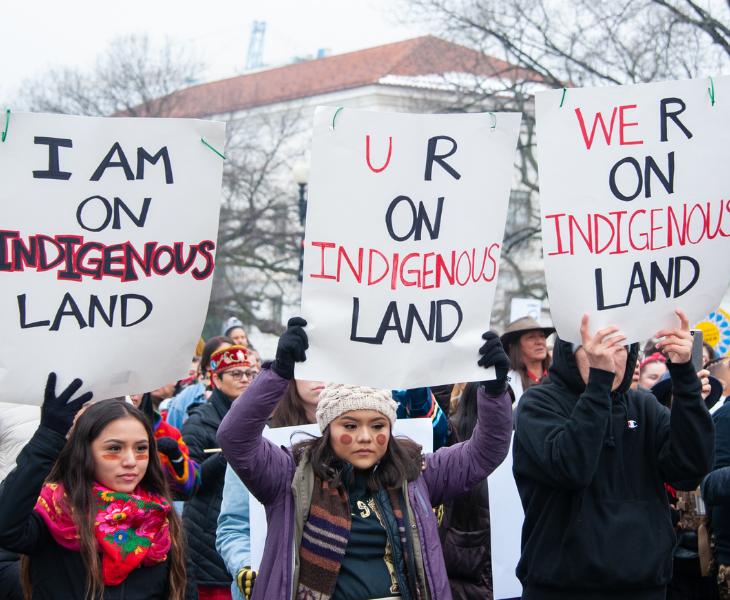
Land recognition/acknowledgement— This practice has been around in Native culture before colonial institutions, but today it is commonly used by non-native communities as a sign of respect. It acknowledges the truth and helps prevent erasure of the Native narrative. A simple template of one such proclamations is: “I would like to acknowledge that we are on the traditional land of the first people of [current name of area/city], [name the group of Natives], past and present, and honor with gratitude the land itself and the [specific Native] Tribe.” There can be a ceremony for this, as well as news articles to share the information with other unaware citizens.
Next on the list of terms is blood quantum and the alternative form of heritage justification, lineage. Blood quantum is the percent or fraction of one’s ancestors that were/are Native American. This is what people mean when they say “I am 1/4th Choctaw.” This method is highly problematic and tribes were allowed to change their methods to claim Native identity in 1934, but this was only after 138 million acres of land were taken from Native reservations and given to “homesteaders” and corporations, a practice allowed by blood quantum discrepancies. Many believe that gatekeeping with “certificates of degree of Indian blood” and being the only ethnicity requiring federal proof is the slow phasing out of a culture. If blood quantum rules continued, tribal enrollment would not stop declining. One alternative that some tribes use is the proof of direct descent from a lineal ancestor included in certain documents, which also proves to be an immense challenge for many.
Cultural appropriation vs. appreciation: The definition of cultural appropriation is “the act of taking or using things from a culture that is not your own, especially without showing that you understand or respect this culture.” One example might be wearing a headdress. The headdresses that are popular in costumes are an honor and a privilege for any native that wears one, and therefore it is disrespectful if it is worn for fun or other contexts. An example of cultural appreciation, however, is purchasing beaded jewelry from a Native American vendor and appreciating it for the time it took to create it and wearing it with pride and respect of its history. This would be supporting a Native American artist directly.
Now, I will focus on a few things that can be done to support. First is the name change of holidays. For example: The tradition of harvest festivals could replace the problematic “Thanksgiving.” Additionally, Christopher Columbus Day could be replaced by Indigenous Peoples’ Day. Instead of having a holiday to celebrate the blood on America’s hands, why not celebrate the cultures that were here before the arrival of conquistadors?
Next is holding the United States government accountable and forcing the end of the destruction of sacred lands. One area of concern is the oil industry, which is notorious for building oil pipelines that contaminate rivers that provide water for many natives communities. They drink, clean, fish, and complete other many daily tasks from the help of very few water sources, yet their dedication to the preservation of nature is constantly being reversed at the hands of capitalist extremists.
Lastly, include Native Americans in history! There is and were unique languages and music and art, all of which are overlooked by the standard curriculum covered in American public schools today. We are beginning to acknowledge the mass genocide of native children in residential schools, but we cannot stop there. The Trail of Tears did not mark the end of a culture. There are unspeakable atrocities happening on reservations right now that the media does not cover. The battle is not over. We are still here.
Diana Gillespie is a sophomore, first-generation, pre-med student at Baylor University in Waco, Texas. She is studying medical humanities and civic interfaith studies. In her free time, she works on projects that fight for socioeconomic, gender, spiritual, and LGBTQ+ equality.