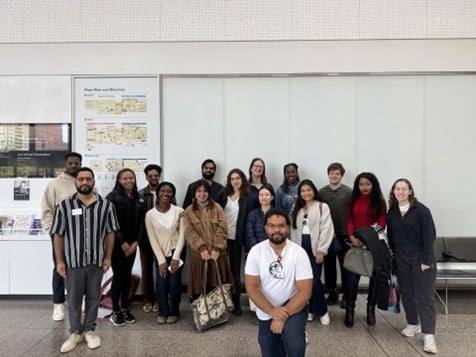

Interfaith America is excited to introduce the 2024-2025 Black Interfaith Fellows.
This cohort brings together eight Black professionals — talented artists, scholars, clergy, and community leaders — engaged in the vital work of bridgebuilding.
Spotlighting Black Interfaith leaders from various sectors and worldviews, Interfaith America’s Black Interfaith Project aims to highlight the longstanding diversity of Black religious life and the many ways Black interfaith engagement has contributed to American spiritual and civic life.
Over their two-year fellowship, fellows meet to develop interfaith projects, network, and contribute to and inform a more accurate narrative about and by Black leaders.
Meet the 2024-2025 Fellows, and learn about their projects:
Sasa Aakil
Founder, If All the Trees Were Pens Open Mic
Artist, Poet

Sasa Aakil is a Multimedia Artist, Writer, and the 2021 Montgomery County Youth Poet Laureate. She is a potter, painter, poet, printmaker, and bassist living and working in Wheaton, Maryland. Sasa has been featured in the Bethesda Magazine for her work as Youth Poet Laureate. She has also been featured in the Washington Post and WTOP for her work on the A Man Was Lynched Yesterday Project in 2020. She has won numerous awards in writing and performed poetry at the Kennedy What is Going On Festival in 2023. Sasa founded If All the Trees Were Pens Open Mic and recently published her first chapbook, the culmination of all my despair and the music that saves me. She received her Bachelor of Fine Arts from Howard University in 2024. More information about Sasa’s visual and written work can be found on her website, sasaaakil.com.
Sasa’s project focuses on building the community and the impact of her open mic, If All the Trees Were Pens. She plans to explore the power of the consensus built by regularly gathering like-minded people through social media outreach, increased frequency, and holding space for art and conversation.

Pamela Ayo Yetunde
Founder, Marabella Storycraft
Multifaith
Interfaith pan-Buddhist universalist practitioner Pamela Ayo Yetunde, J.D., M.A., Th.D. (pamelaayoyetunde.com) is a pastoral counselor in private practice, an author, editor, advocate, instructor, and Buddhist lay leader. Ayo is the author of several books, essays, and articles including the book “Black and Buddhist: What Buddhism Can Teach Us About Race, Resilience, Transformation and Freedom“ (Shambhala Publications, 2020) which she co-edited with Cheryl A. Giles, and “Casting Indra’s Net: Fostering Spiritual Kinship and Community” (Shambhala Publications, 2023). Her essays and podcasts on Buddhism appear in “Lion’s Roar,” “Buddhadharma” and “Buddhist Justice Reporter, a project she co-founded in response to the torture and murder of George Floyd.
“Songbird Birdsong” is a fictional story and film project inspired by the ancient Buddhist story of Kisa Gotami and the Mustard Seed. For this project, inspired by Ayo’s work with Fetzer Institute’s Shared Sacred Story project, the ancient Kisa Gotami story is placed in a deconstructed U.S., in the near future, in the life of a Black female jazz singer, Keisha. The protagonists from each story share similar economic locations, aspirations, and losses. Kisa’s path to healing is largely through Buddhist faith and an ancient form of “exposure to reality therapy” offered by the Buddha. Keisha, who is a conservative Christian, heals through her Christian faith struggles and interfaith encounters with Buddhists skilled in spiritual friendship, Buddhist practices, and psychotherapy. “Songbird Birdsong” is an invitation and a roadmap for healing through fiction. The story has been written to be easily adapted for the screen and other performing arts. “Songbird Birdsong – The Story” — will be published and the screenplay will be offered for production. The story will also be shared with artists in other genres, including opera and stage plays. “Songbird Birdsong” has the potential to support bridge crossings between Christians and Buddhists, Black people and people who aren’t Black, jazz and opera lovers, and lovers of classics and contemporary art forms.
Naila Ansari
Assistant Professor of Theatre and Africana Studies, SUNY Buffalo State College.
Founder, The Movement of Joy, LLC

A native of Buffalo, New York, Naila Ansari is a Cum Laude graduate of Point Park University’s Conservatory of Performing Arts program and is a distinguished M.F.A. from the University at Buffalo. Ansari is a SUNY Buffalo State University Assistant Professor in Theater and Africana Studies. Ansari recently served as the choreographer for “Black Roots Summer,” named Best Theater by the New York Times and praised by Broadway World for her Directing and Choreography of her adaptation of Shea’s first produced show, “Once on this Island.” Ansari merges artistry and scholarship to tell Black stories in America. Her research and performance project “The Movement of Joy” archives stories of Black women’s joy nationwide. In addition to the film documentary of these stories, Ansari works with various foundations to build Arts and Culture programming. For more information, follow @naila_moves_joy on Instagram and movementofjoyllc.com.
The Movement of Joy stands as a beacon of cultural celebration and interfaith harmony, embarking on a national endeavor to amplify the voices of Black women across the United States. This visionary project intertwines the rich tapestry of faith and joy, weaving together narratives of resilience and triumph.
At its core, The Movement of Joy is committed to honoring Black women’s diverse experiences and stories. Through insightful interviews conducted nationwide, the project meticulously crafts live performances that encapsulate the essence of Black joy.
Having graced prestigious venues such as the African American Museum for History and Culture Smithsonian, Michigan Tech University, University of Buffalo, Salve Regina University, SUNY Brockport, and numerous others, The Movement of Joy has captivated audiences with its stirring presentations.
As the project evolves, it transcends the bounds of live performance to embrace the cinematic realm. Expanding into a transformative film project, The Movement of Joy seeks to illuminate the profound connection between faith, joy, and the choreographies that have shaped America, all under the stewardship of Black women.
Through this innovative fusion of storytelling and artistic expression, The Movement of Joy endeavors to inspire, uplift, and ignite conversations that resonate far beyond the confines of the stage or screen. It is a testament to the enduring spirit of community, solidarity, and the boundless power of joy.
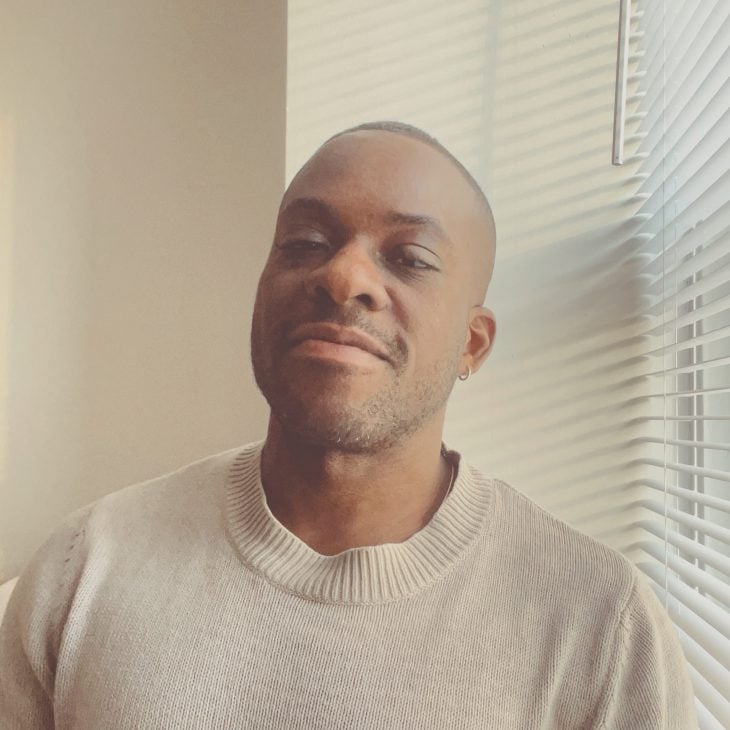
Tyrone Davis
Dual master’s degree student, Union Theological Seminary (M. Div) and the Silberman School of Social Work at Hunter College (M.S.W.)
In the fall of 2024, Tyrone Davis will enter his second year of a dual-degree graduate program, working towards a Master of Divinity at Union Theological Seminary and a master’s in clinical social work at the Silberman School of Social Work at Hunter College. In addition to being a seminarian, Tyrone is also a certified sex educator, actor, musician, and writer.
Before entering seminary, Tyrone held a career as a theater actor who performed on Broadway and in theaters across the U.S. As a prospective clinical social worker and mental health practitioner, his particular interests revolve around supporting marginalized people towards mental health, which includes both sexual and religious/spiritual wellness. Tyrone is originally from Miami, Florida, and is currently based in New York City, where he belongs to a Unitarian-Universalist congregation.
Though interfaith cooperation has been plentiful throughout the histories of Black communities in the United States, the Black Interfaith Project addresses the unfortunate absence of academic research and overall visibility on how Black faith is a significantly diverse web of traditions.
As a research fellow for the Black Interfaith Project, Tyrone’s work will focus on researching, investigating, and documenting historical instances of interfaith collaboration among Black communities in the United States.
His angle is to examine how racialized injustices have inspired collaboration among differing faith traditions of Black people as they came together in the community to cultivate social, economic, and artistic movements. Using various research methods–including academic, archival, interviews, and oral history–Tyrone’s work will culminate in a research paper and bibliography that will strive to be a valuable addition to the existing research on Black interfaith collaboration.
Stephen Readus
St. Mark U.M.C. Chicago
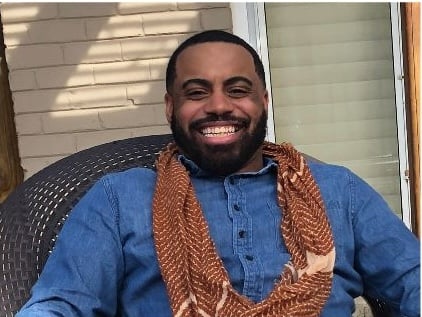
Chicagoan Stephen Readus is a social scientist and longtime community advocate. He currently works in community engagement and grantmaking within the affordable housing space. Academically, he is passionate about Secular Humanism, Black Studies, and urban planning. In his limited free time, Stephen enjoys parks, laughing loudly with friends, documentaries, and the occasional responsible cigar.
Stephen’s project is titled ”‘What Do the Lonely Do?’: Exploring Faith, Connection, and the Future of Chicago’s Black Seniors Amidst Isolation.”
Inspired by the poignant question posed in the Emotions’ song “What Do the Lonely Do?” this research project will delve into the experiences of African American religious leaders and seniors within Chicago’s faith-based communities. Through surveys, focus groups, and in-depth interviews, the project explores how these communities navigate three key trends: declining church attendance, the impact of COVID-19, and the rise of Artificial Intelligence.
The study, rooted in culturally responsive evaluation, goes beyond traditional research methods by centering participants’ voices and seeking to understand how religious leaders foster care and connection within their communities, particularly among seniors grappling with a changing technological landscape.
With the growing number of religiously unaffiliated individuals in the U.S. and the lingering effects of the pandemic, this project seeks to offer valuable insights into the future of Black religious communities, their capacity for fostering social connections in a digital world, and the critical role they play in supporting their most vulnerable members. Ultimately, this research will not only culminate in a 24-minute mini-documentary but also aims to establish a small, interfaith mutual aid group specifically focused on supporting senior care needs.

Allen Reynolds
Director of Spiritual Formation, University Church Chicago (UCC/DOC)
Allen Reynolds is a minister, editor, producer, and consultant from the suburbs of Chicago, Illinois. He is the Minister for Transformation at the University Church Chicago (UCC/DOC) and has served in multiple content roles at U.M.I. (Urban Ministries Inc.), the most prominent African American Christian publishing and media company in the nation. He is also an adjunct professor at Aurora University. He received his Bachelor of Arts in Media Production from Howard University and his Master of Divinity from Yale University. He is pursuing his Master of Business Administration from the University of Chicago Booth School of Business. He was a fellow of the inaugural Faith & Trust Young Leaders Cohort with the Council of Religious Leaders of Metropolitan Chicago and a guest panelist speaking about diversity in congregations at the Parliament of World Religions in Chicago 2023. He lives in the south suburbs of Chicago with his wife and three daughters.
Allen’s project will produce a curriculum for congregations to learn and engage with Black Interfaith history and Interfaith work more broadly. The curriculum will help congregations to understand the tradition of interfaith understanding and cooperation in Black communities and engage with different beliefs, practices, and tools to help foster interreligious dialogue and collaboration in their own broader communities. The curriculum will exist digitally and hopefully culminate in a one-day event for its launch and availability through various distribution channels.
Yolanda Savage-Narva
Vice President of Racial Equity, Diversity, Inclusion, and Communities of Belonging, Union for Reform Judaism
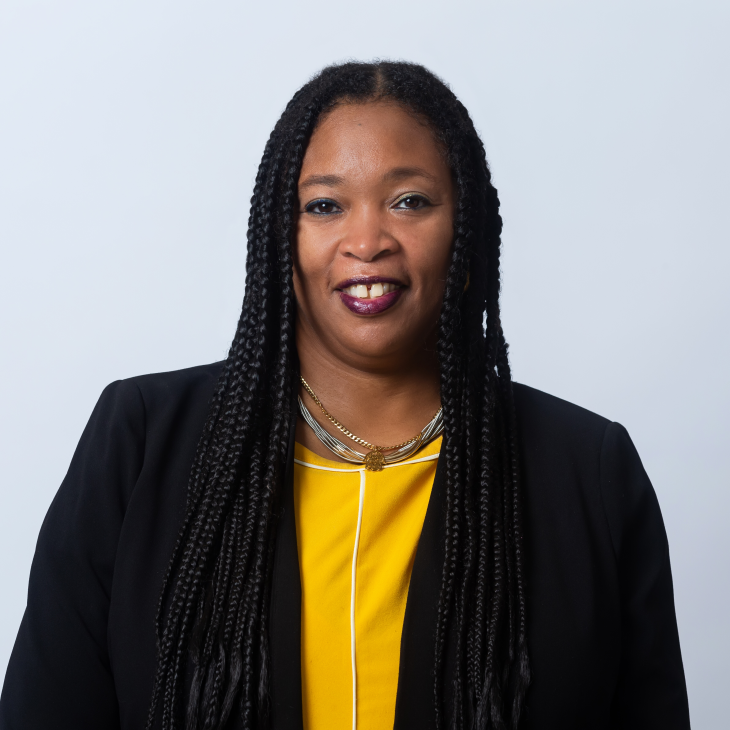
Yolanda Savage-Narva has twenty years of experience working with public agencies and non-profit organizations to promote equity and inclusion. She is a Centers for Disease Control (C.D.C.)- trained public health specialist who has led community-based efforts in community health assessments for the Indian Health Service. Yolanda was also the Executive Director of Operation Understanding D.C., a non-profit organization that promotes understanding, cooperation, and respect while fighting to eradicate racism, anti-Semitism, and discrimination.
Yolanda Savage-Narva is the Vice President of Racial Equity, Diversity, and Inclusion and Communities of Belonging for the Union for Reform Judaism and the Religious Action Center. She is a member of the Board of Directors for the Federation of Greater Washington, Capital Jewish Museum, Leading Edge, American Jewish World Services, and the Historic Sixth and I Synagogue in Washington, D.C., and a member of the Aspen Institute’s Racial Justice & Religion Collective. Yolanda is a Delta Sigma Theta Sorority member, an international Black sorority dedicated to community service and education.
Yolanda has appeared on NBC’s Soul of a Nation and ABC’s IMPACT x Nightline and recently spoke at the March on Washington 60. She graduated from Tougaloo College, where she received a Bachelor of Arts in Sociology, and Jackson State University, where she received a Master of Science degree in Education, both Historically Black Colleges and Universities (HBCUs).
In her spare time, Yolanda loves being outdoors, reading, birdwatching, playing sports, and traveling with her son, Miles, and husband, Andrew.
As a Black Jewish woman, Yolanda relies heavily on the opportunity to be in dialogue (faith and spirituality) with people who think and believe what she does and others who do not. Right now, especially during this very challenging time in the history of the world, we are relying on symbols and short, one-sided monologues to frame who we are, how we feel, and what we believe. Based on work that Yolanda is doing professionally, called Talk for a Change, her project will expand on the topic by creating an opportunity around a Jewish ritual called Havdalah, which will allow opportunities for people to get to know one another and be in dialogue and relationship with people we might not be connected to.
Her project will unite people from all faith backgrounds to lovingly wrestle with what it means to be flawed and human in America. She has pictured a project that will bring people from diverse religious backgrounds together to:
- Build relationships (through storytelling and sharing stories).
- Understand the human project.
- Wrestling with the challenges of the world around them through a faith-based lens will begin the healing process needed for us to fulfill the promise of Dr. M.L.K.’s Beloved Community.
Havdalah means separation. It is a ritual Jews practice on Saturday night, the official end/close of the Sabbath. Havdalah starts at sundown on Saturday night and officially ends on Tuesday night.

Sharon Stroye
Director of Truth, Racial Healing, and Transformation Initiative, Emory University
Sharon Stroye is the inaugural Director of the Truth, Racial Healing, and Transformation (TRHT) Center at Emory University. Emory University joins 77 other post-secondary institutions in hosting a TRHT Campus Center.
The TRHT Campus Centers grassroots movement was established by the American Association of Colleges and Universities (AAC&U) in 2017 with initial funding from the W.K. Kellogg Foundation. The vision of the TRHT framework is to dispel the belief in a racial hierarchy of human values. Each TRHT Campus Center is charged with implementing innovative and actionable programming for the next generation of strategic leaders to dismantle institutional and structural racism through a shared humanity perspective.
Sharon is a Strategic and Transformative leader with the expertise to create empowering and welcoming spaces and places for diverse individuals. She is a trained national Racial Healing Circle Practitioner. She has facilitated 300+ racial healing circles, workshops, and trainings engaging 2500+ participants since 2018 in multiple sectors to incorporate the TRHT framework into the ethos of their environment, culture, and climate. She has been a faculty mentor for the Annual TRHT Institute hosted by AACU, preparing other colleges and universities to host TRHT Campus Centers. She highly seeks after existing centers for training and strategic visioning.
As the Associate Pastor of God’s Kingdom Heavenly Church, an online non-denominational ministry with the mission of teaching the word of God, Sharon’s values and beliefs transcend into actions and behavior as a servant for humanity. With a 30+ year career in higher education, two master’s degrees in business and public administration (M.B.A. and M.P.A.), and an undergraduate degree in accounting, Sharon has mentored hundreds of students recognizing their God-ordained passion and purpose to “create the next generation of leaders to change the world, one child at a time.”
Sharon’s project is titled ‘Sharing the Humanity: Black Interfaith Leaders Communicating, Connecting, and Caring Across Beliefs, Values, and Faith.’ Storytelling has been an integral form of human connection.
The overarching premise of a Racial Healing Circle is to bring people from diverse backgrounds together to share their individual lived experiences in a facilitated human-centered process. The shared stories result in a bond and connection that reflects our similarities more than our differences.
This project is designed to bring together Black Interfaith leaders and their congregants from the Christian, Muslim, and Jewish religions to engage in a videotaped Interfaith Racial Healing Circle. The Rx Racial Healing Circle framework was designed by Dr. Gail Christopher, Executive Director of the National Collaborative for Health Equity.
It is an interactive experience for people from diverse backgrounds to engage in authentic storytelling in a safe, brave, and responsible space to recognize and connect with our shared and common humanity. One of the most segregated areas in society is faith-based houses of worship.